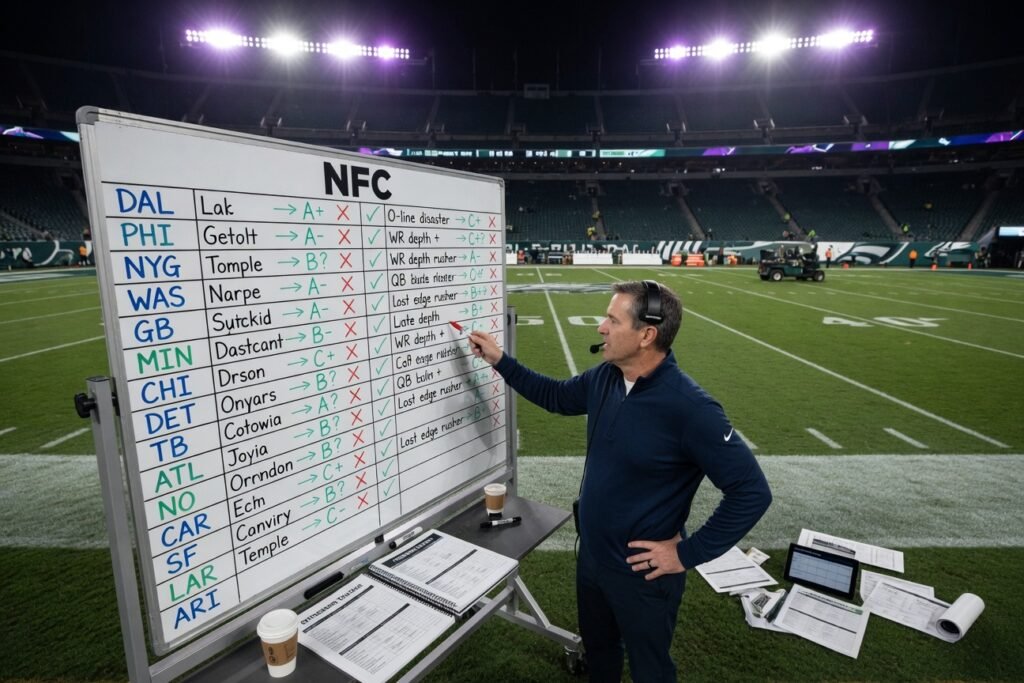
I just finished Bill Barnwell’s AFC offseason breakdown and knew the NFC version would spark the real arguments. Here I am, going team by team through all 16, because some of these decisions scream surplus value while others look like pure cap malpractice. I’m not here to recap every signing. I’m here to tell you which ones actually move the needle and which ones deserve the smoke.
Dallas stands out early. Signing Cobie Durant for one year at four million is the kind of quiet heist that makes you wonder why more teams aren’t raiding the Rams’ secondary like this. Durant has posted a 74.3 passer rating allowed in coverage across four seasons. At 28 he’s still in his prime, and sliding him outside across from DaRon Bland gives the Cowboys a legitimate corner tandem instead of the patchwork they ran last year. The money is basically pocket change next to what they hand Dak Prescott per game. This is how you build depth without blowing the bank.
The flip side with Terence Steele is brutal. Restructuring and keeping him after the multi-ligament knee injury from 2022 was soft. He’s been getting cooked by twitchy edge rushers the last two seasons, and the Cowboys had the chance to walk away from the 13.3 million salary. Instead they locked in three years and 33 million with 13 million cash this season. The dead money hit if they cut him after 2026 is ugly. Dallas already pays its top five players a fortune. This deal screams they can’t squeeze enough value out of the margins.
The Giants’ move of trading Dexter Lawrence for the tenth pick is the right kind of ruthless. Lawrence earned his money but the elbow issues last year dropped his production, and at 30 the window for a new long-term deal wasn’t lining up with a non-contender. They cashed in before the value cratered.
Moving to the rest of the East, Washington grabbed a couple of defensive pieces that feel like they finally read the room on needing pass rush help. Philadelphia stayed aggressive on the lines but left some secondary questions that could bite them if the rookies don’t hit fast. The Giants and Cowboys both swung for defensive upgrades while the Eagles leaned into continuity. Only one of those groups looks built for January.
The North is where the real chaos sits. Detroit kept adding pieces around their core but the question is whether the offensive line additions actually solve the issues that showed up in the playoffs. Green Bay’s approach to the quarterback room still feels like they’re hedging instead of committing. Minnesota’s defensive line work looks promising on paper, but I keep coming back to how many of those new names have actually held up against elite tackles in real games. Chicago’s best move was probably not overpaying for a veteran that would have blocked their young guys. The worst was letting a clear rotational need sit until it became a problem.
Out in the South, Atlanta’s best decision was addressing the edge without overcommitting years and money. New Orleans kept kicking the can on the lines and it shows. Tampa added a veteran presence that gives them a floor but might cap the upside if the young talent doesn’t develop. Carolina’s draft strategy leaned into trenches and that’s the only way they climb out of the basement.
The West is where the champs set the tone. Seattle’s best move was the value they found late in the draft for a position that needed immediate help. The 49ers’ decision to retool the offensive line without breaking the bank was smart until you look at the injury history on some of those new faces. The Rams continuing to find corners and defensive backs on the cheap is starting to feel like a repeatable formula. Arizona’s worst move was the one they didn’t make: they needed a true alpha on defense and instead added complementary pieces that still leave questions.
I watched the way these teams approached free agency and the draft and the pattern is clear. The squads that treated every dollar like it mattered came out ahead. The ones still paying for past mistakes or chasing names without the fit are going to feel it by Week 10. Barnwell was right on the Cowboys’ corner addition and the Giants’ asset flip. Where he underplayed it was how many of these “worst” moves are actually symptoms of bigger cap and roster construction problems that have lingered for years.
The dad in me sees the same thing every season: teams that protect their future flexibility win more often than the ones that fall in love with their own roster. This offseason rewarded the patient and punished the sentimental. If your favorite team is sitting on one of those restructured veteran deals that looks fine today, just wait until training camp when the younger guy starts winning reps.
Which NFC front office is going to get roasted first when these moves play out on the field?