The SEC front office is perfectly happy to sell you the romance of college football, as long as you stay in your plastic seat when the magic actually happens.
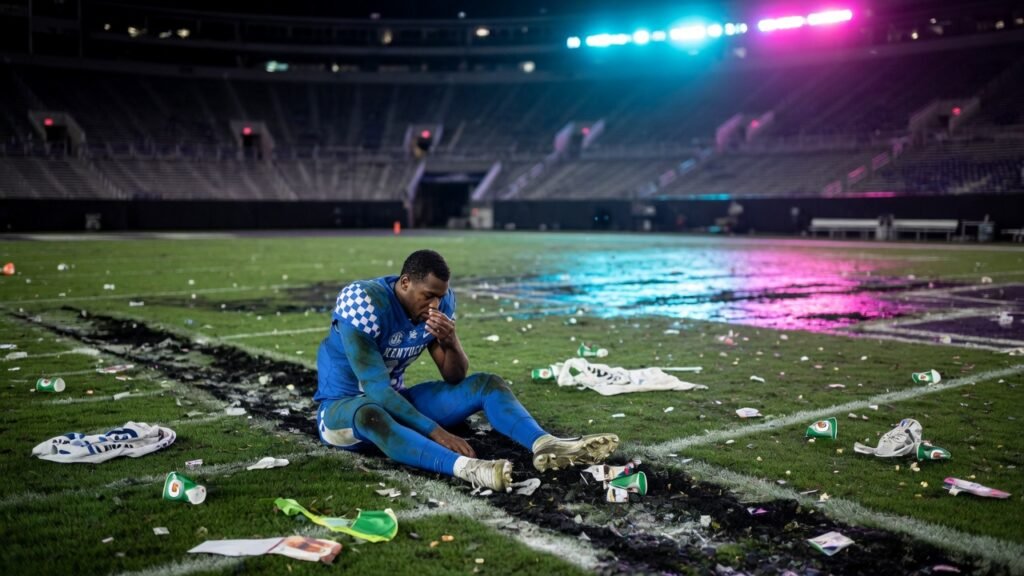
Kenny Minchey showed he had that dawg in him, running the ball up the middle on a two-point conversion to walk off the tenth-ranked team in the country. The stadium lost its collective mind. Kentucky fans poured onto Kroger Field to celebrate a 35-34 overtime win over LSU, and the league immediately handed down a $500,000 penalty for the joy.
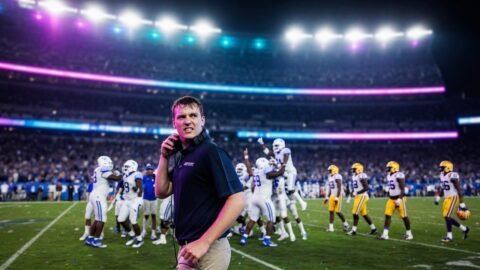
The strongest defense of the fine centers entirely on Lane Kiffin. The tape shows the LSU head coach needing a police escort to navigate the mob on Saturday while fans trailed him with cameras and lewd gestures. I recognize the risk to visiting personnel, and the argument dictates that a massive financial penalty is the only mechanism to protect them.
A half-million-dollar invoice sent to the administration building fails to stop thousands of adrenaline-fueled students from jumping a fence. The stadium security force could not contain the surge, and writing a check on Sunday morning does nothing to protect the coaches on Saturday night.
The Hypocrisy of the Highlight Reel
The SEC will take the footage of that field storm, package it with a dramatic voiceover, and use it in every promotional reel for the next decade. They market the chaos. They sell the passion to the highest television bidder. Then they turn around and bill the school for providing the exact atmosphere that makes the product so valuable.
Kentucky head coach Will Stein understands the assignment. He has energized a fan base and built a 5-1 overall record, marking the best start for a first-year coach in Lexington since 1913. He transformed the stadium into an absolute nightmare for visiting teams, and he completely embraced the chaos of Saturday night.
“I about got killed out there,” Stein said after his first home win over a top-ten opponent. “It was awesome. Great to see all of those students and fans celebrating. They deserve it. They put their heart and soul in this game just like we did as a team, and they were loud and they affected the game and it was really cool.”
Stein gets it. He stormed the field himself as a fan after Kentucky beat LSU in overtime back in 2007. He knows the connection between the student section and the roster is the only thing separating this sport from the sterile, corporate product of the NFL. His players made history on Saturday as the first FBS program to win consecutive overtime games by a single point. The fans spilling onto the grass simply mirrored the energy of the team on the field.
The league office operates in a different reality.
A War Crime Against the Atmosphere
The suits in Birmingham decided to rewrite the rules at the 2025 SEC Spring Meetings. They tossed out the old escalating penalty structure and instituted a flat $500,000 fine for any violation of the access to competition area policy.
“For the safety of participants and spectators alike, at no time before, during or after a contest may spectators enter the competition area,” the SEC announced on Sunday.
The ruling is a war crime against the atmosphere. A flat tax on a legacy-defining win strips the soul right out of the building. The administration in Lexington now has to treat a program-altering victory like a liability on the balance sheet. They paid $250,000 back in 2021 when the fans rushed the field after beating Florida, and the new flat rate ensures the cost of an upset will always be astronomical.
The money even goes directly to LSU. The Tigers fail to get a single defensive stop in overtime, give up a basic run up the middle on a two-point conversion, and fly back to Baton Rouge with a half-million-dollar check for their trouble. Losing a game and getting paid out of the winner’s pocket has absolutely zero aura. The Tigers got cooked on the final play and still cashed a check.
A financial threat will never stop a surging crowd. My patience for the league office acting like a glorified hall monitor evaporates when they bill the schools for the exact atmosphere they sell to advertisers. The policy allows an institution to avoid the fine if they submit a plan to keep fans off the field until visiting personnel exit, but trying to hold back a rushing crowd after a walk-off two-point conversion is delusional.
Stein laid out exactly who the night belonged to.
“This was also for Big Blue Nation,” he said. “This was for the state of Kentucky. This was for everybody that grew up just like me, a wildcat fan. I’m really excited for those people.”
Those people created a moment that will define the season, and the SEC decided to slap a massive price tag on it. Will the television executives remember to subtract the half-million dollars when they inevitably monetize the footage of the crowd next week?