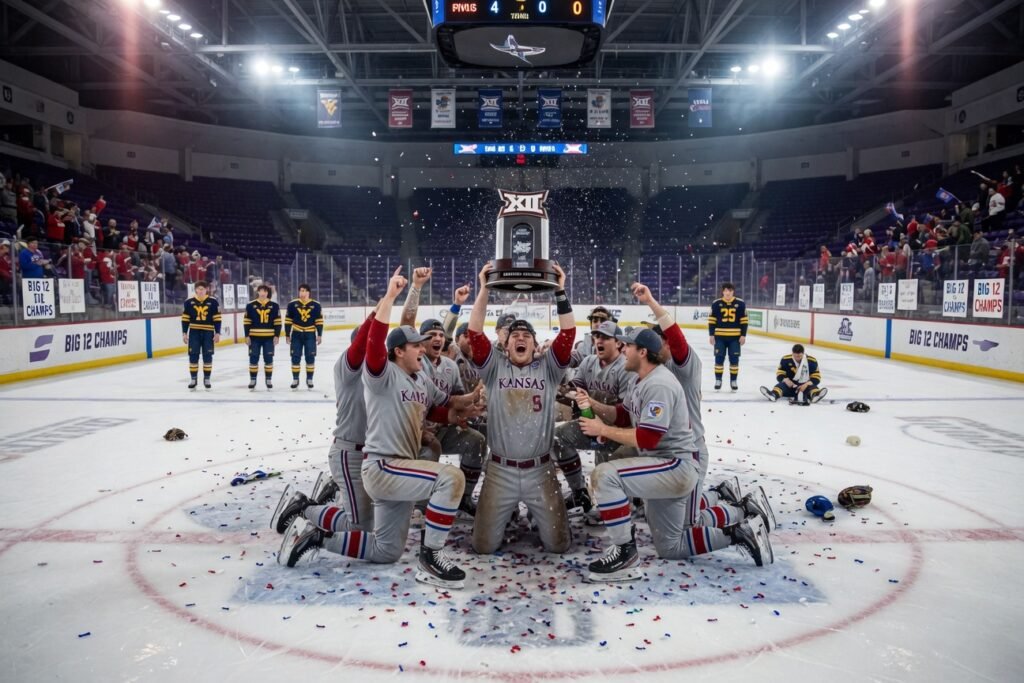
I was sitting at the kitchen table last night after the kids finally crashed, the house quiet except for the low hum of the fridge and my laptop screen still glowing with the box score from Kansas’s 9-0 dismantling of West Virginia, and I couldn’t shake the feeling that the Jayhawks have turned a long drought into the kind of statement that lingers. They hadn’t hoisted a Big 12 baseball title since 2006, and now here they were, top seed, ranked thirteenth, flattening the ninth-ranked Mountaineers with three straight home runs in the seventh and a pitching staff that refused to crack even when the bases were loaded twice. I’ve been on a stretch lately where the columns land clean, and this one feels like it belongs in that run. Last week I was breaking down the SEC home-run race and how Georgia was treating it like their own private safari, and the week before that the Canadiens were showing what “bouncing forward” actually looks like in real time. This Kansas win sits right in the middle of that same energy: a program cashing in on preparation when the moment finally arrived.
That seventh inning is the part I keep replaying. Josh Dykhoff’s three-run shot blew the game open at 6-0, then Augusto Mungarrietta and Jordan Bach went back-to-back. Three consecutive homers against a West Virginia team that had clawed its way to second seed and looked ready to make things ugly. The source only gives the bare facts, but the subtext is obvious if you’ve watched enough tournament baseball: Kansas had been sitting on that lead since Tyson Owens’ first-inning solo shot, and once the dam broke they poured through it. I’ve seen teams press in those spots and hand the game back on a platter. These Jayhawks didn’t. They treated the seventh like a verdict.
The real story, though, lives in the two bases-loaded escapes West Virginia handed Kansas. In the fifth, three singles loaded them with one out, Toby Scheidt came in, and the Mountaineers still couldn’t score. Gavin Kelly’s fly ball and that throw from Bach to nail Brodie Kresser at the plate ended the threat in one brutal sequence. Then the sixth inning repeated the setup, one out, bases full again, and Scheidt induced a popup and a grounder. Two straight innings where West Virginia had the tying run at the plate and left with nothing. That’s not luck. That’s a defense that had already decided the outcome. I keep coming back to those two plays because they tell you everything about why Kansas is 42-16 and heading into Selection Monday with momentum that West Virginia’s 39-14 record can’t match right now.
Scheidt gets the win in the box score, but the real credit spreads across the bullpen. Manning West and Boede Rahe closed it out without drama after Scheidt’s 1⅔ innings. Meanwhile Ian Korn went 5⅔ for the Mountaineers and gave up just two runs before the bullpen melted in the seventh. Reese Bassinger and Dawson Montesa combined to allow four unearned runs in that frame alone. The unearned part matters. Kansas didn’t just hit; they forced West Virginia into mistakes when the pressure was highest. That’s the difference between a team that wins a conference tournament and one that leaves wondering what happened.
I said last week that Georgia’s Diamond Dogs were lapping the field in the national home-run race, and watching Kansas unload three straight bombs in the seventh made me think the same principle applies at the conference level. When a team that hasn’t won since 2006 suddenly strings together that kind of power surge, it’s not random. It’s the payoff of a roster that’s been building toward this. Kansas has only six NCAA appearances in program history. West Virginia has sixteen. On paper the Mountaineers should have been the more battle-tested group. Instead they watched Kansas turn a close game into a route while their own offense stranded runners in the two biggest spots of the night.
The NCAA field drops Monday. That announcement is going to carry extra weight for both programs. Kansas is walking in with a conference title and the kind of shutout win that selection committees notice. West Virginia is walking in with the sting of two bases-loaded innings that produced zero runs. I’ve watched enough Selection Mondays to know that momentum matters more than raw record once you get inside the bubble. Kansas just gave themselves the cleaner narrative.
What struck me hardest, though, was how this win felt like it belonged in the same conversation as the hockey stuff I’ve been tracking lately. The Canadiens are bouncing forward because they keep finding ways to turn survival into forward motion. Kansas did the same thing here. They survived the fifth and sixth, then flipped the script completely in the seventh. That’s not just baseball. That’s the kind of sequence that defines a season when you look back in June. The physical feeling of watching those three home runs land is the same chest-tightening moment I get when a hockey team finally breaks a series open after killing penalty after penalty. You know the game is over even if the scoreboard still shows innings left.
I keep a running ledger in my head of the teams that owe me an apology for the way last season played out, and Kansas wasn’t on it before this weekend. Now they’re the ones collecting receipts. They beat a West Virginia squad that had every chance to steal the title and instead left the bases loaded twice in consecutive innings. That’s the kind of scar that lingers into the NCAA Tournament. Meanwhile the Jayhawks get to ride this into Selection Monday with the confidence of a team that just proved it can win ugly and then explode when the moment demands it.
The deeper angle here is what this means for the rest of the conference landscape. The Big 12 sent a clear message that the top two seeds were the real deal, but only one of them walked away with the trophy. Kansas now has the hardware and the story. West Virginia has the experience and the reminder that you have to finish the job when the bases are loaded. I watched enough of the ACC title game buildup last week to know that heavyweight matchups don’t always deliver the expected result. Georgia Tech and North Carolina were supposed to square off in something bigger than a trophy, and sometimes those expectations flip on one bad inning. Kansas flipped it on three straight swings.
My prediction for Monday’s bracket is simple: Kansas is going to land in a spot where their conference title matters. They’ve earned the right to be taken seriously. West Virginia is still dangerous, but they’re going to have to answer for those two missed opportunities. That’s the ledger I keep. Teams that strand runners in tournament games don’t get the benefit of the doubt later.
I’m done pretending these conference titles are just warm-ups. This one felt like a line in the sand. Kansas waited eighteen years to win another one, and they did it by refusing to let West Virginia capitalize on the exact moments that usually decide these games. That’s the part I’ll be thinking about when the field drops. The Jayhawks didn’t just win. They made sure the Mountaineers remembered exactly how it happened.