Kalshi just killed the softest sports markets on the board, and if you were still grinding announcer word props like they were a real edge, you should thank the CFTC for the reality check.
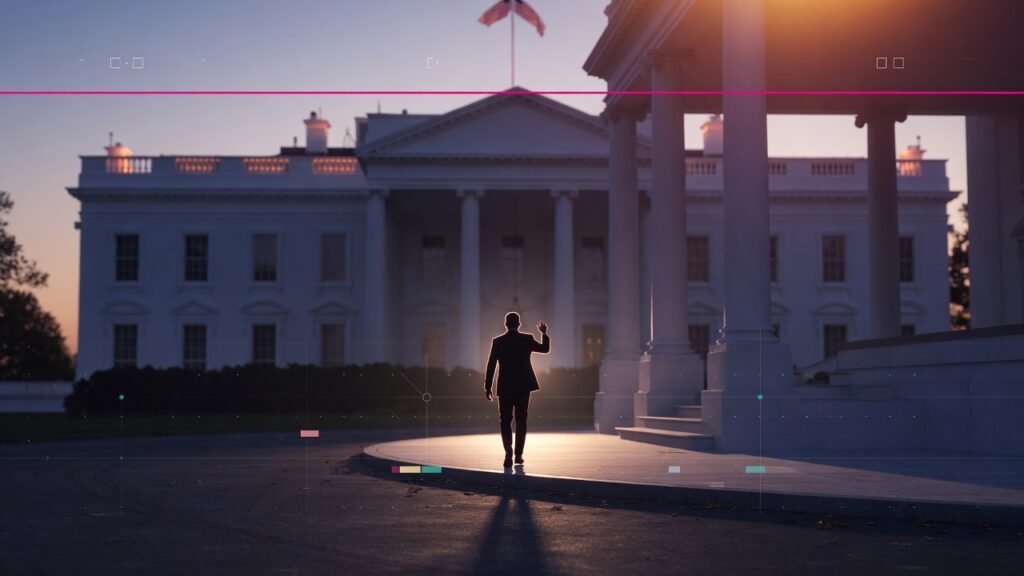
Sports mention markets are gone from the platform “until further notice.” No more putting money on whether a booth will spit “MVP,” “ankle,” or “redshirt.” The trigger was not some abstract integrity memo. It was a White House teleprompter operator, Gabriel Perez, who used advance knowledge of prepared remarks to pocket nearly $100,000 on Trump speech contracts before Kalshi froze roughly $90,000 of it, banned him, and handed the file to federal authorities. Press Secretary Karoline Leavitt called the whole episode “a disgrace.” That single scandal flipped the lights on every mention market that could be gamed by someone sitting closer to the script than the rest of us.
I do not buy the idea that this is temporary housekeeping. This is the market structure blinking first.
The NFL Already Drew the Line in March
The league sent letters months ago telling Kalshi, Polymarket, and the rest to stop offering contracts that are easy to manipulate or outright predetermined. Announcer language sat right on that list next to celebrity attendance and draft-night theater. By the time the CFTC inquiry landed, the product was already radioactive. One source familiar with the probe put it cleanly: “These mention markets are not popular across the political aisle.” Same person added the only line that matters for anyone still trading them: “They are potentially very easy to manipulate, so the CFTC is taking a hard look at whether some of them make sense.”
The volume numbers never justified the risk. DeFi Rate data showed more than $47 million traded on Kalshi NFL announcer and sports mention markets across 64 games in the 2025-26 season. Average per game climbed from under $500,000 early to $3.55 million on the conference championships. That sounds like a business until you stack it against the rest of the book. Sports already drive more than 80 percent of Kalshi’s weekly billions. Mentions peaked at 4.18 percent of total volume and had cratered to 0.17 percent by the time they got yanked. Last month the entire mention category, sports and non-sports combined, did about $3.3 million. You do not torch your regulatory standing for a rounding error that the NFL already wants dead.
I watched these markets resolve in real time. A Fox sportscaster mistook Matt Damon for Brad Pitt during a World Cup final broadcast and some source agencies settled the market as if Pitt had actually attended. Bettors who correctly said he was not there lost $287,866 collectively. That is not price discovery. That is noise with a settlement engine attached.
What Bettors Actually Lost
If your edge was “I know how often Nantz says honor,” you never had an edge. You had a novelty prop that rewarded proximity and punished everyone else. Coinbase CEO Brian Armstrong once deliberately stacked words on an earnings call and resolved contracts with roughly $80,000 in volume. The teleprompter case was the same mechanism wearing a better suit. Anyone who treated sports mentions as serious inventory was trading on the hope that the person holding the mic would not notice the price.
Kalshi still lets you bet political speeches, earnings calls, and live newscasts. That is the tell. The company is not abandoning the category. It is jettisoning the slice that collides with leagues, state attorneys general, and a regulator that already has dozens of jurisdictional fights on its desk. Polymarket keeps the product overseas where the CFTC cannot reach it. The U.S. version stays clean. That split is the real product roadmap.
For the betting public the implication is simple. The liquid, defensible action stays on game outcomes, player props that can be modeled, and market structure that does not require a source inside the booth. Everything else was theater that invited the exact probe that just hit. When a Designated Contract Market has to self-certify that a contract is not “readily susceptible to manipulation,” betting on whether a color guy says “redshirt” was always going to fail the test the first time someone with a headset made six figures.
I am not mourning the product. I am marking the moment the industry chose survival over the fun props that made regulators and leagues reach for the same hammer. If those markets return, they come back smaller, slower, and under a microscope that never leaves. Until then the board just got cleaner, and the only people who should be upset are the ones who thought insider adjacency was a strategy.