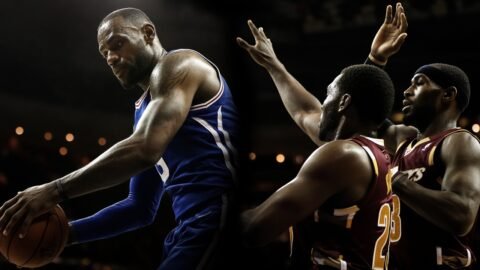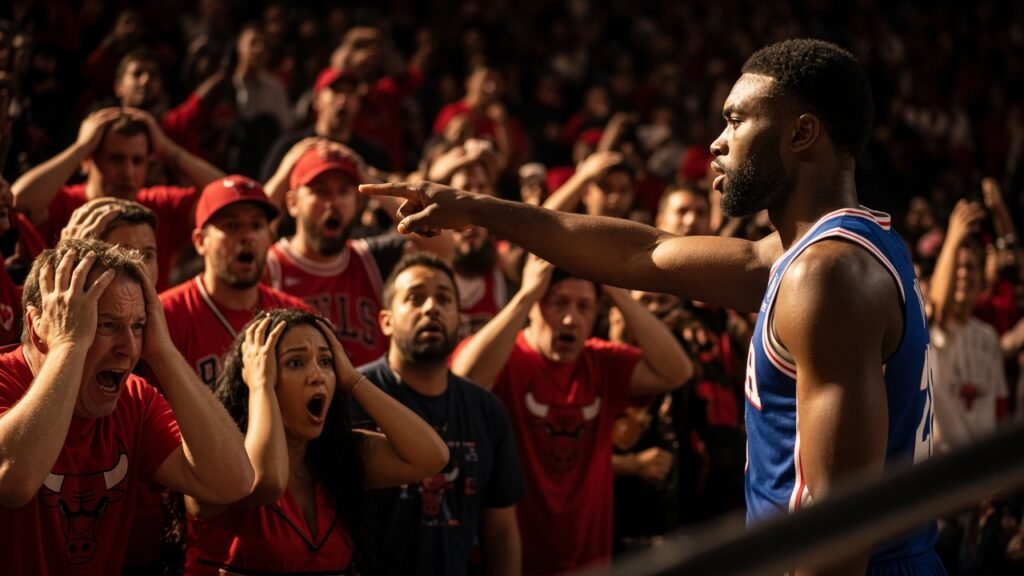
Nine seasons, five Eastern Conference Finals appearances, and the 2024 championship banner did not buy Jayson Tatum a single phone call from Jaylen Brown after July 1, 2026. When Brown dropped 29 points on 11-of-22 shooting with seven rebounds and four assists in 35 minutes to push the Philadelphia 76ers to 9-2 with a 127-121 win in Chicago on Sunday night, reporters naturally circled Tuesday’s showdown against the 7-2 Boston Celtics. Brown shut the door on any reunion talk.
“It’s nothing to talk about. I mean, he’s on his side, I’m on my side,” Brown told ESPN’s Kris Rhim on Sunday. “Just playing basketball. Both of us are trying to win, so it’s nothing to talk about. Just check the ball up.”
My read on that quote has nothing to do with locker room soap operas and everything to do with how front offices allocate usage and control. In NBA history, trading a 28.7-points-per-game scorer who finished sixth in MVP voting and won the 2024 Finals MVP directly to your fiercest conference rival is a structural gamble you only take if the internal hierarchy has already fractured. Boston chose to consolidate its timeline around Tatum and collect draft capital… acquiring Paul George alongside 2028 and 2031 first-round picks and two second-round selections in 2028 and 2030. In doing so, they handed Philadelphia the exact downhill perimeter engine required to tilt the Eastern Conference power balance.
The Usage Sacrifice Behind Philadelphia’s 9-2 Surge
Look at the offensive math behind Brown’s transition to Philadelphia. Last season in Boston, Brown averaged 28.7 points per game while carrying a massive self-creation burden. Through his first ten games with the Sixers in 2026-27, Brown is averaging 22.3 points, 6.7 rebounds, 4.0 assists, and 1.2 steals in 35.8 minutes per night.
A 6.4-point drop in raw scoring looks like regression to a casual box-score reader, yet for a general manager, that shift is the entire blueprint for a 9-2 start. With LeBron James joining the Sixers and citing Brown’s arrival as a draw, Brown no longer has to force contested mid-range pull-ups late in the shot clock to prove he deserves equal billing. Instead, he is attacking tilted defensive shells, punishing closeouts, and converting high-efficiency rim pressure into four assists a night. When he needed to take over in Chicago on Sunday, he hit 11 of 22 shots from the field and 2 of 6 from deep to close out a six-point road win.
Boston’s front office and Tatum’s camp hold the strongest counterargument here: moving off a 30-year-old wing at peak value for Paul George, two first-rounders in 2028 and 2031, and two second-rounders extends Boston’s championship window while preserving a 7-2 start and avoiding future cap gridlock. Tatum himself framed the split as a surprise rather than an internal power play, saying in an October YouTube video that he was “just as much caught off guard as the rest of the world” by the July trade.
“There’s no beef. It’s not about that. It should be more praise,” Tatum told reporters in late October. “I understand drama gets clicks and views, but I’m not really into that. I’m not blaming everybody for how they feel. Everybody is entitled to their own feelings, and we all go through different things in our lives.”
The facts from the July transaction blow a hole right through the idea that this was a routine, blindsided basketball swap. You do not trade a healthy, prime co-star who sought equal treatment in Boston unless the franchise has made a definitive choice about whose team it is. Brown called out Tatum’s claim of being caught off guard by posting a blue cap emoji on Instagram, and while his representatives called reports of a trade demand “10,000% a lie,” Brown confirmed he only asked for destination input after Boston informed him he was being moved.
Why “Lamb Chops and Gravy” Matters on the defensive Wing
Two days after Tatum’s October comments, following a Sixers win over Milwaukee, Brown stripped away the diplomatic polish. He agreed there was “no beef,” then added that there “might be a little lamb chops and some gravy,” pointed out that Tatum has a “hell of a PR team,” and delivered a warning of his own: “He should stay ready at all times.”
I care about that warning because of what happens when the ball goes up on Tuesday night in Philadelphia. For nine seasons, Boston held a schematic trump card in the East: two No. 3 overall picks who could switch across positions, absorb contact at the point of attack, and punish mismatches on the other end without requiring double-team rotations. That wing redundancy took them to five Eastern Conference Finals and two NBA Finals.
Now, Boston has to guard the bruising slasher who knows every hand-off read, drop-coverage trigger, and isolation tendency in their playbook. Replacing Brown with an older Paul George gives the Celtics elite spot-up shooting and length, yet it shifts the physical toll of primary wing creation and point-of-attack defense squarely onto Tatum’s shoulders over an 82-game grind. Meanwhile, Brown gets to channel nine years of second-billing friction into a single isolation matchup with the #1 seed in the East on the line.
“We’ll see how I feel when we get out there, but as of now, I got no emotion towards anything,” Brown said Sunday night. “So I’m just ready to go.”
When the ball is tipped on Tuesday night in Philadelphia, the Celtics will find out whether two future first-round picks in 2028 and 2031 are worth having to send early help into the paint every time Jaylen Brown puts his shoulder into Jayson Tatum’s chest.