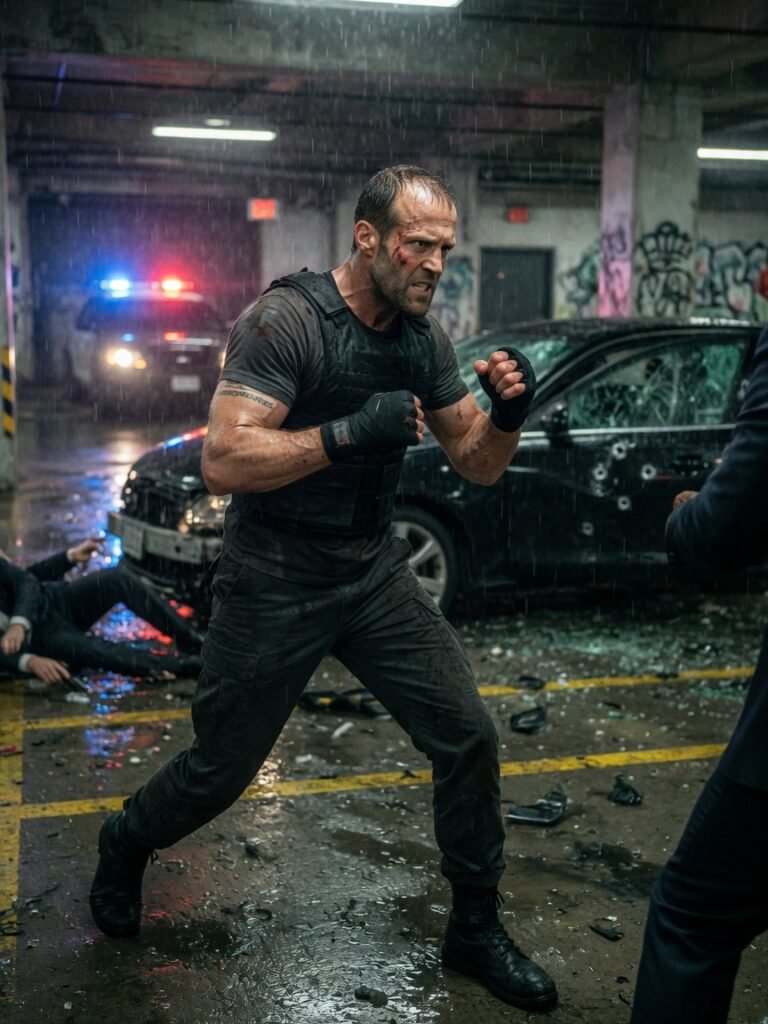
Look, when a mid-budget Statham joint like A Working Man starts punching above its weight on HBO Max in more than two dozen territories, the takeaway isn’t that audiences suddenly crave another retired operative story. It’s that the film actually respects the rules of its own genre instead of treating them like optional suggestions from a nervous test-screening focus group. The numbers don’t lie even if the marketing did: eighty-nine million against forty million at the box office, then a quiet VOD run that never screamed for attention, and now here it sits, quietly outpacing bigger titles because people keep hitting play when they want something that delivers without apology.
The John Wick comparisons are obvious on the surface and the source material makes them explicit. Both pictures open with a man who walked away from the life, both treat that man as mythic the moment the past drags him back in, and both build their momentum around the idea that competence itself is the spectacle. Where most studio action now pads the middle with irrelevant subplots or forces a love interest who exists only to humanize the lead for audiences assumed to be goldfish, A Working Man keeps the through-line tight. The second act doesn’t sag because every sequence advances the central problem: the operative has a job, the job has consequences, and the consequences demand he stay in motion. That’s not revolutionary screenwriting. That’s just refusing to insult the viewer with committee-approved detours.
You might be thinking the bar is low if a Statham picture clears it by simply showing up prepared. Fair. The man has spent years carrying films that treated him like a delivery system for set pieces rather than a character who needs to earn the violence. What separates this one is the refusal to over-explain. The script lets the audience track the stakes without spelling out every motivation in HR-approved dialogue. When the hero makes a choice, the film trusts you to understand why instead of cutting to a three-minute monologue about trauma. Compare that to the endless mystery-box plotting that sank so many recent would-be franchises. John Wick got the formula right in 2014 because it remembered that action cinema lives or dies on clarity of objective. A Working Man copies the homework without the flourishes and somehow lands cleaner because of it.
The streaming resurgence makes sense once you stop expecting theatrical dominance from every release. These films aren’t built for opening-weekend bragging rights. They’re built for the second or third watch when someone needs ninety minutes of focused aggression without the baggage of a bloated ensemble or a director who thinks every fight needs a thematic monologue. David Ayer’s involvement on the first Beekeeper proved he still knows how to stage violence that feels personal rather than choreographed for the trailer. A Working Man carries the same DNA. It doesn’t pretend the hero is saving the world. It just shows him cleaning up his own mess with maximum efficiency and minimum speeches. That restraint reads like a revelation after years of films that treat the audience like they need constant reminders of who the good guys are.
The upcoming Mutiny and The Beekeeper 2 sit in a different lane. Mutiny carries a fifty-million-dollar budget and a co-star in Annabelle Wallis who could anchor her own picture if the industry ever stopped typecasting her as the one who needs rescuing. The Beekeeper sequel loses Ayer to Brad Pitt’s Heart of the Beast, which already smells like the kind of package that prioritizes star wattage over directorial voice. Statham returning as Adam Clay is the safe play, but safe only works if the script remembers why the first one clicked. Clay isn’t John Wick in a beekeeper suit. He’s a blunt instrument who operates on a code the audience can track without footnotes. If the sequel starts adding layers the original never needed, the whole thing collapses into the same noise that killed so many other legacy sequels.
What A Working Man proves on streaming is that the audience still responds when a picture treats its premise as sufficient. No need for multiverse cameos. No need for a villain who monologues about the state of the world. Just a man who knows what he is and a story that doesn’t waste time pretending otherwise. The eerie parallels to John Wick aren’t a flaw. They’re the point. Both films understand that the mythic figure only works when the audience believes the violence has rules and the hero follows them. Break that contract and you get another expensive flop that dies on VOD before anyone notices. Honor it and the film can keep finding viewers months or years later because the structure holds up under repeat exposure.
Statham has never been the most expressive actor in the room, but he has always been the most consistent at refusing to overact the competence. That quality shines when the screenplay stops asking him to carry emotional subplots that don’t belong. The current run on HBO Max isn’t a massive shock. It’s the predictable result of a film that remembered action cinema used to be about momentum instead of messaging. Studios keep chasing the next John Wick while ignoring the simple lesson the original taught: pick a lane, stay in it, and let the audience do the rest. A Working Man did exactly that and the charts are finally catching up.
The real test arrives with the next two projects. If Mutiny leans into its ensemble and The Beekeeper 2 tries to expand the mythology, both risk the same dilution that turns promising premises into background noise. If they double down on the single-minded efficiency that made A Working Man stick, Statham could keep this lane open long after the theatrical window closes. The audience has already voted with their remotes. The question is whether the people writing the checks will notice before they greenlight another committee script that explains everything twice and delivers nothing new.