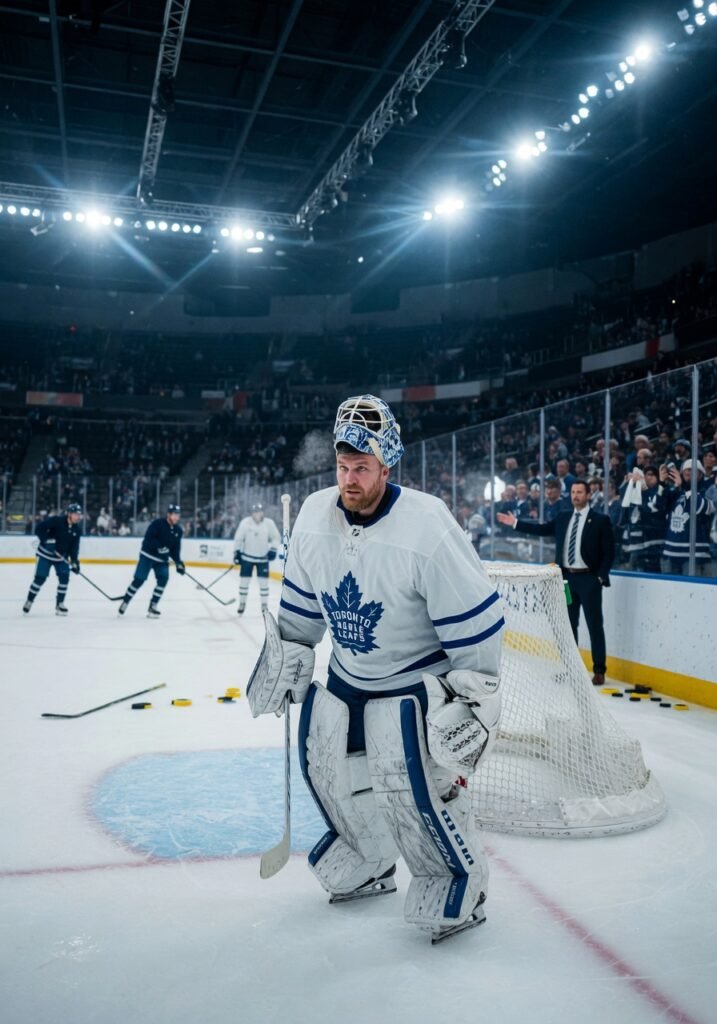
I was sitting at the kitchen table last night after the kids finally crashed, the house quiet except for the low hum of the fridge and my laptop screen still glowing with the latest box scores from the Jayhawks title run and that Aaron Judge walk-off, and I couldn’t shake the feeling that this stretch of columns has turned into another one of those redemption arcs that lingers longer than anyone expected. My last few pieces landed clean on the Jayhawks flattening West Virginia and the North Carolina baseball surge, and now here we are again, staring at the spring campaign’s final chapters while Frederik Andersen stands between the pipes in Raleigh with a chance to punch Carolina’s ticket to the Stanley Cup Final. The guy has been through the wringer—blood clots, rehab stints, three straight Eastern Conference finals appearances that ended in gut punches—and yet the Hurricanes are up 3-1 on Montreal because Andersen keeps showing up when the lights get hottest.
That even-keeled thing Rod Brind’Amour described after Game 4? It’s not an act. It’s armor forged in the fire of 2015, when Andersen backstopped the Ducks into the Western Conference finals only to watch the Blackhawks run him out of the net in the final three games. I remember watching those highlights again last week and feeling my own chest tighten, the way a bad goal in overtime can make the whole room go silent. Andersen posted an .813 save percentage and 4.69 goals-against average down the stretch of that series. The numbers don’t lie, but the lesson did: sometimes the best players learn what they’re missing only after the door slams shut.
Fast-forward to Toronto, then Carolina, and the same pattern kept repeating. Last year’s sweep by Florida left Andersen at .921 and 1.87 in the conference finals, respectable on paper, zero wins in three tries. The year before that against the same Panthers, the numbers cratered to .838 and 3.63 with just one victory. Each time the Hurricanes came up short, the narrative around Andersen turned clinical—age, injury history, whether the organization needed to move on. I’ve written before about how front offices treat goalies like interchangeable parts until one of them refuses to break. Andersen refused. He fought through the clotting issues that sidelined him in 2023-24, watched Antti Raanta and others take starts, then clawed his way back into the crease without a single public complaint. That quiet part of his personality K’Andre Miller nailed in the primary source? It’s the same quality that lets him absorb a bad game and walk out of the media room looking exactly the same as after a shutout.
Brind’Amour said it straight: “I saw him walking out of [the media room]; he didn’t look too excited. That might be you guys, though. No, he’s very even-keeled, and for that position that’s really important, I think, and certainly the way he plays is to be that way. You wouldn’t know [from his demeanor] if he had a good game or bad game.” I’ve watched enough goalies unravel after one soft goal to know how rare that trait actually is. Most of them wear every mistake on their face for the next forty-eight hours. Andersen processes it internally, then flips the switch when the puck drops again. That’s why Carolina’s 4-0 win in Game 4 felt different—not just the third shutout of these playoffs, but the fifth of his career and a new franchise record. The .859 save percentage and 2.12 goals-against average through four games against Montreal aren’t elite, yet the team is still one win from the Final. The numbers tell one story; the wins tell the one that matters.
I keep coming back to Andersen’s own words because they land heavier than any stat line. “I’m just thankful for the opportunity, really,” he said. “I’ve been through a lot. So I can be grateful for just still being around and being able to play for this long. It’s been really cool. We all dream about these times a year, and it’s really special.” That’s not media-speak. That’s a 35-year-old who’s stared at the ceiling after elimination games and still chose to lace them up again. The health scares alone would have ended plenty of careers. Missing time, forced downtime, the uncertainty of whether the body would cooperate for one more October-to-June run—those details get glossed over until you realize how many goalies never make it back from something like a blood clot. Andersen did, and now he’s the reason the Hurricanes are the more composed team in this series even when the save percentage dips.
Miller’s description of the two versions of Andersen—the vocal leader on the ice who turns into the quiet life-of-the-party guy off it—adds another layer. The duplicity isn’t a contradiction; it’s survival. The vocal part shows up in big moments because he’s lived through enough failures to know exactly when a teammate needs a reminder. The reserved part in the room is the same mechanism that lets him stay even-keeled after a rough outing. I’ve seen that split personality in other athletes who’ve been counted out, the ones who learn to compartmentalize so the next failure doesn’t steal the joy from the current win. Andersen is living proof that the lesson sticks only when you refuse to let it define you.
The no-assurances part of his season heading into training camp matters more than the box scores. Carolina had options in net. They’d already cycled through veterans and prospects while Andersen recovered. Yet he earned the net again through performance and presence, not entitlement. That’s the kind of quiet competition that never makes highlight reels but decides who’s standing when the conference finals roll around. I’ve argued in past columns that redemption arcs in sports feel manufactured until you watch one play out in real time. Andersen’s isn’t manufactured. It’s the product of every overtime loss, every health setback, every time the front office considered moving on. The current 3-1 lead over Montreal is the latest chapter, not the end.
What happens if they close it out Friday night in Raleigh? Andersen gets the start, the even-keeled demeanor stays intact, and the Hurricanes finally break through to face Vegas. The stomach-punch history suggests nothing is guaranteed—Florida taught them that twice—but the difference this time is the man in net who’s already absorbed the worst punches and kept coming. I’m not ready to hand out Conn Smythe votes, but the way Andersen has stabilized the position after the early-series wobbles tells me he’s the difference-maker the Hurricanes needed. The tough lessons didn’t just make him tougher; they made him the guy who can absorb a .859 night and still deliver a shutout two games later.
That’s the part that keeps me writing these columns even when the hour gets late and the coffee goes cold. The arc isn’t finished, but Andersen has already flipped the switch that matters most.