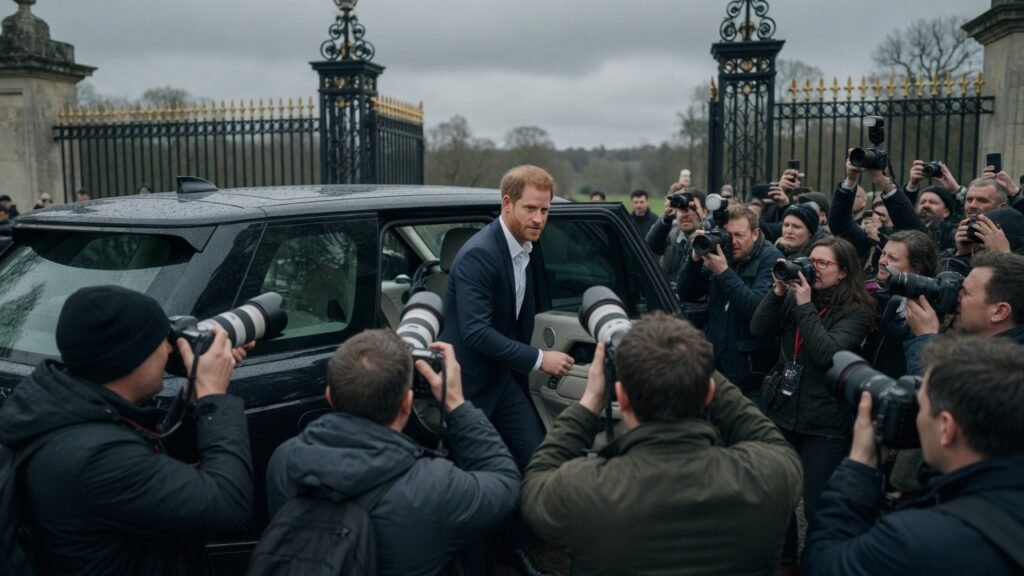
Prince Harry just timed his exit from African Parks like a prestige drama cutting a problematic arc before the season premiere. Ten years on the books. Six as president. Board seat since 2023. And now, with the family packing California for an extended UK stay and the kids lined up for British school in early September, the charity drops a “governance refresh” that conveniently concludes his tenure effective September 30.
Massive shock. The man whose brand has been half conservation documentary, half Netflix confessional leaves the wildlife board right as the homecoming optics demand a cleaner set.
A spokesperson for the Duke delivered the expected polish: “The Duke is proud of his 10 years with African Parks and fully supports the ongoing strengthening of its board. His commitment to conservation in Africa continues, and he remains a supporter of African Parks’ mission.” African Parks itself piled on the gratitude. Chairperson Vas Narasimhan thanked him “for a decade of committed service” while welcoming Justice Isaac Lenaola and Alice Ruhweza to deepen the board’s expertise. Everyone remains “deeply committed.” Everyone remains a “strong supporter.” The language is so frictionless it could have been generated by the same committee that writes royal Christmas cards.
Look, I get it. Conservation is hard. African Parks manages 24 protected areas across 13 countries covering more than 20 million hectares and employs more than 2,000 rangers. That scale attracts real money and real enemies. Harry first linked up in 2016 around the 500 Elephants translocation in Malawi, rode the visibility, and became the glossy face of a mission that photographs beautifully from a helicopter. The problem is what the photographs leave out.
The Report Stayed Locked. The Exit Did Not.
In mid-2023 the organization learned of human rights abuse allegations against its eco-guards in Odzala-Kokoua National Park in the Republic of Congo. The Mail on Sunday put the claims in print in January 2024: beatings, waterboarding, rape, all allegedly used to keep the Indigenous Baka from ancestral forest. African Parks hired Omnia Strategy LLP. The investigators spent 16 months, made four trips, interviewed roughly 180 people, and looked at the record from 2010 onward. On May 8, 2025, the charity finally said the quiet part: “African Parks acknowledges that, in some incidents, human rights abuses have occurred, and we deeply regret the pain and suffering that these have caused to the victims.” It added that Omnia had highlighted “several failures of our systems and processes that were insufficient for the level of responsibility given to us, particularly in the early years.” Then it refused to release the full report.
Survival International had already been calling for Harry to walk. He stayed. The board seat held. The public statements kept the mission language intact while the actual findings stayed behind the curtain. That is not how you run a clean third act. That is how you protect the brand until the calendar forces a rewrite.
Now you might be thinking this is just one park and one investigation. Fair. But the surrounding picture is messier. In October 2025 Chad terminated its roughly 15-year partnership with African Parks over the Ennedi and Greater Zakouma areas, citing failures that included poaching control. Harry had already exited Sentebale, the charity he co-founded, in March 2025 after a boardroom civil war. Pattern recognition is not conspiracy. It is basic story structure. When the same protagonist keeps leaving the stage right as the lighting turns harsh, the audience stops buying the noble-exit monologue.
Celebrity Conservation Runs on Soft Focus
Hollywood loves this exact genre. The royal or the movie star plants a tree, hugs a ranger, narrates the urgent need for biodiversity, and the credits roll before anyone asks who got waterboarded so the elephants could stay photogenic. Die Hard works because the hero actually pays for every floor of the building. The Godfather works because the family business exacts a visible price. Modern celebrity philanthropy prefers the version where the hero remains untouched and the press release does the emotional labor.
Harry’s African Parks run was pure soft-focus product. Global attention, philanthropy promotion, the image of a modern prince who chose purpose over palace. The Omnia process and the Baka allegations are the unplanned second-act complication the writers never wanted. So the organization issues regret without the report, improves “safeguarding processes,” and then, fifteen months later, refreshes the board just as the Duke’s family relocates. Charity Governance Code guidance often caps trustees around nine years. Ten years is a nice round number for a graceful bow. Stunning and brave.
The kids are seven and five. The family is crossing an ocean. The UK press is already sharpening knives for the return. Leaving the board before the plane lands is the cleanest possible cut. No messy questions at the school gates about Congo. No need to defend a report nobody has read. Just the residual glow of “remains a strong supporter” while the actual trusteeship ends.
I walked into this story expecting the usual royal-adjacent spin cycle. I walked out annoyed that the conservation industrial complex still thinks audiences cannot hold two ideas at once: that protecting wildlife matters, and that the methods used to protect it can destroy the people who lived there first. African Parks said there is “no place for any form of abuse in the name of conservation.” Correct. Then it kept the full findings private and let its highest-profile board member time his departure to a family move. The systems still look excellent in the annual report. The Baka still have to live with whatever Omnia found.
The Duke is 41. He has another few decades of causes ahead of him. The next one will arrive with the same helicopter shots and the same mission language. The question is whether anyone covering it will demand the unedited investigation before the board seat is offered. History says no. The graves, metaphorical and otherwise, keep arriving anyway. This exit just proves the rewrite room is still open and the notes still prioritize the lead’s likability over the plot.