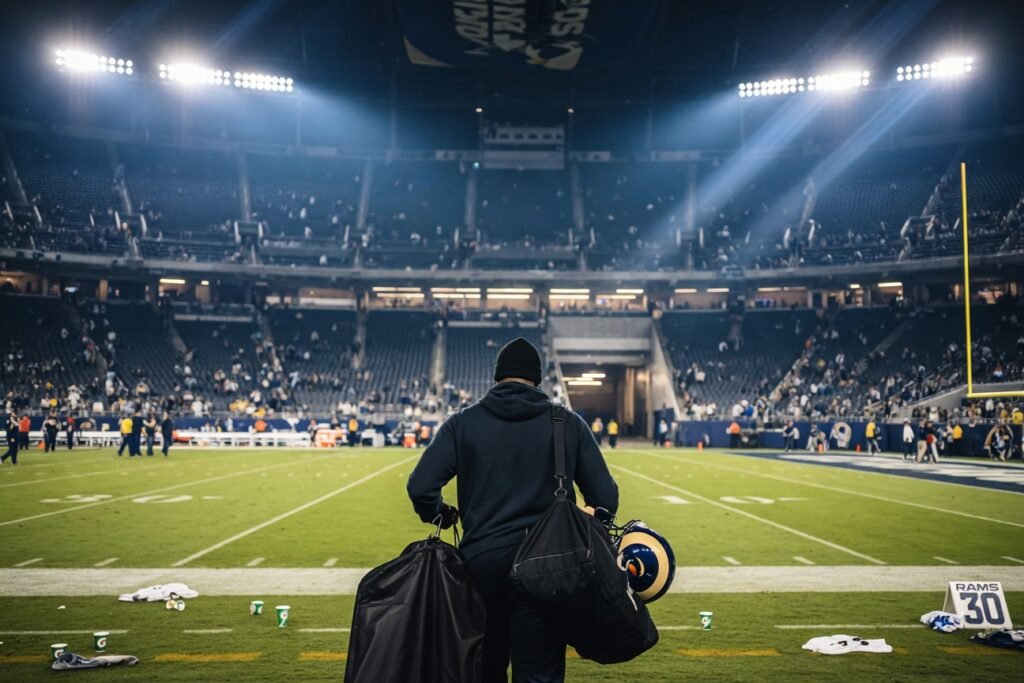
I saw the Myles Garrett trade details land Monday morning and the first thing that struck me was how inevitable this felt once you lined up the Browns’ actual decisions against Garrett’s own words over the past eighteen months. Cleveland just cashed in a two-time Defensive Player of the Year for Jared Verse, a 2027 first, a 2028 second and a 2029 third. That package tells you everything about where Andrew Berry’s front office landed after another losing season.
Garrett posted the highest single-season sack total since sacks became official in 1982. He posted the third-highest pass-rush win rate among edge defenders since 2017. The Rams’ defense already ranked eighth in that same metric before the deal. Adding Garrett pushes their ceiling into the range where the betting markets immediately shifted them from +800 to +600 for the Super Bowl. The numbers do not lie about the immediate on-field upgrade.
What changed from last February’s extension? Garrett had already requested a trade once. The Browns responded with the record four-year, $160 million deal and a public smoothing-over. Then they passed on Jim Schwartz, the coordinator Garrett had publicly supported, and hired Todd Monken instead. Garrett’s social media reaction after the Schwartz falling-out was not subtle. The March contract tweak that moved option bonus dates later in the calendar looked like contingency planning even if Berry called him a “career Brown” at the time. The team finished with its seventh losing record in Garrett’s nine seasons. At some point the commitment Garrett demanded from the franchise simply was not returned in results or in roster-building choices.
I ran the historical comps on this exact situation. Only two prior Defensive Player of the Year winners have suited up for a new team the following season. Garrett becomes the third. That rarity underscores how rarely a player of his caliber reaches free agency or forces a deal while still in his prime. The Browns chose the draft capital route instead of trying to build around him one more time. Berry now has a young blue-chip edge in Verse and extra first-round ammunition for 2027. The math favors that outcome over retaining a future Hall of Famer on a roster that has not posted a winning record in most of his tenure.
The Rams side of the ledger starts with the Ty Simpson selection at 13 overall. Drafting the Alabama quarterback gave Los Angeles the flexibility to move its 2027 first-rounder on a non-quarterback. That asset became the centerpiece of the Garrett package. Los Angeles already possessed a top-ten pass-rush win rate unit. Pairing Garrett’s 25.8 percent career mark with their existing front creates a schematic mismatch problem for opponents that few teams have solved in recent playoffs. The defensive line rotation now includes two of the highest-impact edges in football on the same side of the ball.
Scheme fit matters here more than raw production. Garrett has thrived in multiple fronts, but the Rams’ multiple-front approach under their current staff emphasizes simulated pressure and simulated coverage rotations that should maximize his get-off. Verse, by contrast, projects as a high-floor starter who can step into the Browns’ new scheme without the same learning curve. Cleveland gets younger at the position and resets its draft timeline. That is the cleanest way to describe what Berry accomplished.
I keep coming back to the salary-cap angle because it explains why the deal closed now rather than at the deadline. Garrett’s contract carries an option bonus window that was deliberately shifted. Moving him before that window opened freed Cleveland from a massive dead-cap hit while still extracting significant future value. The Rams absorbed the remaining guarantees knowing their window with Matthew Stafford or a post-Simpson bridge aligns with Garrett’s remaining prime years. Both sides executed the cap mechanics cleanly.
The broader Browns timeline now looks even more compressed. They have traded away the player who represented their clearest path to contention. The 2027 first-round pick they acquired gives them another high-selection chance at a quarterback or premium defensive piece, yet the track record since 2017 shows repeated failure to convert those assets into sustained winning. Garrett’s exit removes the last internal voice that publicly tied organizational success to his own future.
For the Rams the addition tilts the NFC West odds to +100 and the conference odds to +300. Those numbers reflect the pass-rush win-rate spike more than any single-game projection. In a league where playoff margins often come down to third-down stop rates and third-and-long sack frequency, Garrett’s presence moves the needle on both. Los Angeles already possessed the draft flexibility; they simply chose to accelerate the contention window by one year.
The subtext that lingers is how little leverage a franchise player actually holds once results stall. Garrett delivered the production. He delivered the public statements about winning. The organization responded with coaching hires and roster decisions that did not match the stated standard. The trade is the logical endpoint of that mismatch.
This deal also resets expectations for how other contenders will value aging but elite pass rushers. The market for a player with Garrett’s résumé now includes multiple first-round picks and a young starter. That precedent will shape negotiations for the next wave of edge defenders entering their final contract years. Cleveland took the assets. Los Angeles took the immediate impact. The numbers on both sides of the ledger are now fixed.