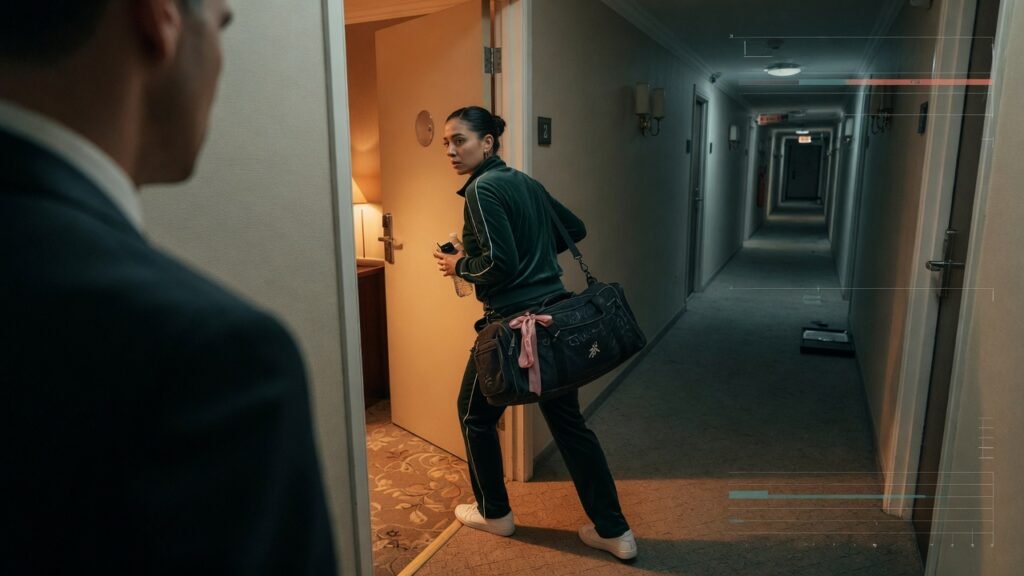
The hotel room pitch lasted long enough for one teammate to walk out, call his agent, and light up the ICC Anti-Corruption Unit inside an hour. That is the entire value chain of a failed fix, and it just cost USA off-spinner Bodugum Akhilesh Reddy eight years of his career.
I do not care about the morality play. I care about the market signal. T10 cricket is a bookmaker’s playground: 90 minutes, extreme variance, thin information, and enough overseas names on the sheet to pull global handle. When a 26-year-old with four USA caps and one international wicket tries to recruit a teammate to “give runs” in Abu Dhabi, the bettor’s problem is not one bad actor. It is the architecture that made the approach feel rational.
Reddy played two matches for Aspin Stallions in the 2025 Abu Dhabi T10 before the provisional suspension hit on 21 November. The approach itself landed on 19 November. According to the tribunal’s accepted evidence, he told Player A that selection would come with an expectation to underperform with the ball. Player A refused, left, and reported it. Reddy then wiped the WhatsApp thread and an attempted call log. The ICC Anti-Corruption Tribunal (Michael J Beloff KC chairing) found him guilty on three counts: attempting to fix or influence matches, encouraging another participant to do the same, and obstructing the investigation through deletion of data. Sanctions stacked to eight years, backdated to the provisional date. No fine. No proven financial benefit. No prior record.
That last detail is the one that should make every sharp pause.
The Fix Did Not Need a Syndicate. It Needed One Soft Spot.
Look at the career numbers that sat underneath the approach. Four T20Is for the United States in April 2025, all in the North America cup. Ninety-six balls, 85 runs, one wicket at 85.00, economy 5.31. He was not a protected star. He was a fringe spinner in a short-format league stacked with names like Harbhajan Singh and Sam Billings, trying to manufacture an edge by recruiting someone else to bleed runs. The tribunal rejected his counter-story (USA training camp logistics ahead of the 2026 T20 World Cup) as implausible. Player A’s account held across the initial report, interview, statement, and testimony.
This is how modern spot-fixing and underperformance schemes actually travel: not always through a thick bookie network with coded signals, but through a hotel-room conversation that assumes the other guy wants the same outcome. The ICC’s own language is clinical. Article 2.1.1 for the attempt to influence the result or progress of matches. Article 2.1.4 for soliciting or encouraging another participant. Article 2.4.7 for the deletion. Seven years concurrent on the first two, one more consecutive for the obstruction. Eight total.
I have watched enough associate and franchise cricket to know the betting volume does not wait for Test-match pedigree. T10 and similar competitions generate exactly the conditions bettors love and integrity units fear: limited overs, rapid price movement, players on short contracts who may never see another payday that size. When the approach fails this cleanly, the public ban is the deterrent. When it succeeds, the ticket you cashed is toxic and you will never know.
Eight Years Is the Price of a Deleted Chat
Credit the system for the speed. Player A reported within roughly sixty minutes. The provisional suspension landed two days after the conversation. Liability finding in June 2026, sanctions at the end of July, public announcement in early August. The ICC statement put it flat: “USA player Bodugum Akhilesh Reddy has been banned from all cricket for eight years after an ICC Anti-Corruption Tribunal found him guilty of breaching three counts of the ICC Anti-Corruption Code.”
For the betting side, the useful takeaway is narrower. Franchise leagues in non-traditional markets will keep attracting handle because the product is fast and the names are still marketable. The integrity tax is already priced into the vig on those boards whether the books admit it or not. A player with almost no international stock and a vanishing WhatsApp history just demonstrated the entry cost is still low enough for someone to try. The failed recruitment is the lucky break. The next one may not walk out of the room.
Reddy is done until late 2033. The USA program loses a fringe spinner it barely used. The real residue sits with anyone still firing five-figure limits into T10 and similar competitions without treating every bowling spell as a potential soft spot. I am not burning the entire format. I am marking the clip. When a 26-year-old with a 85 average and two T10 appearances decides the path to edge is asking a teammate to give runs, the market is telling you something about information asymmetry and contract security. Price it accordingly, or stop pretending the only risk is variance.