I was sitting at the kitchen table again after the kids finally crashed, the fridge humming its low, steady note in the dark like it always does when the swings miss. Last week’s takes on the D1Baseball assistant coach carousel and Koa Peat locking into the draft felt like watching a slow roller that never quite reached the bag. I called the Sorsby situation right when the NCAA brief dropped, but the rest of the ledger sat red. That bruise is still there. So tonight I went deeper into the tape on K.J. Green’s pledge to LSU and what it actually signals about Lane Kiffin’s first full cycle in Baton Rouge.
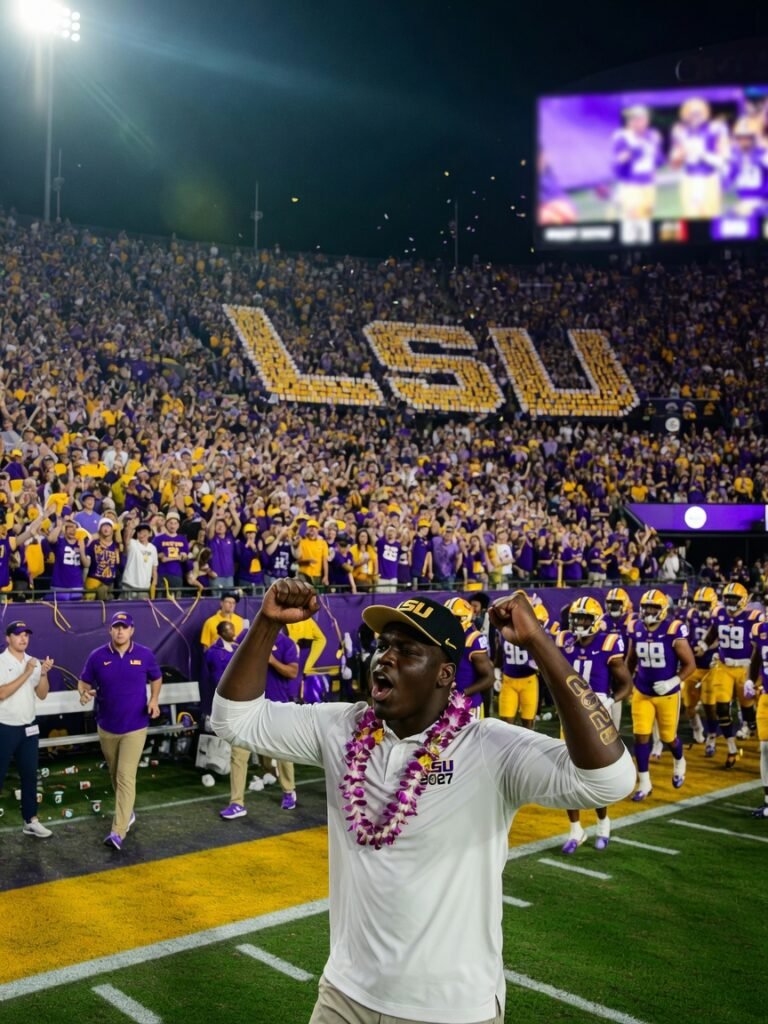
This one landed different. Green, the 6-foot-4, 215-pound edge rusher from Stephenson High in Stone Mountain, Georgia, chose the Tigers over Georgia, Oregon, and South Carolina after an official visit. He is ESPN’s sixth-ranked defensive end in the 2027 cycle and the No. 5 overall prospect in his home state. The numbers he put up as a junior—129 tackles and 18 sacks—tell you he is already a backfield problem, the kind who collapses pockets before quarterbacks finish their drop. Losing Jaiden Bryant to Miami four days earlier stung, no question. Bryant had been the first 2027 verbal to Kiffin after the hire last November, a top-40 national talent who flipped away. But Green arrived right behind him as the second-ranked piece in LSU’s growing 2027 group, and the timing matters more than the raw ranking.
I keep coming back to what this class already looks like. Ahmad Hudson, the No. 1 tight end in the country, is in. So are Braylon Calais and Ah’Mari Stevens, both top-300 receivers. Green slots in as the highest-ranked defensive lineman so far. That mix—tight end, two wideouts, an edge who can rush and set the edge—gives Kiffin the kind of foundation he never quite finished building at Ole Miss. The man has always recruited at a high level, but the retention and the development pieces lagged. At LSU the resources are different, the brand is different, and the early returns on this 2027 cycle suggest he is using both.
What stood out on the visit weekend was the presence of flip targets. Kelsey Adams, committed to Georgia, and Greedy James, committed to Texas, were both hosted. That is not passive recruiting. Kiffin is actively circling the wagons around the kids already in the class and daring other programs to match the attention. Green had taken official visits to Georgia and Oregon last month, so he had seen the competition up close. Choosing LSU anyway tells me the on-campus experience and the immediate plan for his development won out. At 215 pounds he still has room to add mass without losing the twitch that produced those 18 sacks. The physical profile is already there; the coaching staff just has to keep him on the field and scheme around the athletic traits.
I am not pretending one commitment erases the Bryant departure. Flips happen in both directions in this cycle. What I am saying is the speed of the response matters. Four days later, another top-50 defensive end is in the fold. That is not coincidence. It is staff work and relationship equity Kiffin brought with him. The rest of the 2027 board still includes Easton Royal, the top wide receiver in the country currently committed to Texas, plus Caden Moss and Xavier Sabb, both five-stars. LSU is not just collecting bodies; they are chasing the top of the rankings in multiple positions. If even two of those three land, the class jumps into the national top five before most programs finish their 2026 cycle.
The physical feeling when Bryant flipped was familiar. Chest tight, replaying every detail of the visit, wondering what the staff could have done differently. Then Green’s announcement hit and the ledger started to balance again. That is the rhythm of recruiting under a coach who has already shown he can close. Kiffin’s teams at Ole Miss played fast and physical on defense when the talent was there. Now the talent pipeline is widening at a Power conference school with better facilities and a larger NIL footprint. The edge rushers he develops tend to become rotational pieces early and starters by year two. Green has the traits to follow that path.
I watched the junior film again after the commitment. The first step is violent. He wins with his hands at the point of attack and then explodes into the backfield. The 18 sacks came against high school offensive lines that could not mirror his get-off. At the college level the competition will be better, but the traits travel. Pair him with the pieces already in the class and you start to see the outline of a front seven that can pressure without constant blitzing. That is how Kiffin’s defenses at Ole Miss created negative plays even when the secondary was still finding its identity.
The larger point is momentum. Kiffin took over late in the previous cycle and still landed Hudson and the two receivers this spring. Green is the first defensive lineman to join that group. If the staff keeps hosting the flip candidates and the on-campus visits keep converting, the 2027 class could be the one that defines the early Kiffin era at LSU. I have been wrong on slow rollers before. This one feels different because the response to the Bryant flip was immediate and targeted. Green did not just commit; he chose LSU after seeing the full menu. That is the kind of validation that does not show up in rankings but shows up in the next visit weekend when another blue-chip kid sees the class growing and decides the Tigers are the destination.
The bruise from last week is still there, but the tape on Green and the early shape of this class gave me something to build on. Kiffin is not waiting for the 2026 cycle to finish before he starts stacking talent. He is already doing it. And if the rest of the board follows the pattern Green set, the ledger might finally move out of the red before the summer dead period even arrives.