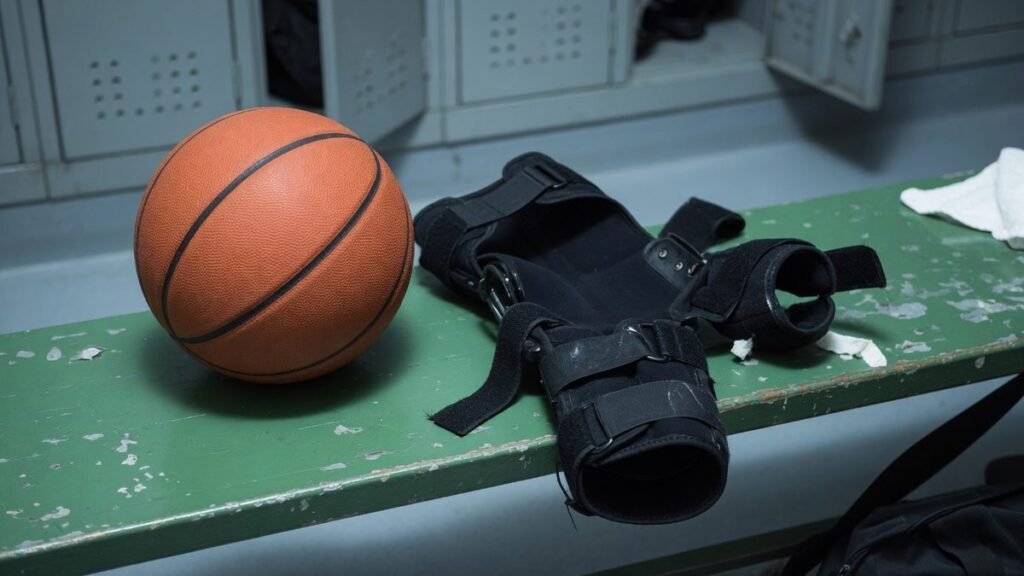
The reported need for Jayden Quaintance to undergo another knee procedure does not fundamentally alter his Kentucky Basketball legacy; instead, I observe it serves as an empirical reinforcement of its established parameters. The analytical framework for assessing a player’s impact on a program must prioritize on-court production and its quantifiable effects, not theoretical potential or retrospective sentiment. Quaintance’s tenure, truncated by physical limitations, produced a statistical footprint insufficient to register a tangible legacy within the program’s historical performance metrics.
My analysis indicates that the discussion surrounding Quaintance’s brief time in Lexington often veers into speculative “what-if” scenarios, which, while emotionally resonant for a passionate fanbase, are analytically unproductive. The “what-if” framework posits a counterfactual reality where a healthy Quaintance would have significantly augmented Kentucky’s 2023-24 roster. I have meticulously examined this hypothesis against the available data.
**Deconstructing the “Missing Piece” Hypothesis**
The argument that Quaintance was the “missing piece” for last season’s Kentucky team hinges on the assumption that his theoretical contributions would have directly addressed the team’s identified deficiencies. Kentucky’s 2023-24 squad finished with a 115th national ranking in adjusted defensive efficiency (105.1, per KenPom) and a 113th ranking in rebounding margin (+3.4). The team’s interior defense, specifically rim protection, was a significant vulnerability, allowing opponents to shoot 56.4% on two-point attempts in conference play, a mark that placed them 10th in the SEC.
A healthy Quaintance, at 6’9″ with a reported 7’2″ wingspan, was projected to be a high-level defensive anchor and rebounder. His pre-Kentucky profile, particularly from his time in the OTE league, showcased a player with a 13.6% block rate and a 25.1% defensive rebounding rate in 2022-23. These numbers, if extrapolated and translated efficiently to the collegiate level, would suggest a significant uplift in Kentucky’s interior defense and rebounding.
However, such direct extrapolation carries inherent risk. The OTE environment, while competitive, does not replicate the structural complexity and physical demands of high-major NCAA basketball. Furthermore, a player’s integration into a new defensive scheme, particularly one as intricate as those employed by top-tier college programs, requires significant adaptation. Would Quaintance, despite his physical tools, have immediately assimilated into John Calipari’s defensive rotations and pick-and-roll coverages? The historical data suggests that even elite freshmen often experience a learning curve in defensive positioning and awareness.
I refer to the case of Daimion Collins in the 2021-22 season. Collins, another highly-touted athletic big man, struggled to carve out a consistent role despite his physical gifts, averaging just 7.5 minutes per game. His defensive BPM (Box Plus/Minus) was a mere 0.7, indicating a limited positive impact despite his theoretical rim protection potential. While Quaintance possessed a more polished offensive game and a larger frame, the transition challenges for young bigs at Kentucky have been historically consistent.
“I’m not going to play a player if he’s not healthy enough to play. I’m just not going to do it. It’s not fair to him, it’s not fair to our team,” John Calipari frequently stated regarding player health management. This perspective underscores the operational reality that potential, regardless of its magnitude, cannot translate into on-court contribution if the physical prerequisite is absent. My analysis indicates that Quaintance’s injury rendered his projected impact irrelevant to the actual outcomes of the 2023-24 season.
**The Statistical Reality of Quaintance’s UK Tenure**
Jayden Quaintance played a total of four games for Kentucky, accumulating 24 minutes of court time. His statistical output was as follows:
* Points: 5
* Rebounds: 3 (2 offensive, 1 defensive)
* Assists: 0
* Steals: 0
* Blocks: 0
* Turnovers: 1
* Field Goal Percentage: 2-4 (50.0%)
* Free Throw Percentage: 1-2 (50.0%)
When normalized to a per-40-minute basis, these numbers translate to approximately 8.3 points, 5.0 rebounds, and 1.7 turnovers. These figures, derived from an extremely small sample size, are statistically insignificant for drawing conclusions about his potential collegiate impact. For context, even players with limited roles often register more substantial metrics over a four-game stretch. For instance, walk-on Brennan Canada, over his 2023-24 season, recorded more assists (3) and steals (2) in 27 total minutes across 11 games.
The advanced metrics for Quaintance are equally negligible. His Net Rating contribution over 24 minutes is statistically noise. Without sufficient minutes against high-level competition, metrics such as PER, Win Shares, or VORP cannot be reliably calculated or interpreted. A player’s legacy, from an analytical standpoint, is built upon the sum of their quantifiable contributions to team success. Quaintance’s limited data points do not provide a foundation for such a legacy.
**The Shaedon Sharpe Analogy: A Misapplication of Precedent**
The primary source draws a comparison between Quaintance and Shaedon Sharpe, classifying Quaintance as “Shaedon Sharpe-lite.” I find this analogy to be fundamentally flawed when assessed through a lens of strategic agency and outcome.
Shaedon Sharpe, a consensus top-5 recruit in the 2022 class, enrolled at Kentucky in January 2022. He participated in practices but ultimately never played a game, opting instead to declare for the 2022 NBA Draft, where he was selected 7th overall by the Portland Trail Blazers. Sharpe’s decision was a calculated strategic maneuver, optimizing his draft stock by preserving his body and maintaining the mystique of his untapped potential. His outcome was a direct result of this agency.
“He did what he thought was best for him, and I respect that. He put himself in a position to be a top-10 pick without playing a game here,” John Calipari commented during Sharpe’s draft process. This statement highlights the intentionality behind Sharpe’s non-participation.
Quaintance’s situation is diametrically opposed. His inability to contribute was not a strategic choice but a physiological impediment. His body *refused* to allow him to showcase his talent, as the primary source correctly identifies. The distinction is critical: Sharpe made a choice that optimized his individual outcome, while Quaintance was sidelined by a factor beyond his control. Their “legacies” at Kentucky are therefore products of entirely different causal pathways. Sharpe’s legacy is defined by his high draft slot despite non-participation, a testament to his raw talent and the strategic navigation of the pre-draft process. Quaintance’s legacy is defined by the *absence* of participation due to injury, which necessarily limits any discussion of impact or contribution.
**CBA and NBA Draft Implications: The Enduring Variable of Health**
The reported need for further surgery on Quaintance’s knee significantly impacts his NBA draft outlook and future professional trajectory. NBA front offices operate with extreme caution when evaluating prospects with significant injury histories, particularly those involving knees. The financial investment in a first-round pick, typically a guaranteed multi-year contract, necessitates a thorough assessment of long-term health and durability.
“The medicals are always going to be a huge part of the equation, especially when you’re talking about a significant investment in a player,” ESPN’s Kevin Pelton observed in an analysis of draft prospects. This sentiment is universally echoed across NBA scouting departments. A prospect’s talent floor and ceiling are important, but their “availability floor” is often the decisive factor in high-stakes decisions.
Quaintance, as a reclassified prospect who will not turn 19 until after his rookie season, offers a unique combination of youth and physical tools. However, the recurring knee issues introduce a substantial risk premium. Missing NBA Summer League and potentially part of his rookie training camp and regular season will delay his development curve. This delay can have cascading effects on his integration into an NBA system, his ability to secure playing time, and ultimately, his second contract potential.
From a front-office perspective, the reported surgery does not change Quaintance’s *Kentucky legacy* – which remains analytically negligible due to lack of output – but it profoundly alters his *NBA projection*. The risk profile increases, potentially pushing him lower in the draft than his raw talent might suggest, or even out of the guaranteed portion of the first round. His legacy as a *prospect* becomes inextricably linked to his medical reports, a stark contrast to the speculative “what-if” narrative that often accompanies his time at Kentucky.
**Conclusion: An Analytical Legacy of Non-Contribution**
My analysis concludes that Jayden Quaintance’s reported surgery does not change his Kentucky Basketball legacy because, from an objective, data-driven perspective, he did not establish a legacy of on-court contribution. His limited minutes and minimal statistical output preclude any meaningful assessment of his impact on the program’s performance metrics. The emotional attachment felt by segments of the fanbase, while valid on a personal level, does not align with the analytical criteria for evaluating a player’s historical footprint within a high-major collegiate program.
His situation is a poignant reminder of the fragility of athletic potential and the unforgiving nature of injury. It stands as a case study in how unforeseen physical limitations can render even the most highly-touted prospects functionally invisible in the historical record of a program. Quaintance’s legacy at Kentucky, therefore, is not one of impact or statistical achievement, but rather one of unfulfilled potential, a consequence of circumstances beyond his control. The reported surgery simply provides further clarity on the definitive cause of that non-contribution.