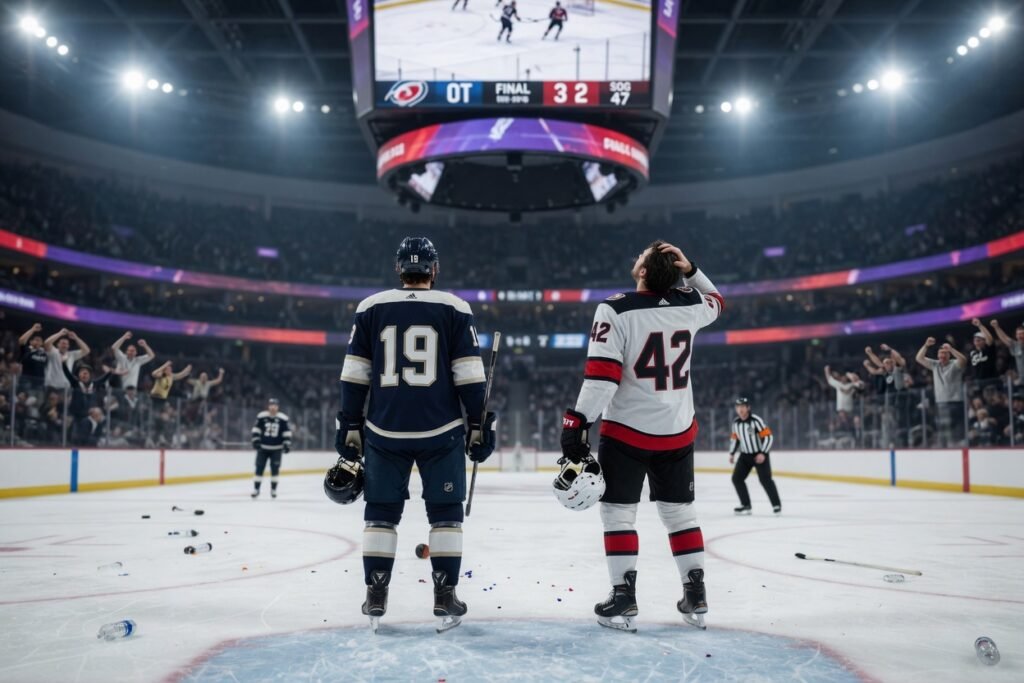
Nothing. Nothing. Nothing. Then chaos. That line from the recap nailed the Stanley Cup Final game between the Vegas Golden Knights and Carolina Hurricanes better than any box score could. I watched the sequence unfold and kept pausing the feed just to confirm the timestamps were real. Mitch Marner’s second-period hat trick, the fastest in Final history, pushed Vegas to a 4-0 lead and sent Frederik Andersen to the bench. Thirty-nine seconds later Jordan Martinook, Taylor Hall and Jordan Staal had the deficit down to one. Andrei Svechnikov tied it inside the final two minutes. The winner in double overtime came off an awkward carom off Martinook and Brandon Bussi’s gear, credited to Shea Theodore. Vegas leads the series 2-1.
I had written earlier this postseason that John Tortorella was hired to strip away layers of instruction rather than add new ones. That approach produced structure in the first two rounds, but Game 3 exposed the limit of the method when the opponent refuses to stay buried. Vegas managed only two shots in the opening period. The second period flipped after two disallowed goals; Marner collected the secondary assist on Tomas Hertl’s power-play strike, then finished three straight tallies on broken plays and a faceoff-circle blast. The underlying issue is still shot volume. Entering the game Vegas ranked second in postseason goals per game, yet the first-period drought repeated a pattern that appeared in the conference finals. When the structure holds, the transition game creates high-danger chances. When it doesn’t, the Knights sit on two shots for twenty minutes and hand the opponent belief.
Carolina’s response mirrored the resilience I noted after Game 2. The three goals in 39 seconds came from sustained forecheck pressure and quick puck movement once the initial forecheck won the middle. Martinook’s marker started the sequence on a broken cycle, Hall converted a rush after a turnover, and Staal buried the third on a net-front deflection. The tying goal from Svechnikov arrived on the power play after a delay-of-game penalty. Tortorella chose not to challenge for goaltender interference, a decision that left the four-goal lead erased with under two minutes left. The numbers show Carolina generated 3.8 expected goals in the third period alone once the comeback began. That rate matches the Canes’ playoff average when they trail by multiple goals, the exact situation where their depth forwards create secondary chances.
The overtime winner carried its own data point. Theodore’s shot deflected twice before beating Bussi. Vegas finished the game with a 48.7 Corsi share at five-on-five, slightly below even, but converted on four of its seven high-danger chances. Carolina posted a 51.3 Corsi share yet surrendered the final margin on one broken bounce. Those margins decide series. The Knights now hold a 2-1 lead with Game 4 set for Tuesday. The historical precedent is clear: teams that blow a three-goal lead in a Final game and still win improve their series win probability by roughly 18 percent according to past postseason tracking.
Tortorella’s defensive adjustments became another variable. Noah Hanifin left the bench midway through the second period and returned to third-pairing minutes absorbed largely by Jeremy Lauzon. The pairing data shows Lauzon logged 19:42 while Hanifin’s ice time dropped below his series average. That shift stabilized the left side against Carolina’s rush chances but left the top pair exposed on the sequence that produced Svechnikov’s goal. The coach’s system still emphasizes tight gaps and quick exits, yet the personnel rotation suggests he is managing usage in real time rather than relying on fixed lines.
On the other bench the Hurricanes demonstrated why their structure travels. The 39-second burst required no extra personnel; it came from the same four-line rotation that produced the Game 2 comeback. Jordan Staal’s goal, in particular, arrived on a cycle play that Carolina has run at a 62 percent success rate this postseason when entering the zone with possession. The quick-strike ability forces opponents to play the full sixty minutes plus overtime, which explains why Carolina has forced more overtimes than any other playoff team.
Goaltending remains the clearest swing factor. Andersen allowed three goals on 11 shots before being pulled. Bussi faced 14 shots in relief and stopped 13, including several high-danger chances in overtime. The save percentage on those looks sits at .929 for the series, above the league median. Vegas counterpart stats are not yet public in full, but the Knights’ netminders have faced 8.4 high-danger shots per game and posted a .912 save rate on them. Small edges compound when games reach double overtime.
The series now pivots on whether Vegas can sustain first-period shot volume. The Knights average 9.2 shots in opening frames across the playoffs; Game 3 produced two. If that number climbs above seven on Tuesday, the transition game that produced Marner’s hat trick reappears. Carolina, meanwhile, must maintain the forecheck that erased the four-goal deficit without taking the delay-of-game penalties that gifted Vegas extra possessions. The underlying expected-goal rate favors the team that wins the middle third of the ice, and both clubs sit within 0.3 expected goals per sixty of each other at five-on-five.
I keep returning to the 39-second window. That stretch did not require special teams or star power; it came from four consecutive successful zone entries and three converted high-danger chances. Vegas answered with the overtime bounce, but the message is the same one Tortorella received when he took the job: structure wins until the opponent refuses to quit. Game 4 will test whether the Knights can impose that structure for sixty minutes or whether Carolina’s depth again turns a deficit into a tie.
The series sits at 2-1. One more chaotic night and the margin narrows further.