The moment Brian Burns learned he had become the Giants’ longest-tenured defensive starter caught him completely off guard, and it caught my attention for the same reason. A reporter at the Gridiron Gala tossed out the fact after Dexter Lawrence’s trade, and Burns’ reaction told the story: raised brows, quick glance upward, then the quick “Wow, I am!” as the reality landed. Only entering his third season in New York, he now carries that designation on a defense that has cycled through plenty of names. That kind of rapid ascent to de facto leader usually takes longer, yet the numbers on the roster made it fact.
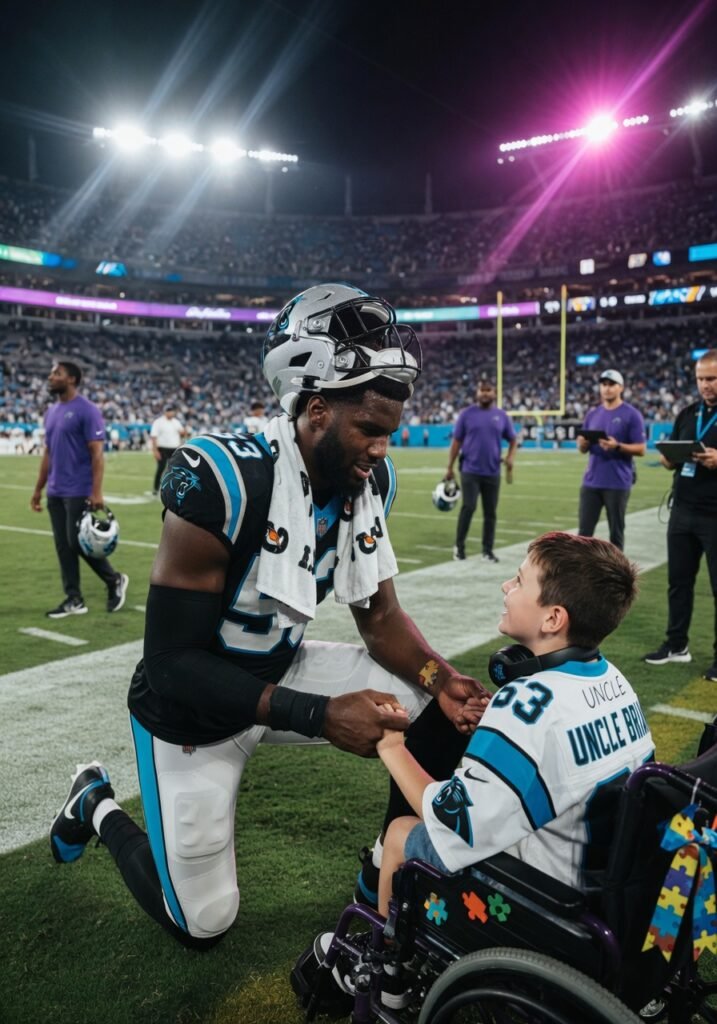
This shift puts Burns in a position where his off-field work carries extra weight inside the building. The same week he fielded those questions, the event honored his efforts through Brian Burns Family Charities and the Hype 4 Life Foundation. The foundation focuses on autism awareness, driven directly by his nephew Champ. At eight years old, Champ is nonverbal and was diagnosed at age two. Burns’ older brother Stanley McClover, a former NFL player himself, described the initial denial and the gradual education the whole family went through. That timeline overlaps with Burns’ own early NFL years after the Panthers took him 16th overall in 2019.
What stands out is how Burns has folded that family reality into his daily purpose. McClover put it plainly when he said the support feels like one of the most special things one man can do for another and his child. The relationship between Burns and Champ shows up in small but consistent ways. McClover noted that Champ senses calm or stress in the people around him, and time with his uncle brings visible calm. That detail matters because it points to the kind of steady presence Burns brings both at home and, increasingly, on the Giants’ defense.
The foundation has turned those personal lessons into public action. Nature and animals became teaching tools once the family saw Champ’s strong response to them. A trip to the Georgia Aquarium highlighted that interest, and equine therapy produced a breakthrough when Champ spoke his first word after sessions with horses. McClover bought a horse shortly afterward to keep the progress going. Those steps now sit inside Hype 4 Life’s work, giving other families a model for practical approaches rather than abstract awareness.
Burns is extending that reach with a celebrity softball game scheduled for May 30. Current Giants players and franchise legends are expected to take part, which creates two clear outcomes. First, it pulls teammates together outside the facility at a time when the defense is resetting after the Lawrence trade. Second, it draws the community in for a cause tied to one of the team’s most visible leaders. Burns framed the events as opportunities to build camaraderie while shining a light on autism, and the roster participation suggests the message is landing inside the locker room.
I keep returning to how this off-field focus aligns with the on-field role Burns now holds. As the longest-tenured starter on defense, he sets the tone for younger players navigating their own adjustments. The foundation work gives him a ready example of long-term commitment under uncertain conditions. McClover’s comments about unconditional support reinforce that Burns treats the charity as an extension of family responsibility rather than a side project. That consistency shows up when the family keeps Champ around Burns specifically because the calm effect is measurable.
Autism awareness in the NFL often stays at the level of generic campaigns, yet Burns’ approach stays concrete. The equine therapy detail, the aquarium visit, and the decision to buy a horse all trace back to Champ’s specific responses. Those choices turn awareness into repeatable steps other families can test. McClover’s pride in his brother’s decision to stand in the forefront reflects the practical difference it makes for families still processing a new diagnosis.
The Giants’ defensive reset adds another layer. With Lawrence gone, the rotation and communication responsibilities shift onto the remaining core. Burns entering that spot while simultaneously hosting team-involved charity events creates a direct link between leadership on the field and leadership in the community. The softball game on May 30 will test how well that link holds when the full roster participates. If the event draws the expected crowd, it also gives the organization a visible win in fan engagement at a point in the offseason when attention can drift.
McClover’s own background as a former player adds weight to his endorsement. He played 14 games across Carolina and Houston, so he understands the demands of an NFL schedule. When he says he supports Burns wholeheartedly, it carries the perspective of someone who has lived both the league side and the family side. That dual view makes the foundation’s growth feel less like standard player philanthropy and more like a sustained family project with professional reach.
Burns described the work as part of his purpose because it centers on family. That framing avoids the usual distance between a player’s public platform and private life. The special relationship with Champ supplies the through-line: from diagnosis at age two, through the family’s learning curve, to measurable progress via equine therapy. Each step stays grounded in what actually works for Champ rather than broad slogans. The result is a foundation that can point to specific tools and outcomes instead of stopping at awareness.
As the longest-tenured defensive starter, Burns now models how a player can carry both roles without one diluting the other. The interview reaction at the gala captured the surprise of the roster math, but the surrounding events show the preparation that comes with it. The May 30 softball game will give the first public test of how teammates respond when the cause is this personal. If the pattern holds, the calm Champ feels around Burns may translate into the steady presence the defense needs during its own transition.