Billy Beane told Michael Lewis the quiet part in 2002: “My s— doesn’t work in the playoffs.” The Athletics never did reach a World Series under that regime, and every contender in 2026 is carrying a version of the same confession into October. Short series punish variance. They punish thin rosters. They especially punish teams that spent six months proving one thing and then have to prove something harder against better arms.
The Brewers are the cleanest example of the problem.
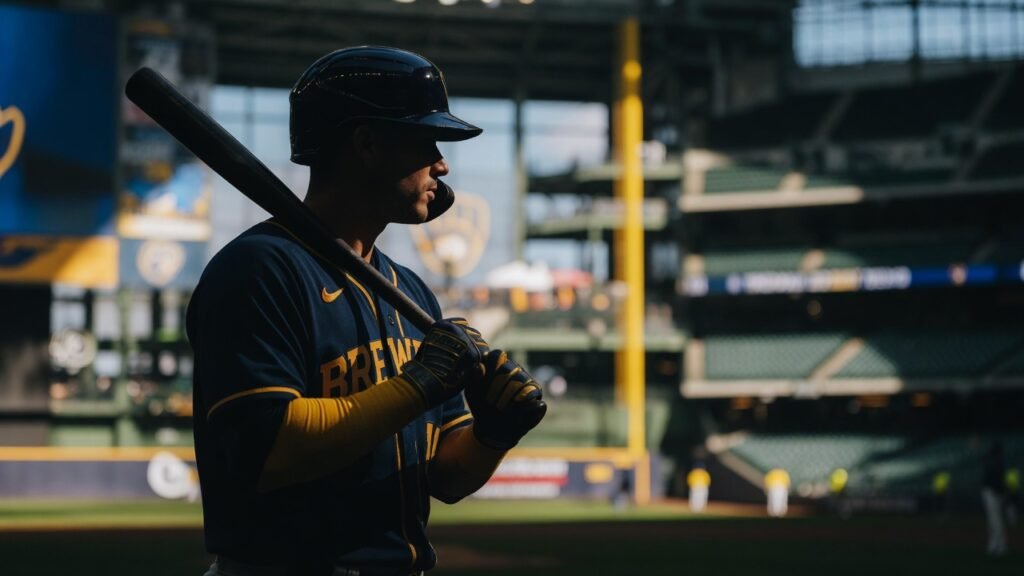
Milwaukee has locked down a fourth straight NL Central title and an eighth playoff berth in nine seasons. This is the best club in franchise history, a 100-win machine if the math holds, built around Jacob Misiorowski and a lineup that somehow scores more runs than almost anyone without hitting the ball over the fence. They sit tied for 28th in the majors in home runs. Only 32.6 percent of their runs have come via the long ball. League average is 40.6 percent. That gap is not a quirk. It is the identity.
Small Ball Gets Nerfed When the Lights Get Hot
I know what the analytics crowd is about to type. Contact quality. Sequencing. The Brewers put the ball in play and force mistakes. Cool story. Over the past ten postseasons, leaving out the 60-game weirdness of 2020, the share of runs scored on home runs climbs every October relative to the regular season. Better pitching shortens the game. Rallies get rarer. The three-run bomb becomes the only reliable currency.
The playoff team with the fewest regular-season homers has gone 17-29 in that span and has never touched a World Series. The club with the most? Thirty-one and forty-one, one pennant, and that was the 2024 Yankees getting cooked by a Dodgers team that finished third in the category. Power is not a guarantee. Lack of power is a real tax.
Milwaukee’s early-season numbers were a warning label: .242/.328/.359 with 0.71 homers per game through May. Since June they have punched up to .269/.349/.430 and 1.10 per game. Jackson Chourio missed April. Jake Bauers has produced. Joey Ortiz has been a different hitter after the break. The current group is deeper. They have been held to one run or zero only twelve times all year, six fewer than anybody else. That resilience is real.
It still does not erase the structural hole. Perfectly executed small ball can steal a night. Sustained rallies against October pitching without power mixed in are a different animal. If Misiorowski and Logan Henderson and the bullpen are dealing, the Brewers only need to out-homer whoever is across the diamond. That is a thin margin for a team that spent the first two months looking allergic to the long ball.
The Dodgers Forgot How to Score When It Mattered
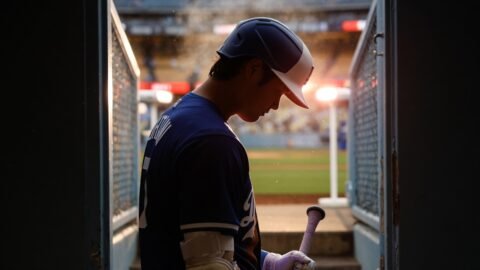
Los Angeles is used to rolling into October as a top-two offense. First in runs in 2020. Fourth in 2021. First in 2022. Second in 2023, 2024, and 2025. They still sit fourth overall in 2026, which sounds fine until you look at the calendar. Since July 1 they are tied for 16th in runs. That is the fatal flaw dressed up as a midsummer lull.
Injuries did the dirty work. Shohei Ohtani’s knee. Freddie Freeman’s knee. Andy Pages dealing with his own issues. The production that carried them for half a decade got soft at the exact moment the league started measuring them for a banner. Traditional media will call it “resting the stars” and move on. I call it a second-half profile that looks a lot more ordinary than the brand demands.
The romance Beane’s character sold in “Moneyball” still holds: “How can you not be romantic about baseball?” Two of these flawed clubs will reach the World Series anyway. That is the chaos tax and the beauty tax in the same package. Short series do not care about your regular-season resume. They care about whether your specific weakness shows up in Game 3 with the bullpen already taxed.
Milwaukee’s power drought is the purest version of the problem because it is baked into how they score. The Dodgers’ version is more seasonal, more injury-driven, and still plenty dangerous if the lineup never reboots. Every other contender has its own version of Beane’s confession. Bullpen leverage that evaporates after the seventh. A rotation that has not thrown a clean inning since August. A middle of the order that struggles against left-handed pitching. Pick your poison.
October does not invent these holes. It just refuses to paper over them. The Brewers can still win a series if Misiorowski is untouchable and the lineup keeps the June-through-September version of itself. The Dodgers can still win a series if Ohtani and Freeman look like themselves for two weeks. Someone with a real flaw is going to hoist the trophy. That does not mean the flaws are imaginary.
The team that treats its weakness like a personality trait instead of a deadline is the one that goes home early. Milwaukee’s 32.6 percent long-ball rate is the number that keeps me honest. Everything else is vibes until the first pitch in October.