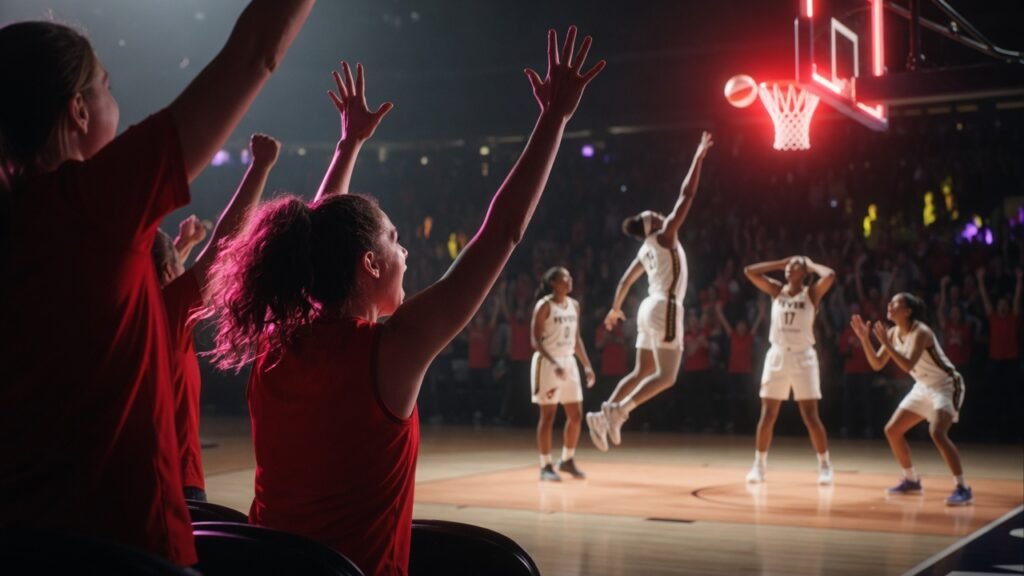
Chelsea Gray caught the ball in overtime, rose without a flinch, and dropped a buzzer-beating three that turned the building into a crime scene. I felt my chest actually tighten on the release. Not because of some internet morality play about flopping. Because a champion closed, and the loudest star in the league had already handed her the knife.
Caitlin Clark did not lose that game on a soft whistle. She lost it the way every soap-opera lead loses the finale: with her own hands. Missed free throws late. A turnover when the moment demanded ice. Then Chelsea Gray, who has been living in these rooms for years, dropped the kind of shot that freezes a bar mid-sentence. The Aces walked out. The Fever walked into the blame circus.
And somehow the conversation became foul baiting.
The Flop Discourse Is a Cheap Alibi
I watched the pile-on start before Gray’s shot even hit the net. Clips of Clark selling contact. Slow-mo of the head snap. Think pieces forming in real time like they had been pre-written and waiting for the right corpse. “Sold the game.” “Punked.” The language got mean fast, and half of it had nothing to do with the actual sequence that decided the night.
Look, I have eyes. Stars hunt contact. Jordan did it. Harden built a religion around it. Every elite guard who ever drew a late whistle has a resume full of exaggerated falls. If you want to grade Clark’s body language on a 1-to-10 theatrical scale, fine. Do it on a Tuesday in June when nothing is on the line. Do not use it to launder what actually happened in overtime against the Aces.
Gray did not win because Clark flopped. Gray won because she is a closer and Clark, in that specific pocket of the game, was not. That distinction matters. One is a style complaint. The other is a competitive funeral.
Clark took the loss like someone who understands the difference. She blamed herself for the missed free throws and the late turnover. No press-conference fog machine. No “the refs” tour. Just ownership of the mistakes that actually put the Aces in position to end it. I respect that more than I respect the timeline’s sudden conversion into the flopping police.
Gray Did Not Ask Permission
This is the part that keeps replaying in my head. Chelsea Gray has two titles and the scar tissue to match. She does not need a narrative permission slip to take over a game. She caught, rose, and ended it. The second you start treating that shot like a footnote to Clark’s reputation management, you have lost the plot of women’s basketball entirely.
I have seen this movie. It is the Goodfellas kitchen scene. Somebody thinks they are the main character because the room got louder when they walked in. Then the real earner walks through the door and the volume changes. Gray is the earner. She has been. The Aces did not invent clutch in 2024; they just keep employing people who refuse to miss when the clock hits zeroes.
Clark is still learning the cost of those zeroes. That is not a smear. That is the job description for every twenty-something superstar who drags a franchise into national television relevance overnight. The scrutiny is nuclear. The mistakes get clipped harder. The wins get credited to the league’s marketing department. She is living inside a pressure cooker that most veterans never touch, and last night the lid blew when she missed from the line and coughed it up late.
The foul-baiting discourse is easier than admitting that. It lets people feel sophisticated without having to sit with the simpler, uglier truth: execution failed, and a pro finished the job.
The Ledger Does Not Care About Your Clip
I keep a running mental ledger on these nights. Who closed. Who folded. Who owned it. Who hid behind the noise. Gray gets the checkmark in permanent ink. Clark gets the honest entry: costly free throws, late turnover, full accountability afterward. The fans slamming the “sell” get a different note. They watched a championship guard end a playoff-atmosphere game and decided the story was a head snap earlier in the night.
That is how you miss the sport while claiming to protect it.
Going forward, the Fever do not need Clark to become a saint at the point of contact. They need her to become boring from the free-throw line when the game is hanging and clean with the ball when the shot clock and the scoreboard are both screaming. Gray already is. That is why her release looked inevitable and Clark’s night looked like a stomach punch you see coming and still cannot dodge.
I stared at the ceiling after that buzzer. Not because Caitlin Clark sold a foul. Because Chelsea Gray reminded everybody, again, what closing actually looks like when the lights get mean. The rest is noise. The shot was the funeral.