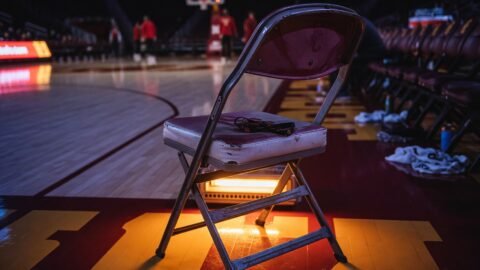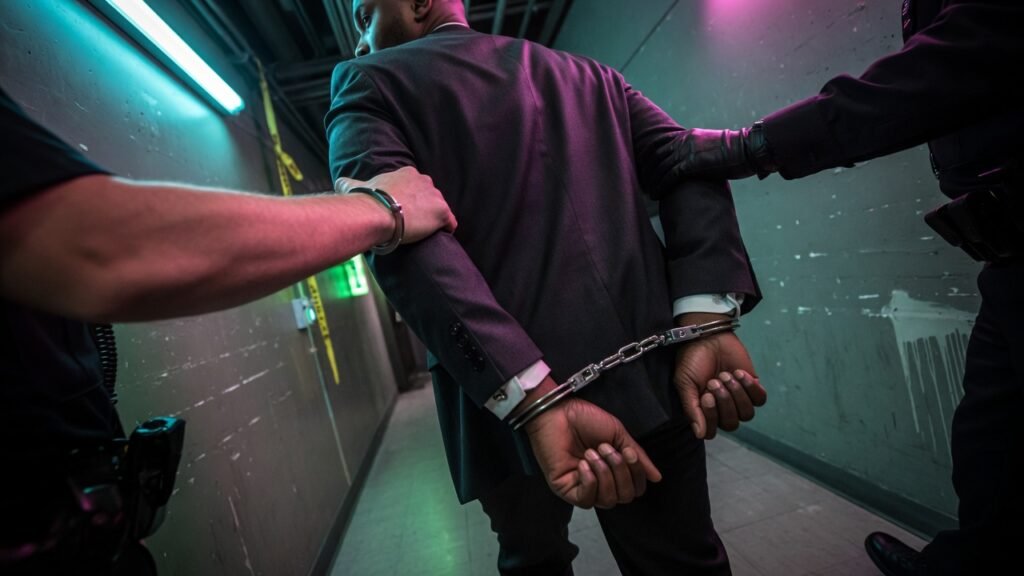
Benjy Taylor is 58 years old, 35 years into a coaching life, and on January 31, 2026 he walked off a SIAC court in handcuffs for trying to keep a handshake line clean. Morehouse had just beaten Tuskegee 77-69 at Forbes Arena. The final buzzer should have been the end of the story. Instead, per Taylor and the federal complaint he later filed, Morehouse football players poured into the court area, mixed into the postgame line, and kept yelling obscenities while the visiting team tried to exit.
Taylor said he approached campus security, specifically the officer later named in the suit as R. Clark, and asked that the football players be cleared so conference security protocols could hold. A short verbal exchange followed. Officers then cuffed him, with assistance from another officer identified as M. Roberson, and walked him off the floor into a hallway and a weight room while players from both sides stood there taking it in. He was not charged. The cuffs came off. He rode the bus home with his team. The humiliation did not.
I keep coming back to what he said afterward, because it strips the spin off the whole night: “I am at a loss for words and I am upset about how I was violated and treated today. For my players, my family and people of Tuskegee to witness that is heartbreaking for me. I was simply trying to get the football team out of the handshake line as they were following right behind me and the team yelling obscenities! It was a very dangerous situation.”
That is a head coach describing a safety breach, not a meltdown over a late whistle. Early social media versions tried to sell it as a coach arguing officials. The documented version is uglier and simpler. Taylor was advocating for the line, for his kids, and for SIAC Policy 1.9 on crowd control and the safe exit of visiting teams. Somebody decided the fastest way to settle that request was steel on his wrists in front of a gym full of student-athletes.
The Conference Already Called the Security Failure
Two days later the SIAC finished its review of video, reports, and observations and fined Morehouse an undisclosed amount for failing required security standards. Commissioner Anthony Holloman put the conference on the record about sportsmanship, safety, and accountability. That fine matters. It means the league looked at the same night everyone else did and decided the host school’s postgame operation did not meet the bar.
Morehouse President Dr. F. DuBois Bowman later wrote the campus community that the college apologized directly to Taylor that night and that the detainment did not reflect what Morehouse wanted. He also said he was present, that he saw students congratulating their team in ways that fit competitive HBCU norms, and that he believed public accounts sometimes mischaracterized the students and the institution. Then he questioned the SIAC process for determining responsibility and issuing a fine without first requesting Morehouse’s input, and said the school was engaging the conference to reconsider.
I hear the institutional pride in that letter. I also hear a school trying to reopen a finding the conference already closed. You can apologize to a coach the same night and still lose the policy argument two days later. Both things happened here. Tuskegee’s side was clearer: President Dr. Mark A. Brown met with the team, backed Taylor, and pointed to sportsmanlike conduct from the Golden Tigers. Taylor’s players did not create the breach. They had to watch their coach get cuffed for pointing it out.
Former SIAC coach Marcus Reed captured the gut reaction a lot of people in that league felt: “It’s troubling to see a coach treated like a criminal for arguing a call. We’ve all seen heated moments after games. The response here feels excessive.” Even if Reed’s early framing leaned on the wrong trigger, the excess part lands. Handcuffing a visiting head coach on the floor is not standard de-escalation. It is a choice that travels on video forever.
The Lawsuit Is the Receipt the Gym Already Wrote
On March 20, 2026, Taylor filed a federal civil suit in the Northern District of Georgia against Morehouse College and officers R. Clark and M. Roberson, seeking more than $1 million for emotional, physical, reputational, and financial harm. The complaint alleges he was needlessly handcuffed and publicly humiliated while trying to enforce protocols and de-escalate after football players taunted and entered the handshake line, and that one officer sided with or stood by those players. He has not been charged with any crime. The case is unresolved. The number is not theater. It is what a 35-year coaching résumé and a public cuffing look like when you put them on a docket.
Taylor later earned 2025-26 SIAC Men’s Basketball Coach of the Year honors and pushed Tuskegee to a 20-win season. That timeline should embarrass everyone who treated him like a disruption instead of a coach doing the job. A Coach of the Year candidate gets walked through a tunnel in cuffs for protecting a handshake line, and the host school gets a conference fine for the security failure that started it. Those two outcomes can sit next to each other without canceling each other out.
I am done pretending this is a one-off bad night in a loud gym. HBCU administrators have been raising alarms for years about inconsistent security when Black coaches and players push back. Confrontations after games happen everywhere in college basketball. Leading a 58-year-old head coach away in handcuffs in full view of the student section does not. The SIAC already said Morehouse failed Policy 1.9. Taylor’s lawsuit says the personal cost went further than a fine can cover. Forbes Arena put both on the record the second those cuffs clicked shut.
The handshake line is supposed to be the truce. On January 31 it became the crime scene, and the only person who left it in restraints was the coach who tried to keep it clean.