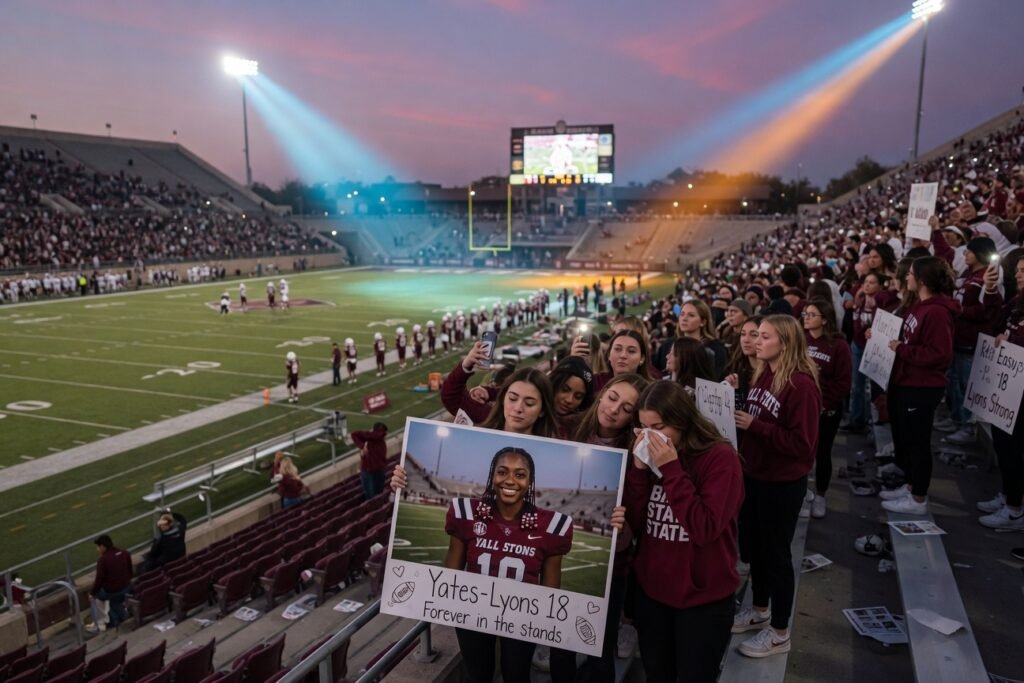
I sat with the news about Gavin Yates-Lyons for a full day before I could even open the laptop. An 18-year-old defensive back, just finished with high school early so he could get on campus in January, back in Georgia for his graduation ceremony, then caught in crossfire in a Tallahassee parking garage three days later. Ball State confirmed it Sunday. He never got to play a snap.
The school posted what they always post in these moments. “We extend sincere condolences to his family, friends, coaches, teammates and all who held him close. May you find comfort and strength during this challenging moment.” I read it twice and still felt nothing but the same cold anger that hits every time one of these stories lands. Another kid who did everything the system asked—enrolled early, showed up, chased the dream—gone because he happened to be near the wrong spot at the wrong time.
I keep coming back to how young 18 actually is when the pads come off. Yates-Lyons finished his coursework at Lowndes County High School ahead of schedule, signed with Ball State, and was already in Muncie when most seniors were still worrying about prom. That kind of jump takes discipline. It also puts an 18-year-old back on the road for ceremonies that feel like closure. He attended graduation the day before the shooting. One day of celebration, then a random parking garage in Florida ends it. The dad in me keeps picturing the timeline and getting angrier.
College football loves to sell the narrative that these programs build men and create opportunities. Fine. But the same sport rarely talks about what happens when the lights go off and the kids scatter for holidays or family events. Yates-Lyons was not some big-name transfer chasing NIL. He was a freshman defensive back from Georgia who had barely unpacked at a Group of Five school. The risk profile for these players is supposed to be two-a-days and spring ball, not stray bullets three states away. I am done pretending the dangers stop at the practice field.
Ball State is a program that rarely makes national noise. They grind in the MAC, recruit the kind of kids who actually want to play, and try to build something steady. Losing a freshman this way does not just thin the depth chart. It rips through a locker room that was counting on the new guy to grow into a contributor. Teammates who were supposed to be showing him the ropes are now left writing messages that will never get read. Coaches who sell families on safety and structure have to answer questions no one prepared them for. The entire operation just got punched in the mouth by something that had nothing to do with X’s and O’s.
I watched similar stories play out across the sport for years and kept telling myself the odds were still long. Random violence is random. But the pattern keeps showing up around college towns and travel weekends. Kids who left home at 17 or 18 to chase football are still teenagers when they are not in meetings. They still make normal kid decisions about where to go and who to see. One of those decisions put Yates-Lyons in Tallahassee the last weekend of May. The crossfire did the rest. Three victims total. Only one name attached to a college roster so far.
The early enrollment trend makes these moments sting harder. Programs push January starts because it gives them an extra semester of development and compliance math. Families agree because the kid wants to get started. Then the calendar flips and suddenly that same kid is traveling for a high school graduation that feels like unfinished business. Yates-Lyons checked every box the coaches wanted. He checked the final box his family wanted. The system did not protect him from what came next.
I am not interested in the usual hand-wringing about gun violence from people who will move on by Tuesday. This column is not about legislation. It is about the specific cost to a program that was trying to do right by a teenager who showed up ready. Ball State did not sign a five-star. They signed a kid who finished high school early and wanted to be part of something. That kid is gone. The condolences are already written. The season will still start in August. The machine does not pause.
What I keep circling back to is how little any of the off-field infrastructure actually reaches these moments. NIL collectives, transfer portals, conference realignment—none of it touches an 18-year-old defensive back who just wanted to walk across a stage in Georgia and then get back to work. The sport keeps expanding the revenue streams and the media deals while the most basic promise, that the kids who buy in will at least get a chance to grow up, keeps getting broken by things no strength coach can fix.
Yates-Lyons never saw the field. He never got the redshirt year or the first spring practice highlight or the moment his name got called in the locker room. He got the early enrollment, the graduation, and then the hospital. That is the full arc the sport gave him. I cannot square that with the way programs talk about “family” and “brotherhood” when the cameras are on.
The MAC is full of programs built on kids exactly like this one. They do not have the resources to fly security details or private transport for every family event. They recruit on relationships and opportunity. When the relationship ends in a parking garage three states away, the opportunity evaporates with it. Ball State will recruit another freshman class. The roster will turn over. The pain inside that building will not.
I have covered enough of these stories to know the next few days will bring the standard statements and the quiet vigils. Then the conversation will shift back to conference expansion or playoff seeding. Yates-Lyons will become another name in the scrolling ticker of tragedy. That is how the machine protects itself. I am not protecting it this time.
An 18-year-old who did the work is dead. Ball State lost a player before he ever played. The family lost a son who had just finished one chapter and was trying to start the next. Everything else is noise.