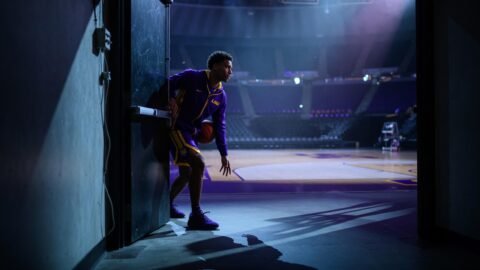
The Big Ten just slammed the gym doors on every two-way cut and draft-and-stash experiment that thought college was a soft landing pad. On Monday the conference unanimously adopted a rule that keeps men’s and women’s basketball players who signed with the NBA, G-League, or WNBA—or sat on those rosters, or declared without withdrawing clean—from ever suiting up again for a Big Ten school. Same playbook they ran for football a month earlier. Same message. Once you cash the pro check, the conference is closed.
I am all the way in on this. The TRO scramble turned eligibility into a loophole hunt, and basketball was next in line. Sixteen football players from the high school Class of 2022 already got temporary restraining orders to chase a fifth year after NFL camp time. RJ Luis Jr. became the basketball version of that story—former St. John’s standout, two-way deals with the Jazz and Celtics, three NBA preseason games for six points in seven minutes, then an injunction path toward LSU under Will Wade. That is the exact reverse pipeline the Big Ten just shut down inside its own footprint.
The SEC Said the Quiet Part First
The SEC put the principle on paper in August and did not hedge. “College athletes, not former professional athletes, have been at the heart of the Southeastern Conference,” the league said. Then it went further: “College sports are for college athletes. The current confusion around national eligibility standards emphasizes the need to advance the Protect College Sports Act.”
That is the correct framing. A kid who declared, signed, and got cut does not get to walk back onto a scholarship roster and freeze out a high-school senior or a current reserve who never left. Competitive equity is not a slogan when the alternative is a roster built from G-League washouts and training-camp casualties. The Big 12 went all-sports. The ACC covered football and basketball. The Big Ten finished the basketball half of its own house on September 28.
The conference’s own language is clinical and final: “The Big Ten Conference announced Monday the unanimous adoption of a conference rule to prohibit men’s and women’s basketball players who have signed a professional contract with the NBA, G-League or WNBA or any team that is a member of any such league, were on a roster for an NBA, G-League or WNBA team at any point or declared for the NBA or WNBA Draft but did not withdraw or declare an intent to return to college within the required timeframe, from maintaining eligibility for athletic competition at a conference institution.” Then the kicker they keep repeating: they are still evaluating other sports. Baseball and hockey should take notes.
This Is a Line, Not a Suggestion
Football already carries real teeth—head coach suspended for half the season, institutional fine that some reports peg as high as a fifth of the sport’s budget. Basketball penalties were not spelled out in the Monday release, which is the only soft spot in an otherwise hard rule. If the fine structure and coach suspension do not match football’s, some opportunistic staff will test it. They should not. The unanimous vote means every athletic director in the room already agreed the loophole was a problem.
I keep hearing the fairness argument about the kid who barely got a look in the G-League. Spare me. Declaring and signing is a choice with a price. The Class of 2022 mess and the Louisiana injunctions proved that courts will keep creating one-off exceptions until conferences write their own bright lines. The Big Ten wrote one. LSU under Kiffin and Wade became the gravity well for these returns; the Power conferences just stopped pretending that was sustainable.
What this protects is the kid who stayed. The four-star who reclassified or the walk-on who earned minutes the hard way. Every roster spot a former pro occupies is a spot that kid does not get. The SEC called that out as competitive equity. The Big Ten made it conference law. That is how you stop the blur between the G-League and a college practice gym.
The national eligibility mess still needs Congress and the Protect College Sports Act if anyone wants a single standard instead of conference-by-conference patchwork. Until then, this is the adult move. The Big Ten locked basketball the same way it locked football. Pros who want another run can find a different league. The conference already decided what it is for.