Four to six games. That is the range ESPN’s Jeremy Fowler is hearing for Josh Jacobs, and I keep landing on how thin the distance is between a courtroom handshake and the league’s actual hammer.
Jacobs pleaded no contest on September 10 to two Class A misdemeanors, battery and criminal damage to property. In court he said, “I fully understand the seriousness of the situation and I take full responsibility.” The battery brought a $1,000 fine plus costs. The property charge got suspended for twelve months, set to disappear if he stays clean, keeps no contact with the victim, finishes counseling he had already started, and pays restitution. No jail. The original May 23 call to his Hobart residence, the arrest three days later on five counts that included a felony strangulation charge the DA later dropped, the redness and bump officers noted, the damaged phone, the garage surveillance that reportedly backed key pieces of the account: all of that got boiled down to two misdemeanors and a fine that would not cover a weekend in Vegas.
The NFL does not grade on the district attorney’s curve. The personal conduct policy baseline for a first-time assault or battery involving physical force sits at six games without pay. Discipline runs independent of the criminal outcome. Jacobs has been parked on the commissioner’s exempt list since August 30, missing Week 1 against Minnesota and sitting again for the Jets. Time already served is expected to credit toward whatever the league finally drops. Full pay while exempt. Suspension without it. The math on his 2026 base is ugly either way; one report put the per-game hit near $566,000. A four-to-six window means he could be back before the halfway mark if the lower end sticks and the exempt days count clean. I do not buy the lower end as automatic.
The Video Is the Real Clock
The catch is the tape. Victim’s lawyers filed an eight-page motion in mid-September seeking to permanently seal discovery materials, including the garage video, because disclosure would threaten her “privacy, dignity, security, and emotional well-being.” Fowler’s reporting is blunt: that motion makes the league’s path to the footage “increasingly harder.” The NFL is still trying legal routes and still wants to interview Jacobs. Without the video, the file gets thinner. With it, the aggravating factors that push a case toward the full six, or past it, get easier to document. I keep coming back to that motion as the actual lever. The plea already happened. The fine is paid. The only live fight left is whether the league can see what the police and the DA already saw.
This is where the soap opera gets cold. A player can stand in court, own the seriousness, take the fine, start the counseling, and still have the league’s process stall because the evidence that would lock the length of the ban is locked behind a privacy claim. I am not second-guessing the victim’s motion. I am saying the NFL’s timeline just got hostage to a filing that has nothing to do with football and everything to do with whether Roger Goodell’s office can finish the job.
Green Bay Already Moved the Chess Piece
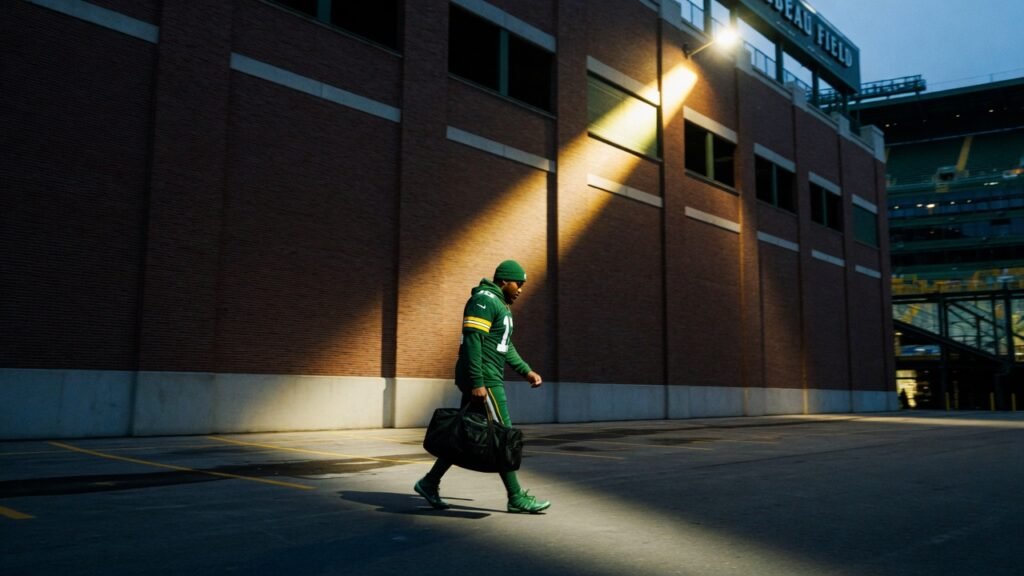
The Packers did not wait for Fowler’s range. Same day Jacobs hit the exempt list, they traded for Kaleb Johnson out of Pittsburgh. That is front-office language for “we are not gambling the backfield on a personal-conduct calendar.” Jacobs signed a four-year, $48 million deal in 2024 free agency. He gave them 1,329 rushing yards and 15 touchdowns in year one, then 929 and 13 scores in 2025. He is a three-time Pro Bowler with more than 7,800 career rushing yards. He is also a 2026 cap hit north of $14 million who cannot touch the field until the league says so. Johnson is the insurance premium. The Packers have already played a game without their lead back and are staring at another week without him. The contingency is already on the roster. The only open question is how many more Sundays that contingency has to carry.
I am not here to litigate the May morning. The complaint, the officers’ notes, the no-contest plea, and Jacobs’ own words in court are the public record. What I am here to say is that four-to-six feels like the market price of a case where the criminal side resolved light and the visual evidence is fighting to stay sealed. Six is the policy baseline. Four is the discount if mitigating factors and missing tape win the day. The exempt list days already banked pull the real absence shorter either way. Jacobs returns when the league finishes its file, not when the court docket clears. That file is still open. The motion to seal is the reason it stays open longer than a simple plea would suggest.
The thousand-dollar fine closed the county’s books. The NFL’s books are still being written, and the length of that sentence will tell you whether the policy still has teeth when the video never walks through the door.