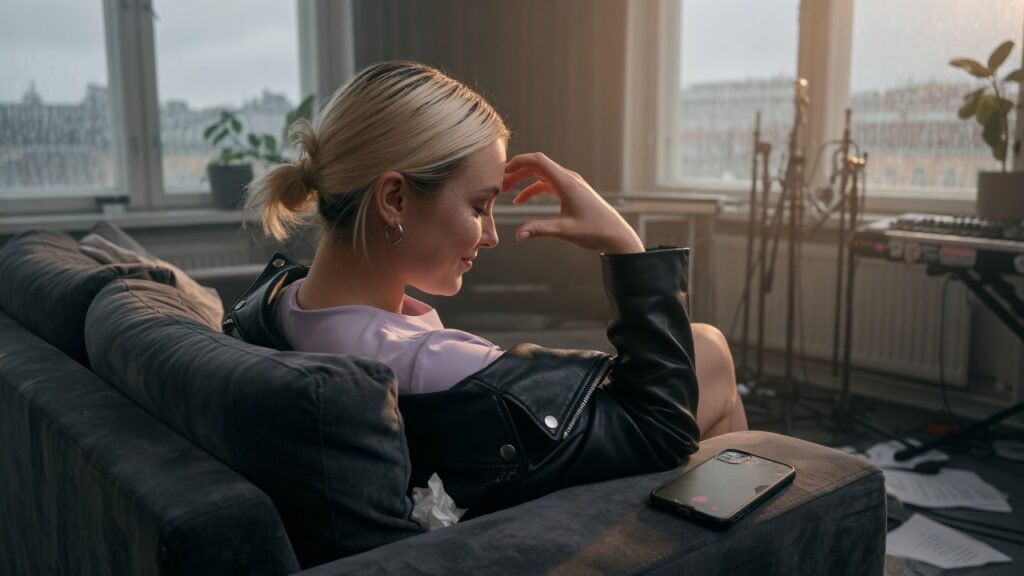
Zara Larsson put an L on her forehead, stared down the lens, and called the White House fucking losers for turning her own song into background music for handcuffs. The official White House TikTok account had dropped a 19-second clip of ICE agents detaining and loading men into vehicles, set to “Midnight Sun,” and captioned it “Never ending deportations…✨.” By the next day her stitched response had already blown past 4.2 million views. The song audio vanished from the original post soon after. The video stayed.
This is the second time in 2026 the same administration has pulled her catalog for immigration content. Earlier they ran Trump dancing to “Lush Life” under text celebrating ICE. She answered that one with an Instagram story. This time she took three full minutes on TikTok and refused to stay cute.
The song itself came out June 13, 2025, the second single from the album that hit No. 1 in Sweden and earned Larsson her first Grammy nomination for Best Dance Pop Recording. Its entire emotional architecture is about feeling tethered to nature, the universe, and other people. Pairing that with restraint footage is not a clever edit. It is a category error that turns a track about belonging into a victory lap over people losing the chance to belong anywhere.
The Construction Vest Is the Whole Argument
Larsson did not open with policy. She opened with sadness and then zeroed in on one frame. “There’s a fucking guy in there with construction wear. He’s working. These people who are undocumented are regular people with jobs, and they’re just trying to have a better future.” That single observation does more work than most op-eds. The video wanted silhouettes of threat. She forced the audience to see a person mid-shift.
She kept going: “I’m just sad. My heart is heavy seeing that, because I wish I could speak to whoever made that video. I wish I could talk to you, and I wish I could help you remember that you and I, we aren’t that different. And we’re not that different from the people in the video, either. The biggest difference between us is that we were dealt a different hand in life.” Then she owned her own luck out loud: born in Sweden, education, travel, opportunities “just sort of laid out in front of me.” The contrast is deliberate. She is not performing radical politics. She is refusing the premise that the people in the clip are disposable props.
“If you want to talk about politics and immigration politics, fine, but that’s really not what this is… This video is so dehumanizing. These people in the video are real people.” That line is the hinge. She grants the policy conversation and then yanks the aesthetic out from under it. Meme culture flattens everything into content. She called the flattening itself the offense.
Pop Catalogs Are the New Battleground
Larsson is hardly alone. Ariana Grande, Sabrina Carpenter, Olivia Rodrigo, SZA, and Katy Perry have all pushed back on unauthorized White House use of their music for enforcement or military messaging. The pattern is now a running feature of the second Trump term: government accounts treat major-label catalogs like free production libraries, artists issue public objections, the audio gets scrubbed, the video remains, and the cycle resets with the next clip. Engagement numbers reward it. The original White House post sat at 1.5 million views and 77,000 likes before the response overtook it.
What makes this one stick is the mismatch in tone. “Midnight Sun” is not a protest song and was never marketed as one. Using it for deportation theater is the same move as scoring a car commercial with a funeral hymn and then acting surprised when the composer objects. The lyric play on “never ending” is the tell. Someone in the content shop heard a hook about endless light and decided endless removals was the joke. That is the exact meme-ification Larsson named: “It’s so crazy how everything is so meme-ified, especially ‘Midnight Sun,’ which is about feeling connected to nature, the universe and people. And this just creates this massive divide between people. It’s so fucking uncool. You guys are such fucking losers.”
The loser gesture is not side commentary. It is the thesis. She refused the cool detachment that usually greases these moments. She made the emotional temperature the story. In an era when every political account is chasing the same short-form dopamine hit, an artist slowing the feed down long enough to say “these are real people” still registers as rupture.
The White House has not commented. Multiple outlets asked. The silence is its own production choice. The audio removal is the only concession, and even that leaves the images circulating with the original caption intact. The power imbalance is obvious: a government account can keep the visual while an individual artist is left defending the meaning of her own work after the fact.
This will keep happening. Catalogs are soft targets, TikTok is the preferred distribution channel, and the incentives run one way. What changes is whether enough artists treat the usage as a storytelling violation instead of free publicity. Larsson just did. She walked viewers through luck, labor, and the difference between a person and a prop, all while the original clip still sat there with the sparkle emoji. That three-minute response is sharper cultural criticism than most prestige limited series managed this year, and it cost her nothing but clarity.
The construction vest is still in the frame. The L is still on her forehead. The song about connection is still the one they chose for the divide. Those three facts travel farther than any caption about never-ending anything.
VERDICT: WATCH — 9/10. A three-minute TikTok that restores the human scale the original 19-second clip deliberately erased and reminds everyone what the song was actually built to do.