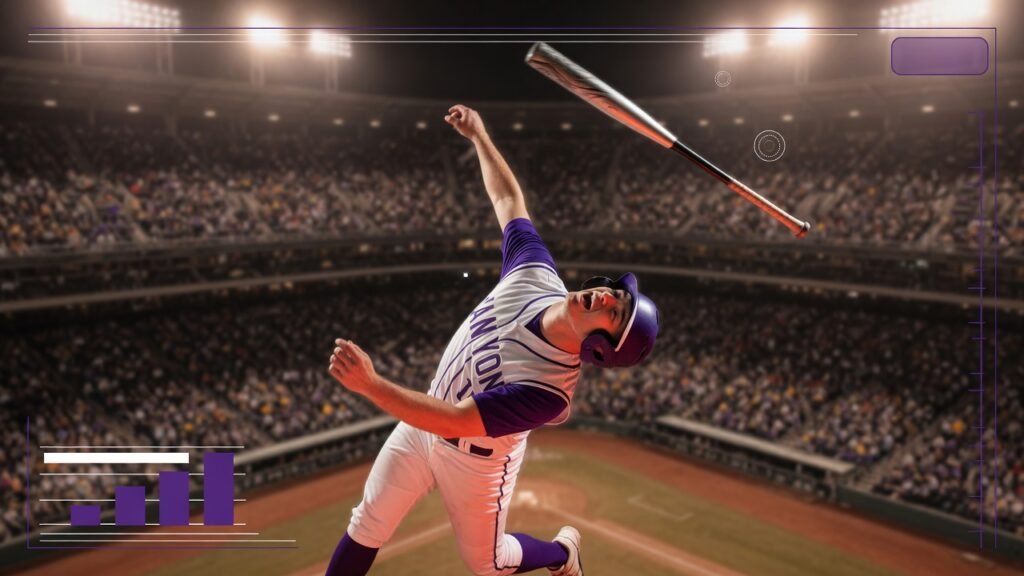
NCAA.com dropped a bat-flip reel on September 16 and dared everyone to pick a side. Cocky or cool. The site itself already chose.
The page copy is blunt: “Whether you think it’s cocky or cool, bat flipping is one of the most iconic ways to show off your insane hit in baseball. Here are the best bat flips in recent NCAA baseball tournament history.” That is the governing body’s own language, posted on the same platform that still lists bat flips near or toward an opponent or umpire as unsportsmanlike conduct under Section 5-17. First offense draws a warning. Keep going and you get ejected. I keep coming back to that split because it is the entire product.
College baseball spent the last few seasons trying to draw a bright line. Drake Siens of Gustavus Adolphus got run in May 2023 after a home-run toss. Grand Canyon’s Tyler Wilson ate an ejection in February 2024 after a game-tying grand slam flip against Nebraska. Those were not fringe moments. They were high-leverage swings followed by the exact celebration the highlight machines now package as “electric.” The rule is real. The enforcement has teeth. The content calendar still wants the clip.
The Warning Comes Before the Montage
Players have already absorbed the mixed signal. After a 2023 warning, LSU’s Jared Jones laid it out without spin: “I just got caught up in the heat of the moment… He (the umpire) just said that with the new rules, they give out warnings about bat flips and stuff — that’s something that’s part of his job now, so he said, ‘It’s a big moment, I understand it completely, just trying to do my job.’ I just thanked him for doing that and totally understood.” Jones understood the job. The job is to police the flip on the field and then green-light the same motion for the tournament montage six months later.
That is the mechanism I care about. Unwritten rules once treated the bat flip as showing up the other dugout. Retaliation risk lived in the next pitch. Asian and Latin American leagues never bought that humility code the same way, and José Bautista’s 2015 ALDS flip made the cultural collision public. NCAA baseball tried to codify the old code in 2023-24 while its own social channels and ncaa.com kept posting the flips with fire-language captions. Height, rotations, timing. The official account has done it for years. The September 16 compilation is simply the latest version of the same pattern: police the act, then sell the act.
Fall timing makes the choice even clearer. Spring tournaments are over. Recruiting and exhibition chatter fill the calendar. A clean package of recent NCAA tournament flips is easy content that travels. Aggregators picked it up the same day. No takedown. No walk-back. The video stays live because the engagement math works and the “let the kids play” crowd already owns the comment sections. Counter-voices still exist. Some fans want the flip gone, especially in blowouts. Most of the loud reaction treats a high, multi-rotation toss as pure energy that separates college baseball from the more scripted pro product. The brand knows which side posts better.
Entertainment Value Owns the Offseason
I do not need view counts or a frame-by-frame list of which flips made the cut. What I have is the structural fact: the same organization that wrote the unsportsmanlike language also cut the reel and labeled the behavior iconic. That tension is older than this video. Bench-clearing dust-ups years earlier helped push the stricter points of emphasis. Coaches still talk about “feel” in enforcement because emotion spikes after a grand slam and umpires are left holding a rule that the highlight department will later celebrate.
The practical outcome is predictable. Players will keep flipping on the biggest swings because the adrenaline is real and the audience rewards it. Umpires will keep issuing the warning first, then the ejection when the bat travels too close to the wrong body. NCAA.com will keep packaging the survivors. The rulebook and the content desk share a logo and opposite incentives. One protects the dignity of the opponent. The other protects the shareable moment.
That is the actual story behind the September 16 drop. Not a sudden cultural shift. Not a new controversy that blew up overnight. Just the latest public proof that college baseball has decided it can run both plays at once: caution the kid in real time, then put his flip on the official site when the tournament dust settles. The compilation is still up. The warnings will still come. The bats will still leave the hands on contact because both the crowd and the brand already voted with their attention.