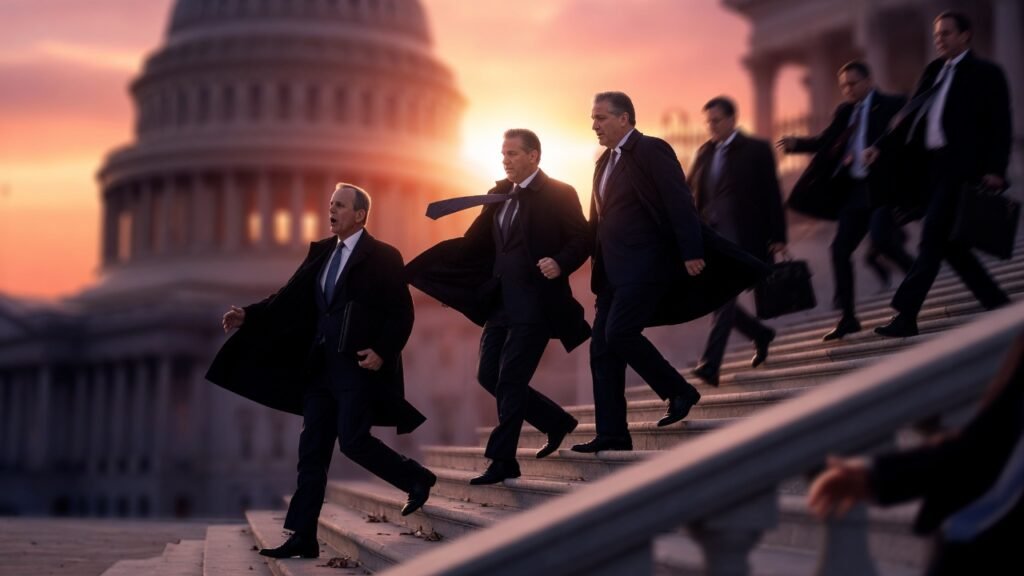
Rick Barnes is walking up to a microphone outside the U.S. Capitol on September 14, and I keep replaying that image like a bad late-night loop. Tennessee’s coach, John Calipari, Mark Few, Kelvin Sampson, Ed Cooley, Craig Robinson from the NABC, more than thirty coaches and athletes total, lined up next to Ted Cruz and Maria Cantwell like the sport finally ran out of private rooms to argue in. College basketball did not send a polite memo. It sent the grown-ups who actually recruit and coach to ask Congress for a leash.
I am not pretending this is pure. Coaches who spent decades treating the transfer portal like a personal ATM suddenly want rules. Fair. They also live inside the wreckage every March when half a roster ghosts and the other half is shopping NIL deals while film sessions turn into exit interviews. The Protect College Sports Act is the first serious attempt I have seen to put floors and ceilings on the chaos instead of hoping the next collective bargaining mirage shows up.
Calipari’s Letter Was the Tell
Back in June, Calipari put it in writing. More than twenty basketball coaches signed on, Barnes included, along with Penny Hardaway, Dan Hurley, Bill Self, and Jon Scheyer. The National Basketball Coaches Association endorsed the bill. That is not a random press release; that is the coaching fraternity admitting the current setup is burning the product they sell. When the guys who benefit from portal raids start asking for one free undergraduate transfer (with an exception only for a head-coaching change) and a hard stop on unlimited retention spending, I pay attention.
The numbers in the bill are the part that actually lands. High-revenue conferences clearing more than $700 million get capped at nineteen members. Jump ship and you sit independent for five years. Roster retention spending gets a $22.5 million lid, plus another $5 million locked for women’s sports and non-revenue sports. Agent fees top out at 5 percent of the deal. The so-called Lane Kiffin Rule keeps coaches from walking into a new job midseason and immediately running the show. None of that is radical. It is basic product protection.
I watched the portal turn the offseason into a perpetual free-agency circus. Kids bounce after one bad month. Freshmen never learn a system long enough to own it. Mid-majors get raided the second a kid posts a decent efficiency number. The coaches standing on those Capitol steps know it better than any senator. They are the ones left explaining to boosters why the rotation that made the Sweet 16 just became a bunch of strangers wearing the same jersey.
The Coalition Is Ugly and Necessary
Nick Saban cut ads. Deion Sanders cut ads. Trump said he would sign it. The Big Ten and SEC dragged their feet, floated lawsuits, then flipped once the revised language hit in August. The Senate Commerce Committee already moved it 19-9 back in June. Support eventually stretched to twenty-eight conferences and more than 370 schools across all fifty states. Professional leagues and their players’ associations nodded along with caveats. That is a strange bedfellows list, and I do not care. Gridlock is how we got the current mess.
Cruz hit College GameDay the Saturday before the press conference. The vote math still needs sixty in the Senate, then the House has its own knife fight waiting. I am not naive about congressional sausage. I am also done pretending the NCAA can police this without federal cover. Antitrust shields, national NIL standards, a five-year eligibility window, and a ban on true pros masquerading as students are the only way the next decade does not look like an endless auction.
Barnes showing up matters because he is not a Twitter warrior. He is a lifer who still talks about culture and development like those words mean something. Sampson and Few are the same breed. When that group stands next to Cruz and Cantwell outside the Capitol at 4 p.m., the message is simple: the sport cannot self-regulate anymore. The free market experiment without guardrails produced richer collectives, thinner benches, and a product that feels rented every November.
I want the bill on the floor. I want the nineteen-team ceiling. I want the retention caps enforced so the schools that still care about women’s sports and Olympic sports do not get starved while football and men’s basketball vacuum every dollar. I want one free transfer to mean something again instead of an annual shopping spree. The coaches already said it with their feet and their signatures. Congress either listens or owns the next five years of roster musical chairs.
The press conference ends. The cameras pack up. Barnes heads back to Knoxville with a season still to build. The only thing left is whether sixty senators decide college basketball is worth saving from itself.