Matthew Mayich is 21 years old, a St. Louis Blues draft pick, and according to his family’s attorney he has zero chance of recovery after collapsing on an Arizona State track. That is the whole story in one sentence, and it should already be enough to stop every coach, athletic director, and NCAA official cold. It has not.
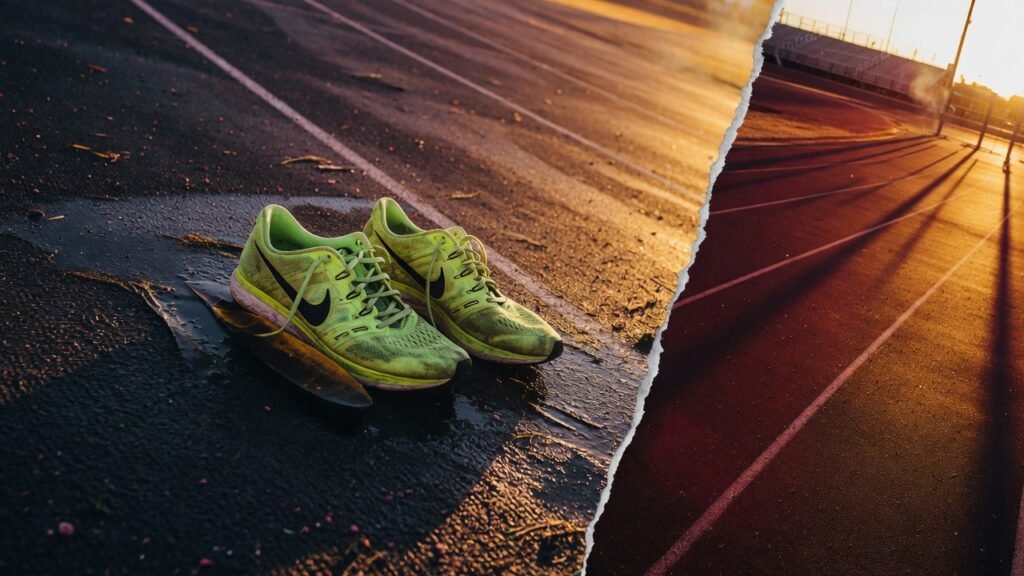
On the morning of August 20, the first day of ASU’s fall semester, Mayich was in an outdoor team workout near Joe Selleh Track in Tempe. Tempe Fire Medical Rescue got the call around 8:30 a.m. Temperatures sat in the upper 80s. By afternoon the high would hit 106 under an extreme heat warning. The session itself, by multiple accounts, ran roughly 45 to 60 minutes and more, a military-style grind of sprints, planks, push-ups, bear crawls, flutter kicks, teammate carries, and medicine-ball runs. It was led by Tim Ziesel, a 39-year-old former Special Forces volunteer brought in at the request of ASU hockey coach Greg Powers. Ziesel’s side says he left about 20 minutes before the collapse. Mayich was treated on site, taken to a hospital, then moved to Barrow Neurological Institute in Phoenix. He has not left.
I have covered enough of this league, and enough of the programs feeding it, to know the difference between a hard day and a reckless one. This is the second kind, and the people who should be screaming about it are still clearing their throats.
Carey Is Not Asking for Sympathy. He Is Demanding a Real Investigation.
Family attorney Robert Carey has not filed a lawsuit yet. He is collecting evidence first. What he has already put on the record should end any soft-pedaling. To the LA Times he said, “Matthew’s injuries [are] from exertional heat stroke that caused the lack of oxygen to his brain. There were no other contributing conditions, only exertion-related heat. This is not a coma, and the family is at his bedside praying for a miracle.” He added, “He’s been incapacitated from the moment he left the field, and with no chance of recovering.” And this: “So when he left the field that day, by the time he got to the hospital, there was almost zero chance of recovery.”
Carey has also rejected the neat version of events floating around campus. “My investigation shows the storyline is completely false,” he told The Arizona Republic. “This case has shattered (Mayich’s) life. He deserves, and his family deserves, a proper investigation.” He says Mayich “was disoriented and struggled well before he collapsed.” He has accused ASU of failing to run an impartial review, of refusing to sequester coaches from players who fear retaliation, and of inadequate heat protocols and response. “A kid’s life was basically ruined, the family is devastated, and people refuse to accept responsibility.”
That last line is the one that should follow Greg Powers, James Rund, and every administrator attached to this program into every meeting until the full record is public. ASU says it is reviewing policies, procedures, and training protocols. ASU Police are investigating. Review is not the same as accountability. I have watched too many “reviews” turn into press releases.
A Blues Prospect’s Career Died on a Track in Tempe
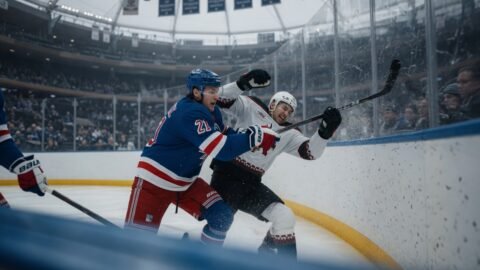
Mayich was never a finished product. He was a real one. Blues took him in the sixth round in 2023, 170th overall, out of Stoney Creek, Ontario. Four seasons with the Ottawa 67’s in the OHL: 256 games, 99 points, 273 penalty minutes, later an alternate captain. One year at Clarkson: 34 games, 15 points, a plus-13, leading freshmen in ice time near 20 minutes a night. He transferred into an ASU program that had just ranked first in the country in the transfer portal. He attended Blues prospect camps in 2023 and 2024. Doug Armstrong and the organization put out the right statement in late August, keeping him “close to our hearts” and praying for comfort and recovery. Prayer is what you have left when a 21-year-old’s body, in Carey’s words, “ceased functioning in a fundamental way, and this condition is irreversible.”
I keep coming back to the temperature and the clock. Upper 80s at 8:30 in the morning is not a freak Arizona event. It is August in Tempe. Extreme heat warnings were already in effect that week. You do not need a medical degree to understand what repeated sprints, carries, and ground work do to a human body under those conditions when cooling and monitoring fail. Carey’s position is that exertion-related heat alone did this, and that the damage was locked in before Mayich even reached the hospital. If that holds, then every person who designed, approved, or stood on that field owns a piece of the outcome.
Hockey culture loves the language of toughness. Bear crawls at sunrise sound like character until a kid never stands up again. Powers brought in a Green Beret volunteer for a team-building session. Fine. Character work does not suspend the laws of heat illness. Medical staff presence, disputed in the accounts, does not erase the result. The NCAA has spent years talking about athlete welfare. A defenseman with NHL rights is lying in a Phoenix hospital with what his lawyer calls irreversible brain injury from a morning workout. Welfare is a slogan until the protocols actually stop this.
Mayich’s family is at the bedside praying for a miracle Carey has already told the public is not coming through medicine. Zero chance of recovery. Incapacitated from the moment he left the field. A life shattered over a session that was supposed to make the group tighter. ASU can keep reviewing. Powers can keep coaching. The Blues can keep the rights. None of that restores the kid who showed up for the first day of classes and never left the facility under his own power. The only thing left that matters is a full, independent accounting of every decision that put him on that track in that heat for that long. Until that lands in public, every soft narrative about “team-building” is an insult to a 21-year-old who will never play another shift.