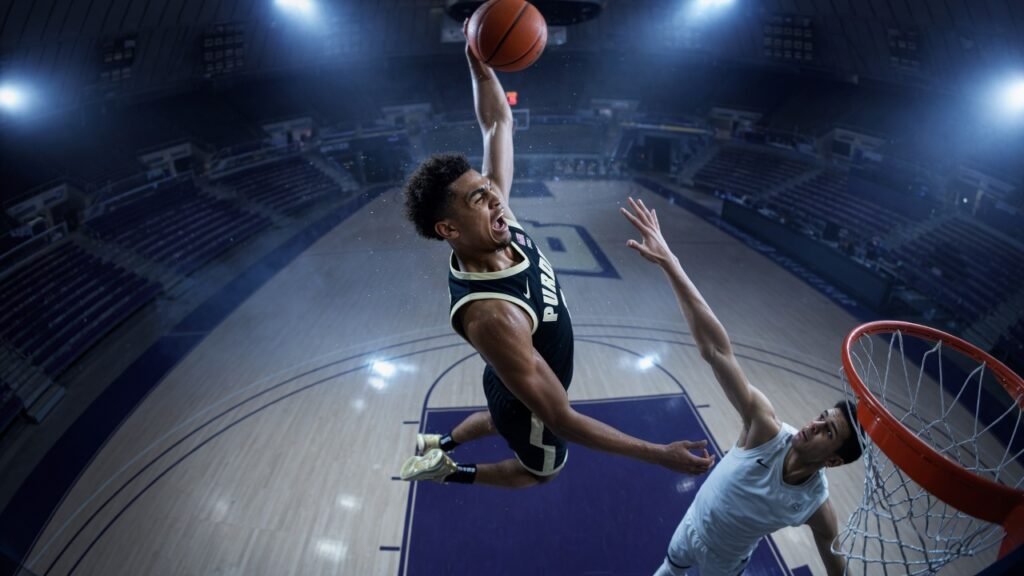
Trey Kaufman-Renn just filed the eligibility lawsuit that actually makes sense, and I cannot stop staring at the calendar math.
According to the motion filed in Clark County Circuit Court, the former Purdue forward is seeking a temporary restraining order and preliminary injunction that would force the NCAA to treat him as having one season left for 2026-27. He is a 2021 high school graduate. He redshirted the entire 2021-22 season after a knee injury that required surgery and never appeared in a game. Then he played four full seasons in West Lafayette, developed into a First Team All-Big Ten scorer at 20.1 points and 6.5 rebounds as a junior, and closed his senior year at 14.2 points and 8.3 rebounds while helping Purdue to another deep March run. Minnesota took him 59th overall in June. He played five Summer League games at 6.6 points and 3.8 rebounds in 12.7 minutes. He has not signed a pro contract. Now he wants college again.
I watched the entire arc. The redshirt was real. The minutes were earned. The new age-based model still wants to count him out.
The Medical Year the New Rules Pretend Never Happened
Here is the distinction that keeps getting buried under the pile of 2022-class lawsuits. Those players finished four seasons in four years and are asking courts to hand them a bonus year after the fact. Kaufman-Renn started earlier, sat out clean because of injury under the old hardship pathway, and still only played four seasons. Under the NCAA’s fresh “five in five” window, that empty year eats the clock anyway. Traditional redshirts and most medical waivers are gone. Limited exceptions remain for pregnancy, military service, and religious missions. A November 2021 knee surgery that wiped a season does not make the list.
His attorney, Mickey K. Weber, put the equity argument in writing better than any columnist could. “He does not ask this Court to give him something the old rules withheld,” Weber wrote in the brief. “He asks not to be the one person left outside a benefit the NCAA handed to everyone else. In withholding it, the NCAA has also forbidden every institution in Division I from competing for his services, which is a restraint of trade under Indiana law.”
I keep coming back to that sentence. The NCAA spent years selling competitive equity, then flipped the eligibility model in June and left the injured 2021 guy standing outside the window it cracked open for later classes. Kaufman-Renn is not inventing a fifth season of basketball. He is asking not to be the only forward who lost the medical year he already used under the system that existed when he got hurt.
Matt Painter already telegraphed the Purdue side earlier this month to Jon Rothstein. “Trey wouldn’t apply for this, I don’t think, because he redshirted and then he had four years, even though everything can be battled these days,” Painter said. He added that the program’s stability comes from keeping its word to the next wave of bigs and that roster spots are spoken for. A return to Mackey is complicated under the 15-player limit and the bodies already on campus. That does not kill the case. It just means the market, if a judge opens it, will be somewhere else. The filing itself states that more than one Division I program has already expressed interest.
September 8 Is When the Dominoes Start Tipping
The hearing originally set for this week got continued. Judge Kyle P. Williams moved it to September 8 after the NCAA asked for time. That date now sits two months from tip-off season and right in the middle of a legal thicket that already includes stayed cases in Colorado, Ohio, and Tennessee. Every temporary win creates another plaintiff. Every stay creates another emergency filing. Kaufman-Renn’s situation is different enough that a favorable ruling would not simply add one more name to the 2022 list. It would reopen the medical-redshirt conversation the new model tried to bury.
I am not pretending the second-round Summer League tape was electric. Six points a night in limited minutes is not a locked NBA rotation player. That is exactly why the college cash window still matters. A 6-9, 230-pound forward who just averaged 14 and 8 in the Big Ten can command real money and real minutes somewhere that needs an immediate starter. The complaint alleges the NCAA’s enforcement of the age window and his draft entry currently blocks every school from competing for those services. If an Indiana judge buys the restraint-of-trade frame, the ripple is immediate: programs start shopping the ruling, agents start shopping the programs, and the “five in five” model takes another body blow before it even finishes its first fall.
College basketball already lives in permanent free agency. Adding court-ordered sixth years for players who actually lost seasons to injury just accelerates the soap opera. I do not blame Kaufman-Renn for walking into Clark County and asking. The old rules gave him the redshirt. The new rules erased the pathway after he used it. Leaving him as the one person outside the benefit is the part that feels indefensible.
The September 8 hearing will not settle the sport. It will decide whether a clean medical year from 2021 still counts for anything when the calendar got rewritten underneath the guys who already lived it. I think it should. The filing is already on the docket. The only question left is how many other forwards start dialing the same attorneys once the first temporary order lands.