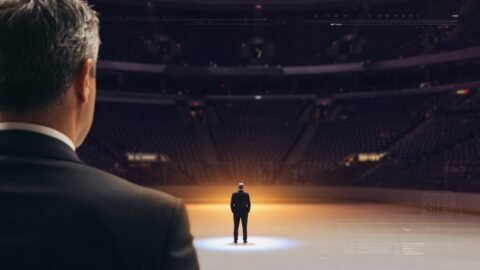
Mario Lemieux no longer owns any piece of the Pittsburgh Penguins. For the first time since September 3, 1999, his name sits off the cap table, and the franchise he dragged out of bankruptcy finally runs without him as a shareholder.
The minority stake sale, first reported by Dejan Kovacevic on August 31, closed the last residual slice Lemieux and Ron Burkle still held after Fenway Sports Group bought controlling interest in 2021. That residual moved as part of the larger deal that sent control from FSG to the Hoffmann Family of Companies for roughly $1.7 billion to $1.75 billion. The Board of Governors rubber-stamped it in late June. FSG kept a minority piece. Lemieux and Burkle walked away clean.
I keep coming back to the mechanism, not the nostalgia. In 1998 the club owed Lemieux more than $32.5 million in deferred salary. He converted a large chunk of that debt into equity, partnered with Burkle, and took the keys. Two Cups as a player (1991, 1992). Three more as owner (2009, 2016, 2017). Franchise-record 690 goals. 1,723 points, still second only to Crosby. That ownership arc turned a near-relocation case into a $1.7 billion asset that nearly doubled from the $900 million FSG paid five years ago. The exit is the final balance-sheet proof that the rescue worked.
The Cap Table No Longer Needs the Savior
New governor Geoff Hoffmann has been careful not to treat the departure as a cold cut. “Mario and I have spent some time together. He’s been as good as advertised, I think. Just a great, great guy,” Hoffmann said in June. “I’m really hopeful that he will be a part of this in whatever way, shape, form makes sense for him. But we would love for him to be a part of it.” He doubled down: “We know what he means to hockey. We know what he means to the Penguins, we know what he means to the city and what he means to the League, the NHL. I think everybody would embrace him with open arms.”
That language is deliberate. Hoffmann also locked in the city commitment that still haunts older Penguins fans: “The Penguins are going to be in Pittsburgh, and are always going to be in Pittsburgh, as long as the Hoffmanns are part of it. And the Hoffmann’s plan to be a part of this for generations to come.” Long-term ownership talk after a $1.7 billion check is cheap until you remember how close this franchise came to vanishing in the late ’90s. Lemieux’s equity conversion was the original lock. Hoffmann is now trying to buy the same permanence with cash and generational language instead of deferred-salary alchemy.
Lemieux and a group that included Burkle and former CEO David Morehouse tried to buy the club back from FSG and lost the bidding. Sources told local outlets he still wants a presence—suite access, the usual alumni orbit. No public quote from him on the 2026 stake sale itself has surfaced. The closest recent frame is his 2021 statement when FSG arrived: “As the Penguins enter a new chapter, I will continue to be as active and engaged with the team as I always have been and look forward to continuing to build on our success with our incoming partners at FSG.” He kept the small residual then. He has now sold that too.
Valuation Math Beat Sentiment
I ran the simple arc. Roughly $900 million in 2021. Approximately $1.7–1.75 billion five years later. Sportico and Forbes had the club around $1.47 billion in the interim window. That is not sentimental growth. That is the market pricing a stable, Cup-pedigreed NHL asset in a locked-in market after the original savior finished the handoff. Lemieux’s remaining stake after 2021 was already described as small; Burkle’s was larger. Exact proceeds on the final slice stay private. The signal is clearer than the dollar figure: the ownership structure no longer requires the player who once owned the debt.
Fan reaction on the platforms landed where you expect—nostalgia for No. 66, relief that Hoffmann still wants him visible, quiet acknowledgment that twenty-seven years of formal ownership is a complete cycle. The useful distinction is ownership versus presence. The former is finished. The latter is still on the table if both sides want it.
The Penguins now sit with fresh capital, a governor promising multi-generational control, and a living franchise icon who no longer has skin in the equity. That is the cleanest possible endpoint for a rescue that began with unpaid salary converted into shares. Lemieux did not lose the team. He finished building the version that could be sold twice at rising prices and still keep his name on the building. The next chapter runs without his signature on the ownership docs. The on-ice product and the civic identity still run through everything he already put there.