Six former Utah players just put Kyle Whittingham’s entire coaching philosophy on trial, and the charge is simple: when bodies broke, the program allegedly chose the next Saturday over the next decade of a kid’s life.
I have watched college football long enough to know the difference between toughness and negligence dressed up as culture. What Van Fillinger, Mycah Pittman, Jaylon Glover, Miki Suguturaga, Tevita Fotu and one anonymous player told The Salt Lake Tribune is not a locker-room gripe. According to those accounts, it is a pattern of delayed imaging, return-to-play pressure, and threats that turned medical timelines into coaching suggestions. Fillinger’s story alone should stop the room cold.
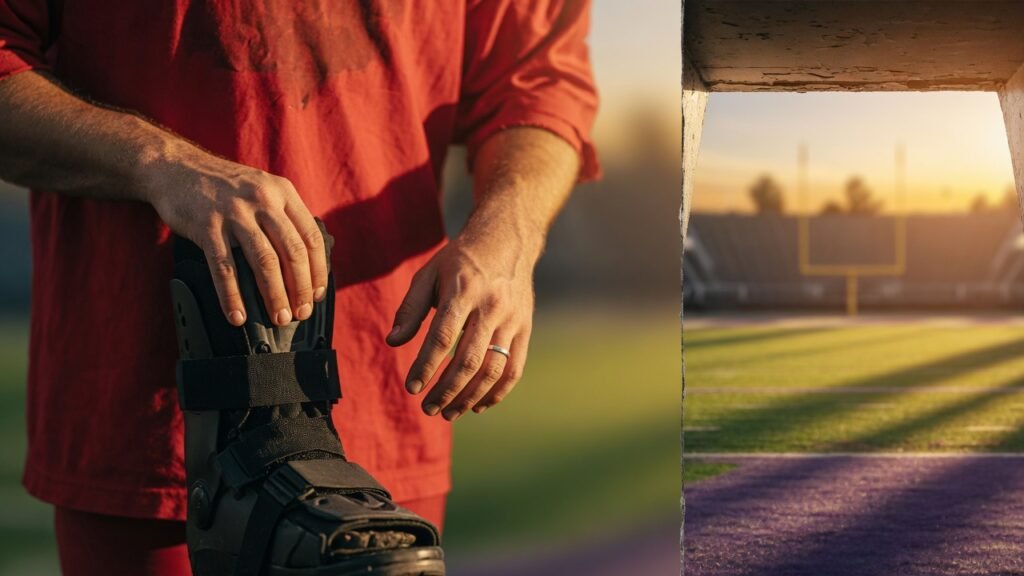
In 2022 he heard a snap in practice, could not walk, and left the field on teammates’ shoulders. The diagnosis that week was an ankle sprain and a walking boot. Only at week’s end did an X-ray show a season-ending tibia fracture. He called the handling “lackadaisically.” Then came 2023. The same ankle was, in his words, “just destroyed.” A doctor’s appointment on Sept. 25, 2023—audio the Tribune obtained with Fillinger, his mother, and a Utah physician present—discussed at least six weeks of rest. Position coach Lewis Powell initially agreed to a medical redshirt. Three weeks later, after Logan Fano tore his ACL, the message flipped. Fillinger says Powell told him Whittingham would not allow the redshirt.
“He said that I’ll be kicked off the team if I don’t play,” Fillinger told the Tribune. He played 11 games that season, posted 5.0 tackles for loss and 3.0 sacks, then needed a second ankle surgery after the year ended. Let me tell you something about that sequence. A kid hears a snap, gets a delayed fracture diagnosis, returns against a six-week medical recommendation under alleged threat of dismissal, and the program still wants to call health a top priority. I said it then in my own notes and I will say it louder now: that is how legacies get stained.
The Culture Was the Diagnosis
Mycah Pittman’s 2024 fall camp ankle injury followed the same script according to his account. Tangled with a defender. X-ray called it a lateral sprain. No MRI. Pressure to return. More than a month later an outside specialist’s MRI found a partially torn Achilles and a high ankle sprain. “The pressure to play was definitely there,” Pittman said. “If you aren’t able to go, it is kind of frowned upon, obviously, because coaches want to win football games.” His father, former NFL wideout Michael Pittman, said Utah “did what they thought was better for the team’s outcome instead of my son’s long-term health.”
Jaylon Glover described the split that every honest athletic trainer already knows exists in too many programs: training staff on one page, coaches on another, the refrain always “We need him back.” Tevita Fotu tore his MCL as a redshirt freshman and says his position coach told him “the head man” wanted him to push through. Threats of losing the depth chart spot or the scholarship itself. “It was kind of heartbreaking,” Fotu said. “I thought these guys would care about me.” He also alleges promised NIL money to keep him out of the portal never arrived; Utah said it was unaware and would look into it. Suguturaga and the anonymous player added ankle and meniscus stories that rhyme with the rest—rehab deadlines that felt unrealistic, imaging that came late, pain that got explained away until it could not be.
Utah Athletics and University of Utah Health answered with the institutional shield. Player health is a “top priority.” Return-to-play is collaborative. They follow university and national guidelines. Imaging is ordered based on clinical findings. Michigan, where Whittingham now sits as head coach after leaving Utah following the 2025 season, said through a spokesperson that Whittingham and his staff “did not make medical decisions” at Utah and “followed the lead of the medical team.” Current Utah coach Morgan Scalley pointed back to the department statements. No independent investigation has been announced in the initial coverage. The players’ accounts stand against the process language.
I have covered enough programs that win with physical football to recognize the old-school badge when I see it. Two Pac-12 titles and Rose Bowl trips under Whittingham did not appear out of thin air. They were built on a reputation for toughness that now, according to these six former players, crossed into something uglier. The disconnect Glover named is the entire case. When the medical staff’s six weeks becomes the coach’s three, the athlete absorbs the difference in cartilage and ligaments that do not grow back on a depth chart schedule.
Legacy Does Not Get a Redshirt
Whittingham spent roughly two decades building Utah into a national brand. He left for Michigan with that résumé intact. These allegations, still unresolved and still contested by the official statements, now travel with him. Every recruit’s parent who reads the Tribune piece will ask the same question I am asking: when the doctor says six weeks and the position coach starts talking about the head man, whose voice actually runs the room? Fillinger played through it and needed another surgery. Pittman’s Achilles waited more than a month for the MRI that mattered. Fotu heard scholarship threats while limping. That is the record the players put on the table.
I am not a medical board and I am not a court. I am a columnist who has watched too many kids get used up and then discarded when the next signing day arrives. The joint Utah statement talks about evaluating processes and welcoming adjustments. Good. Start by treating a six-week medical recommendation like a medical recommendation instead of a negotiation. Start by ordering the MRI before the father has to force the issue. Start by firing the first coach who allegedly tells a player he will be kicked off for following a doctor’s advice. Whittingham’s defenders will call this selective memory from players who left. The audio of that September 25 appointment and the delayed fracture diagnosis do not care about selective memory. They care about what happened to the bone and the tendon.
Six players across five seasons is not a single bad week. It is a culture claim. Whittingham built a winner in Salt Lake. The question hanging over Ann Arbor now is whether the price of those wins included kids who were told, according to their own words, that the head man needed them more than their bodies did. History keeps the rings. It also keeps the testimony. Fillinger’s second surgery and Pittman’s late MRI are already in the ledger. The rest of the ledger is still being written.