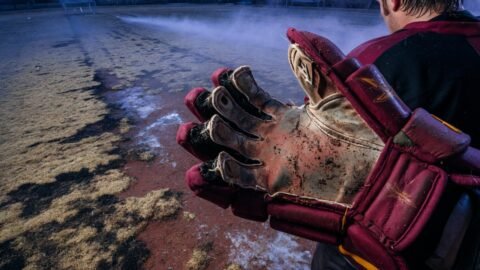
Matthew Mayich collapsed on a Tempe track on Aug. 20 because Arizona State hockey rented toughness from a former Green Beret on a morning already under an extreme heat warning. He is 21. He is a St. Louis Blues draft pick. More than a week later he remained hospitalized in critical condition, with family-connected sources describing a coma and a possible cardiac event after Tempe Fire was called for heat-related illness.
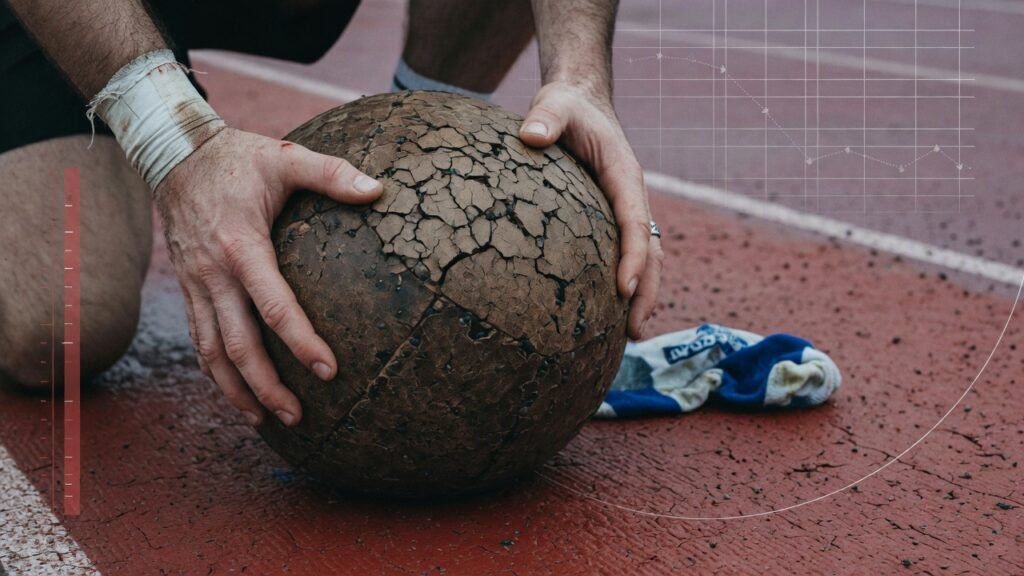
The Athletic’s sources described a 45-to-60-minute outdoor session that started around 7 a.m. at Joe Selleh Track: sprints, planks, push-ups, bear crawls, cadence counting, and a medicine-ball run the length of a football field and back. Players who lagged or missed a count did extra work. Some interpreted an instruction not to complain as an order not to speak up if they were struggling. According to those sources, instructor Tim Ziesel left before the final activity was finished. Staff helped Mayich when he had trouble. Morning readings sat near 87°F at 7:51 a.m. and 89°F around 8:51 a.m., with a nearby heat index near 91; the afternoon high reached 106. An extreme heat warning had already been in effect for days.
I am not interested in the toughness mythology. I am interested in the scheme.
Punishment Cadence Is Not a Leadership Drill
Military-style group conditioning sold as team-building has a documented failure mode. Rebecca Stearns, COO of the Korey Stringer Institute at the University of Connecticut, said it without soft edges: “There’s a number of previous cases that have shown athlete hospitalizations because of something like applying military-type tactics or training to an organized sports team that’s in high school or college, which just is not appropriate or necessary. A lot of data points to the fact that in most of those cases, there was some sort of punishment involved in the activity. We know that punishment in the form of exercise is not a successful approach if you want your athletes to live.”
Rod Walters, the athletic trainer and safety consultant, has watched the practice recede for the same reason. “It’s going the other way because of problems like that,” he said. ASU’s own athletic department carries heat-illness guidelines informed by the National Athletic Trainers’ Association, plus rules for outside entities that interact with student-athletes. Chris Fiscus, the university’s media-relations VP, confirmed the review and little else: “A student-athlete who collapsed during an outdoor exercise Thursday morning remains hospitalized. The student-athlete, a member of the ASU hockey team, is not being named by the university because of privacy interests. The university is reviewing the circumstances surrounding the workout.” He declined to answer who authorized the session or whether coaches and trainers were present in any meaningful supervisory role.
That silence is the mechanism. A non-university former Green Beret ran the cadence. Coaches observed. Medical coverage, if present, still ended with a dispatch at 8:30 a.m. and a player in critical care. Ziesel, reached by the Arizona Republic, offered only distance: “I don’t know what all needs to be said and not needs to be said. I would go to the ASU for that.” He later said he didn’t know “the whole situation” and “wasn’t tracking what all is going on with this.”
The Portal Class Does Not Absolve the Track
Mayich arrived as part of a 2026 transfer haul ranked first in the country, roughly 18 newcomers. At Clarkson he put up 7 goals and 8 assists in 34 games. He is 6-foot-3. The Blues took him 170th overall in 2023 after more than 250 OHL games and 106 points with Ottawa. Doug Armstrong’s statement from the Blues was pure support: “The entire Blues organization is keeping Matthew Mayich close to our hearts as we pray for his comfort and recovery while he continues to undergo medical treatment in Arizona.” His cousin Victoria Beara, on an Aug. 25 virtual rosary that drew about 175 people online, said, “Even though we are going through this heartbreak, it is truly such a blessing to see everyone praying and just the impact Matthew has had on so many people. It’s in God’s hand. Please don’t stop praying and don’t give up.”
None of that changes the design choices on the track. Early-season conditioning in Phoenix heat with punishment reps, a “don’t complain” culture, and an outside instructor who left before the last run is the opposite of the standards Stearns and Walters describe. Camaraderie is not measured in bear crawls under an extreme heat warning. Leadership is not proven by counting push-ups correctly under threat of extra sprints. College hockey already has skating, weights, video, and actual practice structure. It does not need a rented basic-training simulation to teach a defenseman how to gap up.
ASU is reviewing. It should. The review has to answer the only operational questions that matter: who signed off, why a third-party military cadence session was preferred over program staff, what the heat protocols actually looked like at 7 a.m., and why “don’t complain” was part of the vocabulary. Mayich’s condition is still critical. The medicine-ball run was still on the sheet. Those two facts should end the argument about whether this style of workout belongs anywhere near a college roster in August.