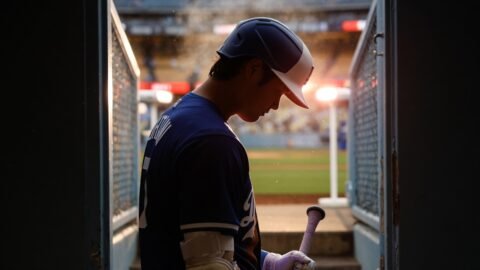
Pete Crow-Armstrong stood on third base in a scoreless sixth inning at Chase Field and did the one thing baseball still pretends is illegal when a runner does it well: he made a pitcher flinch. Eduardo Rodriguez started his motion, stopped it, and stepped off. Four umpires watched it happen. None of them called a balk. The run that should have scored stayed parked on third, Jordan Lawlar went deep an inning later, and the Diamondbacks walked out with a 2-0 win that never should have stayed scoreless that long.
I have watched enough baseball to know the difference between a bang-bang play and a free gift. This was the free gift. Crow-Armstrong knew it the second Rodriguez interrupted himself. Third-base coach Quintin Berry knew it. The entire Cubs dugout knew it. Crew chief Alfonso Márquez eventually knew it too, because after the game he told a pool reporter the quiet part out loud: “We just didn’t see it,” and then conceded “it looked like he stepped off.”
They didn’t see it. On a baseball diamond. With four of them stationed for that exact purpose.
The Conference Was Theater, Not Justice
Crow-Armstrong did not lose his mind for the cameras. He lost it because the system failed in real time and then failed again in the huddle. The crew got together, talked it over, and still came back with no balk. Balks are not reviewable. That is the rule. That rule only works if the people standing fifteen feet from the rubber can identify a pitcher freezing mid-delivery. They could not.
“I saw four umpires miss a pretty obvious play,” Crow-Armstrong said afterward. “They’re out there every day, just like we are. Their one job is to get calls right. And if they get it wrong, they’re supposed to talk about it, figure it out and get it right. And they didn’t.”
That is not a kid venting. That is a professional filing a charge sheet. Berry had to restrain him while he went after third-base umpire Malachi Moore. Manager Craig Counsell came out. No ejections. Just a simmering argument that never got resolved on the field where it belonged.
Rodriguez, to his credit, was dealing. Seven shutout innings. Crow-Armstrong said so himself: “He was nails.” The problem is that nails still get help. When a runner engineers a balk with two outs in a scoreless game, the run crosses. Full stop. Instead, Michael Busch walked, Nico Hoerner struck out, and the inning died with Crow-Armstrong stranded. Lawlar’s leadoff homer in the seventh turned a tie into a deficit the Cubs never erased.
I keep coming back to the sequence. Crow-Armstrong doubled. He moved to third. He danced. Rodriguez broke. The umpires froze. One pitch sequence decided the tone of the rest of the night, and the people paid to police that sequence admitted they whiffed after the damage was done.
The Apology Landed After the Damage
Márquez’s postgame confession does not clean the ledger. Crow-Armstrong said it better than I can: “It doesn’t make me feel any better that they admitted they missed the call. They had as much time as they wanted to talk about it on the field. They should have admitted that right after they got it wrong.”
Exactly. The huddle was the chance. The loudspeaker announcement that it was “not a balk” was the final verdict. Everything after that is damage control dressed up as transparency. Baseball loves the theater of accountability once the box score is already locked. Live correction is harder, so the league keeps balks off the review menu and hopes four sets of eyes are enough. On Wednesday they were not.
This was also the second balk mess for the Cubs in roughly a week, after the call against Matthew Boyd in Seattle that got Counsell tossed. Patterns matter. When the same club keeps running into the same blind spot, the blind spot stops looking random.
Crow-Armstrong went 1-for-12 in the series and punched out three times in the finale. He owned that. “If I’m going to sit here and bitch about this stuff, I should have done better today,” he said. “Shouldn’t have punched out three times… I was pretty non-existent.” That accountability is why the eruption lands. He is not hiding behind the umps. He is demanding the umps meet the same standard he is holding himself to while scuffling and still sitting as the NL MVP favorite chasing the end of Shohei Ohtani’s three-year run.
MVP Candidates Don’t Get to Be Invisible, and Neither Do Umpires
I have watched enough September races to know how these non-calls age. They become the footnote nobody wants when a one-run swing in late August turns into a wild-card seed in October. Crow-Armstrong tried to manufacture a run the old way: pressure, timing, force the mistake. He executed. The officials did not. “When a guy is shoving it down your throat… you got to find any way you can to make something happen and that’s exactly what I was trying to do, and I executed,” he said. “It would have been nice if the umpires did the same.”
Legacy is built on nights like this as much as on the highlight reels. For Crow-Armstrong, the fury is evidence he cares about the details that separate contenders from also-rans. For Márquez’s crew, the admission is a permanent mark that they let a scoreless game stay scoreless by choice, not by skill. Rodriguez earned his seven innings. He did not earn a free pass on a balk that four trained officials later conceded was sitting right there in front of them.
The Cubs left the desert 2-4 on the road trip. The Diamondbacks took the series rubber match. And somewhere in the middle of a sixth-inning freeze-frame, baseball reminded everyone that “we just didn’t see it” is still an acceptable professional explanation for missing the most basic interruption of a pitcher’s delivery. Crow-Armstrong saw it. Berry saw it. The only people who needed to see it decided, after a conference, that they would rather not.
That run still belongs on the board. The final still reads 2-0. The gap between those two facts is the entire argument.