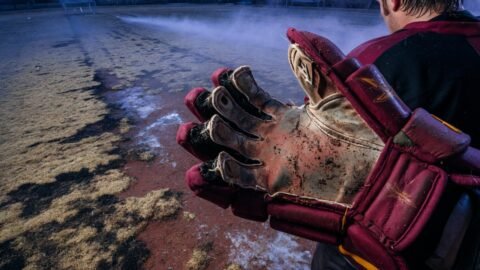
An Arizona State hockey player went down on a track at 8:31 on a Thursday morning and is still in a hospital days later. That is the entire confirmed public record. Everything else sits behind privacy law, and the silence is louder than the sirens.
Tempe Fire Medical Rescue answered a heat-related illness call at 400 S. Rural Road, the Sun Angel Stadium address, treated a patient on scene, and transported him. The university waited until Sunday to confirm the athlete was a men’s hockey player who remains hospitalized. Chris Fiscus, ASU’s vice president of media relations, offered the only official language available: “The university offers its support for the student-athlete, their family and all of our student-athletes during this difficult time.” No name. No condition. No clarification on whether the outdoor workout was a sanctioned team session. One reporter was told it was a team-bonding event. The university would not say.
I keep coming back to the calendar and the thermometer, because those are the two numbers that do not require a waiver.
Classes Started and the Heat Did Not Care
August 20 was the first day of ASU’s fall semester. NCAA rules let college hockey programs open formal activities the moment classes begin. That timing is not a loophole; it is the rulebook. The Phoenix area sat under an extreme heat warning all week. Average temperature that day: 92.5 degrees. Afternoon high: 106. Local reporting put the temperature near 100 around midday. Fire crews still rolled at 8:31 a.m.
Hockey players live in controlled cold for eight months. Off-ice conditioning is the tax they pay for that environment. Sprints, lifts, team runs, bonding circuits. In most of the NCHC footprint those sessions happen in air that does not try to kill you. In Tempe they happen under a sky that posts heat warnings like weather reports elsewhere post rain delays. The program has grown into a real Division I operation with Mullett Arena and a third NCHC season ahead. The schedule still opens October 2 at Lindenwood. None of that changes the physics of August on a track.
I have watched enough summer conditioning cycles to know the pattern. Coaches push early buy-in. Newcomers especially want to prove they belong. Sources told local ASU reporters the player was a newcomer and in critical condition as of Sunday. The university has not confirmed either detail. I am not going to pretend those source reports are settled fact. I am going to note that a multi-day hospital stay after a heat-related call is already the kind of outcome that should force every program in this climate to re-audit its outdoor protocols before the next 8:30 a.m. session.
Privacy Protects the Family. It Also Protects the System.
FERPA and medical privacy are not villains here. Families deserve space. Teammates deserve not to become content. But when an athlete remains hospitalized days after a collapse on university grounds during what may have been team activity, the information vacuum does real work. It keeps the focus on thoughts and prayers instead of wet-bulb temperatures, acclimatization timelines, work-to-rest ratios, and whether any staff member had the authority to shut the session down when the warning was already active.
Arizona’s heat death and heat-illness numbers are not abstract. Outdoor workers in this valley operate under stricter rules than many college athletic departments publish. Hockey is not football. The pads are different. The culture of toughness is not. A player who trains all summer for ice time does not get a free pass from core temperature. Rhabdomyolysis, heat stroke, and related cascades do not check a sport’s logo before they hit.
The public reaction I saw tracked what you would expect from a college hockey community: scared, supportive, focused on the kid and the family. That is the right first impulse. The second impulse has to be structural. Was this session mandatory? Who signed off on outdoor work under an extreme heat warning? What cooling, hydration, and stoppage thresholds were in writing? Those answers matter more for the next newcomer than any statement about difficult times.
October Is Not the Point
ASU hockey will eventually take the ice. The Lindenwood opener will arrive whether or not the public ever learns this player’s name. That is not a prediction about his recovery; I have no medical information and will not invent any. It is a statement about institutional inertia. Programs move. Seasons start. The athlete still in a Scottsdale hospital is the only person for whom the calendar has stopped.
I want the player healthy. I want the family left alone. I also want every coach who runs outdoor work in the Valley to treat 8:31 a.m. under a heat warning as a decision that requires a paper trail, not a vibe. The university’s support line is appropriate. It is also incomplete. A heat collapse that still has a college hockey player hospitalized days later is a systems story wearing a privacy cloak. The cloak is legal. The systems question is not optional.