The Brewers just turned a $69 million closer into a batting-practice machine with five singles in a six-batter stretch, and if you think that was noise, you are not watching the same sport I am.
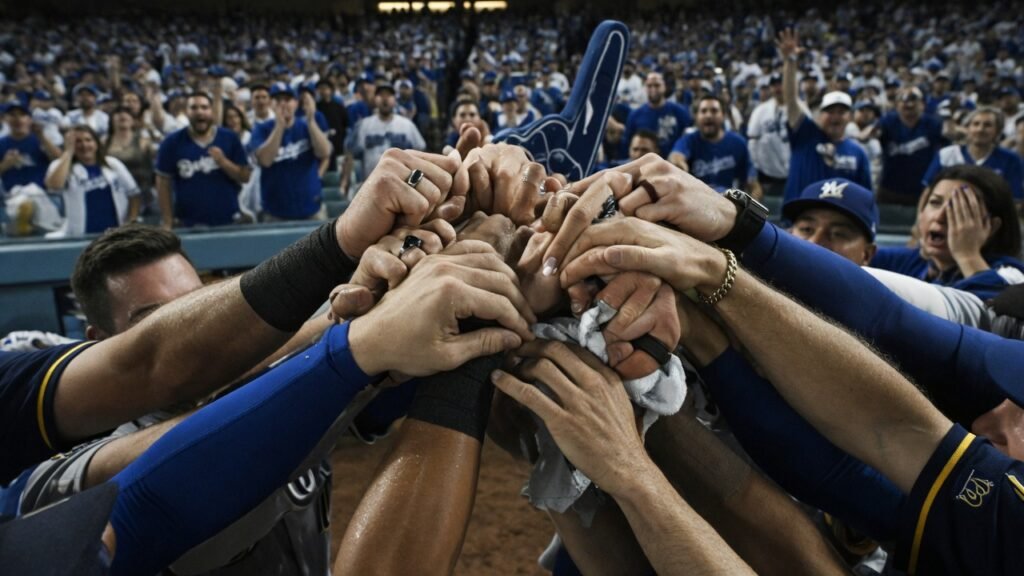
Down 4-2 with one out in the ninth at Dodger Stadium. Edwin Díaz on the mound. The best record in the National League hanging by a thread against the franchise that treats October like a birthright. Then Joey Ortiz, David Hamilton, Jackson Chourio, and Garrett Mitchell strung four straight singles off Díaz like they were playing pepper in spring training. Mitchell tied it. Alex Vesia came in. Jake Bauers punched the go-ahead run home. Trevor Megill locked the door. Brewers 5, Dodgers 4. Milwaukee stays alone atop the NL at 75-47. The Dodgers fall to 73-49 and start whispering about closer committees that nobody actually wants.
I have watched enough late-season baseball to know the difference between a lucky bounce and a personality. This was personality.
The Bottom of the Order Just Wrote the Mission Statement
They did not mash their way out of a two-run hole. They did not need Christian Yelich or William Contreras to carry the weight. The bottom of the lineup flipped the game and handed it back to the top, one clean single at a time. Mitchell said it cleanest: “That’s Brewers baseball right there.” He was right. The same club that went 3-for-28 with runners in scoring position while getting swept in San Diego suddenly looked like the version that spent half the summer owning the best record in baseball.
Bauers, the guy who drove in the winner, spent Wednesday telling everyone they needed to chill the hell out after an 11-inning loss to the Padres. Thursday he made the case with a two-strike slider he forced into play. “When I said we needed to chill the [expletive] out yesterday’s, that more along the lines of what it looks like,” he said. “Line drives, putting good swings on balls, putting it in play with the right ball flight and then ultimately getting the results.”
I love that. No manifesto. No dugout speech. Just contact and conviction. The Brewers improved to 4-38 when trailing after eight innings with that approach. Four wins. That number used to be a punchline. Now it is a warning label for anyone who assumes Milwaukee folds when the lights get bright.
Pat Murphy called it one of the biggest wins of the year because of what they had just endured in San Diego. Megill agreed. Mitchell agreed. Bauers, true to form, refused to rank it. I am ranking it for him. A team that just got its clutch identity stolen in three nights in San Diego walked into Dodger Stadium, got punched by a Max Muncy three-run homer that made him the all-time leader at that park with 131, and still found a way to steal the series opener of a rematch of last year’s NLCS. That is not a box score. That is a statement about October readiness.
Díaz Is Not Searching for Command. He Is Searching for an Identity
Díaz walked into that ninth with a two-run lead and left with his third blown save in his last four appearances and an ERA that now sits at 11.57. Four hits. Three earned. Two strikeouts that felt like temporary interruptions. His fastball was catching too much plate, and he knew it.
“I think my fastball command today — I was throwing strikes, but right in the middle,” Díaz said. “Every big league hitter can hit it right in the middle, [even if you] throw 200 miles an hour. I’ve got to get better at that.”
That is not a mechanical footnote. That is a guy who signed the richest closer deal in the sport describing the difference between looking unhittable and looking average. He added the part that should keep Dodgers fans awake: “It’s frustrating because I know my ability. I know what I can do on the mound. To not be able to do it sucks.”
Dave Roberts is still betting on the stuff. He has to. When asked about alternatives, Roberts went blunt: “Give me another option. To be quite honest, none of those guys really are throwing the baseball great.” He is not wrong about the rest of the bullpen. He is also not wrong that this is getting expensive in ways that go beyond the $69 million. Five relievers used in a loss that kept Milwaukee two games clear of Los Angeles for the NL’s best record. Bye implications. Seeding implications. The kind of loss Roberts himself called “costly.”
Roberts is still giving Díaz runway. “He’s got to find his way. And he’s got to have a runway to find his way.” Fair. But runway ends in September when the Brewers are still the team you have to catch and the closer you paid like a star is serving meatballs to the eight and nine hitters.
This Is How Seedings Actually Get Decided
Roki Sasaki walked five and still only gave up two runs because the Brewers could not cash in early. Muncy’s pinch-hit bomb in the sixth looked like the kind of swing that ends series in October. And then Milwaukee answered with the quietest kind of violence: singles, pressure, and a closer who could not locate.
I keep coming back to the stakes nobody wants to say out loud yet. The top two records in each league get the bye through the Wild Card round. The Brewers just protected that cushion against the Dodgers on the Dodgers’ home dirt after a miserable series in San Diego. That is not a random Thursday night. That is a club telling you it still knows who it is when the bats go cold and the schedule gets vicious.
Bauers can keep saying not to treat any one game as bigger than another. I get the Zen act. I even respect it. But the ledger does not care about Zen. Milwaukee is 75-47 with the best record in the National League because nights like this keep happening. Five singles. One go-ahead knock. A perfect ninth from Megill. The Dodgers staring at a closer who is running out of explanations.
David does not beat Goliath with a monologue. He beats him with contact and nerve when everyone else is waiting for the big swing. The Brewers just reminded the entire National League what that looks like.