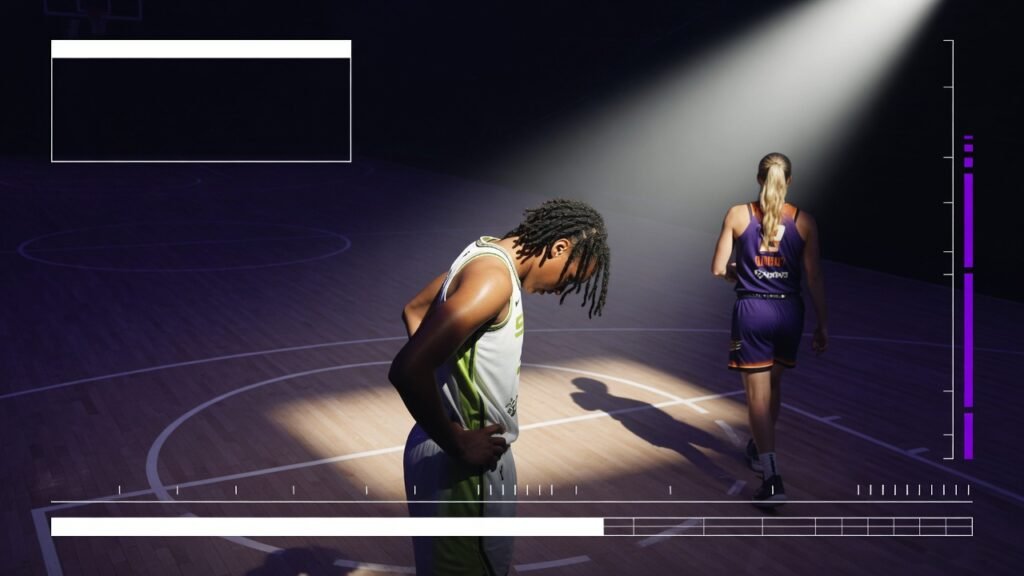
DiJonai Carrington just did the one thing social media never forgives. She took the heat out of her own grenade.
She said Sophie Cunningham’s foul was not intentional. Then she declined to unpack the “white privilege” post that turned a basketball collision into a national referendum. That combination is the story. Not the highlight. Not the outrage cycle. The separation.
I watched this land the way every modern sports controversy lands now: the play happens in real time, the caption happens in half a second, and the second one eats the first. Carrington’s clarification does not erase the post. It does something more useful. It forces a clean split between what the tape can prove and what a platform can imply.
The Foul Was Always the Weaker Case
A flagrant is a specific basketball event. It has a standard, a review process, and a body of film that either supports intent or does not. Carrington looking at that same play and saying it was not intentional is not a press-tour softener. It is a player who was in the action refusing to oversell the contact for narrative value.
That matters because the WNBA’s physicality has been climbing in plain sight. Guards get hit on drives. Wings get bumped off cuts. Post players eat forearms that would have drawn gasps a decade ago. When every hard foul becomes a morality play, you stop evaluating technique and start casting villains. I care about the mechanism: angle of the body, play on the ball, follow-through, game situation. Those are coachable and reviewable. “Privilege” is not a defensive scheme.
Cunningham’s four-word message ahead of the Fever-Liberty game was the other tell. Short. Controlled. No essay. She treated it like a competitor with a series to play, not a defendant in a timeline trial. That is how professionals usually answer when the basketball part is thinner than the noise around it.
Acho Put a Microphone on the Gap
Emmanuel Acho’s criticism of the privilege post did what sharp outside pushback is supposed to do. It asked for the connective tissue. If the foul is not intentional, what exact advantage was being named? Carrington’s response, and then her decision not to re-litigate the post in full, leaves that question hanging on purpose.
I do not need her to host a seminar. I need consistency. You cannot escalate a play into a structural indictment and then, when pressed on the play itself, retreat to “not intentional” without addressing why the larger frame was used in the first place. That gap is where credibility leaks. Declining to explain is a choice. It protects her from a second wave of soundbites. It also leaves the original claim unanchored to the basketball evidence she herself just undercut.
This is the modern athlete bind in compressed form. Post in the heat, clarify in the cool, and discover that the audience only keeps the first version. The tape does not care about your mentions. The tape cares about forearm, hip, and whether the play was on the ball.
Two Standards, One Timeline
Here is the part I will not blur. Racial dynamics in sports media are real. Who gets the benefit of the doubt on physical plays has a documented history across leagues. That conversation is legitimate when it is tied to patterns, suspensions, and comparative enforcement. It gets sloppy when it is hung on a single foul the involved player later declines to call intentional.
I am done treating every hard foul as a referendum and every walk-back as betrayal. Carrington gave the basketball answer. The privilege post remains a separate claim that still needs its own proof structure. Fusing them made for hotter content. Separating them is how you actually analyze a game.
Going forward, the Fever and whoever shares the floor with Cunningham will keep playing through contact. Officials will keep drawing a line that feels inconsistent in real time because it always does at game speed. Players will keep posting before the adrenaline drains. The only durable standard is the one Carrington just pointed back to: what the play shows, not what the caption wants it to mean.
She declined to explain. Fine. The explanation was already in the clarification. The foul was not intentional. Everything else is a different argument, and it still has not been made with the same clarity.