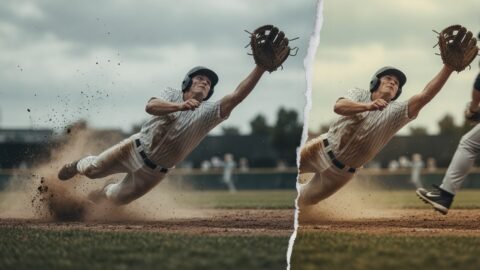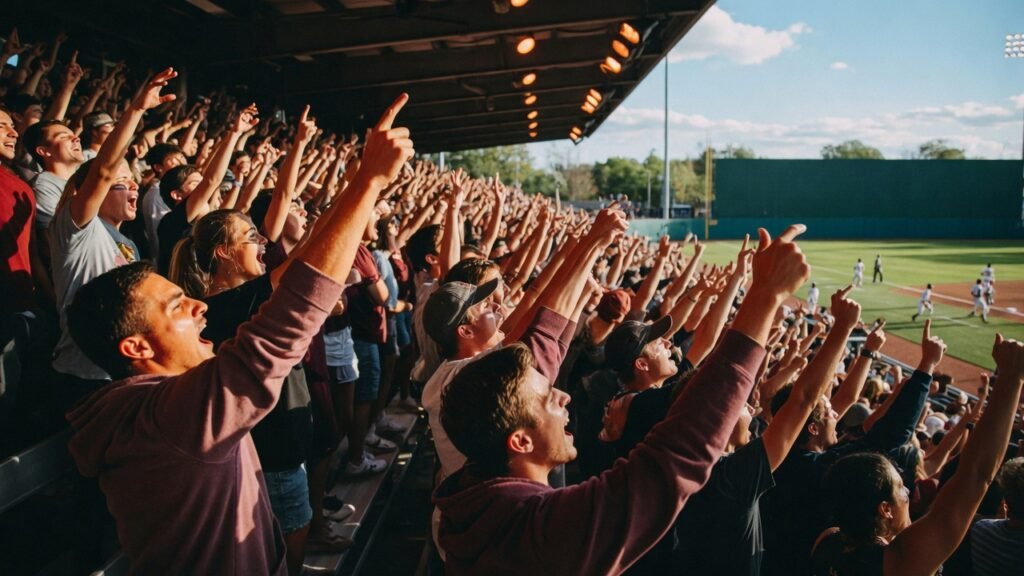
College baseball just ran a full-season victory lap while MLB spent the summer writing its own ransom note, and if you still treat the College World Series like a cute June diversion you are already behind.
Oklahoma took the 2026 title. ESPN’s cameras caught nearly everything. The Men’s College World Series averaged 1.5 million viewers across 15 games, up 24 percent year over year, third-most watched on record. The finals hit 2.0 million. Game 3 pulled 2.5 million. Viewers under 35 jumped 46 percent. Regionals were the most-watched on record. Super Regionals up 31 percent. Regular-season games on ESPN platforms jumped roughly 50 percent and posted the best marks since 2012. That is not background noise. That is a sport seizing the microphone while the big league keeps clearing its throat about leverage.
The CBA expires December 1, 2026. Bruce Meyer has already said a lockout is all but guaranteed. Rob Manfred, never one to bury the lead, once called an offseason lockout “actually a positive.” Eighty of 101 players polled by The Athletic expect the lockout. Nearly 78 percent of fans in the same survey believe games will be missed in 2027. The war chest on the players’ side sits above $500 million. The owners have shown their cards. This is not speculation. This is scheduled chaos with a date stamp.
MLB Is Drafting Its Own Replacement Product
Here is the part the national talking heads keep soft-pedaling because it wrecks their “baseball is dying” content cycle. MLB’s June proposals wanted to bar high schoolers from the draft until age 20 and two years removed from graduation, create separate domestic and international drafts, hard-slot a 12-round process, and dump equal $200 million bonus pools into each. The league literally framed the package as a way to strengthen college baseball as the development path. The union rejected it, correctly noting the pay cuts and the talent squeeze. But the intent was public. Seventy-five percent of domestic big leaguers already come through college. Eighty-one percent of drafted players are college guys. Clubs in 2025 averaged more than 16 college picks out of roughly 20.5 total selections. The pipeline is already college-heavy. The lockout just turns the volume to 11.
I know what you are typing. “College ball can’t fill a 162-game hole.” Correct. It does not have to. It only has to own the months when MLB goes dark and keep the younger demos that already showed up in 2026. Those under-35 numbers and the 18-24 spike in the tournament are not a blip. They are a migration. Fans who discover a packed Alex Box or a raucous Fowler Park in March do not automatically crawl back to a lockout-scarred product in July. Some of them stay. Some of them bring friends. That is how sports actually grow when the monopoly screws up.
Baseball America asked the right question months ago: is college baseball ready for its moment? The 2026 numbers answered yes before the first lockout meeting even happens. Coaches and the ABCA have been prepping for fewer draft rounds and more talent staying on campus. The product on the field already looks faster, louder, and more watchable than the slow-play big-league version that still treats pitch clocks like a suggestion half the time.
The Glazing Class Will Call This Temporary. They Are Wrong.
Traditional media will spend the next 18 months insisting college baseball is a nice story that collapses the second MLB returns. Skip energy. Empty calories. I watched the same people sleep on the sport while the ratings climbed and the demographics shifted. They will do it again because their incentives reward the familiar crisis narrative around the majors, not the actual growth happening three levels down.
A work stoppage that costs spring training or a chunk of the 2027 season hands college baseball a national window it has never owned. The talent is already concentrating there. The TV partners already proved they can deliver the audience. The fans already showed they will show up and stick around when the games matter. Oklahoma and North Carolina just played in front of numbers that would make half the mid-market MLB clubs jealous on a random Tuesday.
This is not charity. This is market share. MLB spent decades treating the amateur game like a free farm system and the college product like a regional curiosity. Now the draft proposals openly admit the college path is the future, the lockout clock is ticking, and the viewership is already migrating. If the big league goes dark, the only people surprised will be the ones who never watched a Super Regional.
Go ahead and tell me college baseball is still just a warm-up act. Tell me the second Manfred and the union cut a deal everyone forgets the 2.5 million who showed up for Game 3. I will wait. The numbers already chose a side.