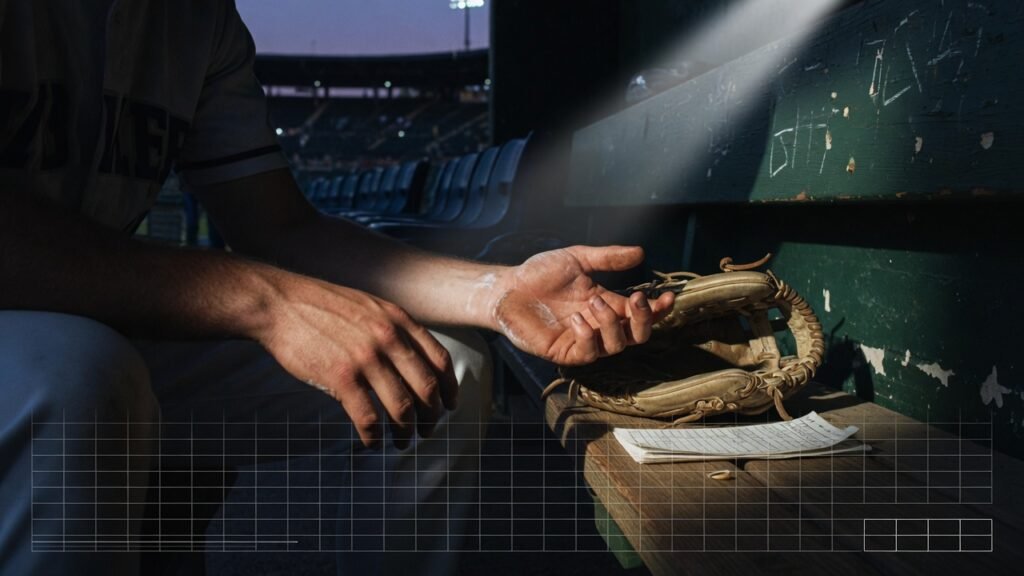
The smartest baseball idea of the decade almost happened in 2020, got killed by a pandemic, and now sits right there in the middle of a CBA fight that will decide whether college baseball still feeds the big leagues or becomes a sideshow. Put the MLB Draft back in June. Put it in Omaha. Do it while the College World Series is still humming at Charles Schwab Field.
I am not romanticizing brick and dirt. I am talking about attention, pipeline, and leverage. When Rob Manfred announced the 2020 Draft would open at the Holland Performing Arts Center right before the CWS, he said the quiet part clean: “The College World Series teams will all be welcome to attend the opening night of the draft… Obviously the result we’re looking for here is that many of the players being drafted are going to have a much better draft-day experience.” He also called the NCAA “a key organization in terms of the overall growth of the game.” That was the correct institutional read. Then COVID wiped the board, the Draft slid to July to ride All-Star weekend, and the amateur calendar fractured again.
June Timing Is Not Nostalgia. It Is Competitive Design
The MLBPA’s July 21 counter-proposal finally puts the calendar back where it belongs. Keep 20 rounds. Keep high school and JUCO eligibility. Open the door for all second-year college players. Grow the pools with revenue and give small-market clubs real flexibility, including playoff bumps and limited big-league deals on early picks. And move the Draft back to June.
That last piece is the hinge. A June Draft sitting next to or inside the CWS window turns two separate peaks into one national event. In 2026 the Series ran June 12-22. The Draft sat idle until July 11-12 in Philadelphia. That six-week gap is wasted oxygen. Kids who just finished the best amateur stage of their lives should hear their names while the lights are still on in Omaha, not after the baseball world has already flipped to the midsummer showcase. The 2020 plan had first-round action June 10-12 with the CWS starting the next day. That sequence still works. Off-day or Friday-before-finals staging keeps the field clear and the cameras pointed at both stages.
Owners want the opposite. Their June 18 package shrinks the domestic Draft to 12 hard-slotted rounds, slashes the bonus pool to roughly $200 million, and effectively kills high school and most JUCO entry by requiring domestic players to be 20 and two years removed from graduation starting in 2028. Parallel international draft, same hard cap. They are trying to cut total amateur spend by hundreds of millions against recent combined outlays near $600 million and a 2025 domestic signing total that hit a record $392.5 million. The 2026 pools already sat at about $358.7 million across 30 clubs. That is not bloat. That is the cost of a functioning feeder system.
Gut the Draft and You Gut the Showcase That Makes Omaha Matter
College baseball’s growth is real. Top programs now deliver resources that used to live only in pro systems. Manfred’s own office has acknowledged the transformation. So the logical response is not to raise the age floor and chop rounds until the high-upside high school bat and the late-blooming junior-college arm disappear. It is to keep those paths open and stage the selection event where the product is already on national television.
The PA’s small-market language is the practical glue. Extra pool money for playoff clubs, limited overage relief before pick penalties kick in, and the ability for lower-revenue teams to attach major-league contracts to a couple of early picks without torching the entire slot structure. That is how you stop the Draft from becoming a pure big-market auction while still letting the event live in a city that already owns June baseball mindshare. Trading picks in the first ten rounds with a two-hour freeze before the clock starts is the modernizing piece that finally matches football and basketball practice without turning the board into pure chaos.
I keep coming back to the mechanism. A 12-round, age-gated draft with gutted pools does not create better big leaguers. It creates fewer developmental bets and a thinner college product because the best prep arms skip campus entirely or never get the second look that JUCO and early college eligibility currently allow. Omaha during the CWS does the reverse. It forces MLB to sell its future next to the best version of the amateur game. It gives the NCAA a co-branded night that actually grows the sport instead of treating college baseball like a cost center to be managed down.
The 2020 version never got its stage. The CBA talks now give both sides a clean shot to build the better version. Keep 20 rounds, keep the kids eligible, put the money back in the pools, and drop the whole thing in Omaha while the College World Series is still the biggest story in the sport. That is not fan service. That is how you stop treating the amateur pipeline like a line item and start treating it like the product.