My stomach is doing that thing again, that low, unsettling rumble you get when you’re watching the opening credits of a movie you *know* is going to end badly, but you can’t look away. It’s the same feeling I had watching the first act of *Casino*, knowing full well that Ace Rothstein, for all his genius, was about to walk right into a buzzsaw of mob politics and unchecked ego. And right now, as Friday night looms, I’m watching the Dodgers, the supposed invincible juggernaut, line up their next scene, and I can practically smell the impending disaster.
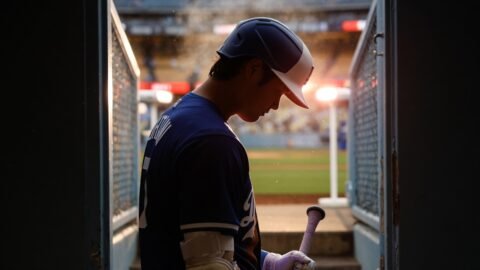
Shohei Ohtani, the unicorn, the one-in-a-century talent, is set to toe the rubber against the Padres. That’s the headline, the marquee event, the reason we all tune in. But I’m not looking at Ohtani. I’m looking at the guy crouched behind the plate, Dalton Rushing, and I’m seeing a kid caught in a crossfire, a pawn in a high-stakes game of managerial chess, and a potential casualty in the delicate ecosystem that is a major league clubhouse.
I can still see it in my head, playing on a loop, the absolute gut punch of that Minneapolis game eight days ago. Ohtani, one of the most stoic, outwardly calm athletes I’ve ever seen, visibly *irritated*. Vehemently tapping his head, trying to get a video review, essentially telling the world, and more importantly, his catcher, “This isn’t what I wanted. This isn’t right.” I felt it in my chest, a tightening, like when you watch a perfectly executed bank heist in *Heat* go sideways because one guy can’t keep his head. The immediate aftermath, Rushing in the dugout, getting consoled by Dave Roberts and Freddie Freeman. *Consoled*. Like a Little Leaguer who just dropped a pop-up. He even admitted it himself, the raw, honest pain of it: “embarrassing that I need support like that.”
Embarrassing? I’d call it a warning shot. A flashing red light on the dashboard of a Ferrari going 200 mph. We’re talking about Shohei Ohtani here. This isn’t just some back-of-the-rotation guy. This is the guy who signed a $700 million contract, the guy whose every move is scrutinized, the guy who carries the weight of an entire franchise, probably an entire country, on his shoulders. And he’s got a 4.34 ERA pitching to Rushing, compared to a pristine 0.74 with Will Smith. That’s not a statistical anomaly, people. That’s a gaping, Grand Canyon-sized chasm of trust, chemistry, and execution.
And then comes Roberts, the calm, collected skipper, trying to pour water on a five-alarm fire. He said Thursday, “I think they will be [on the same page]… They don’t think the same, so it takes time. But Dalton understands that this is what he signed up for. The job of a catcher is to be a servant to the pitcher. That’s the bottom line.”
A servant.
I’m sorry, but did I just hear that right? “A servant to the pitcher.” My jaw actually dropped. This isn’t some medieval court, Roberts. This is the 21st-century MLB, where the best batteries operate on a level of intuitive, symbiotic partnership, not subservience. You don’t tell a young player, especially one trying to navigate the biggest stage in sports, that his job is to be a *servant* to a superstar. You tell him his job is to *lead*, to *collaborate*, to *earn trust*.
This isn’t about Rushing’s talent, or lack thereof. He’s a 25-year-old in his second year. He’s learning. But Roberts’ comment, in my view, just put an anvil around Rushing’s neck. It essentially tells him, “Your thoughts, your instincts, your game plan? Secondary. Ohtani’s the master, you’re the slave.” How in God’s name is that supposed to build confidence? How is that supposed to foster the kind of trust Ohtani *himself* needs to be at his best?
I remember Ohtani talking about Will Smith last year, before this whole Rushing dynamic became a thing. He said, “He’s very experienced, obviously, and he knows how to call games. I have a lot of trust in him.” That’s the key, isn’t it? *Trust*. It’s not about Rushing being a servant; it’s about Ohtani *trusting* Rushing. And Roberts’ public declaration, whether he meant it or not, completely undermines Rushing’s ability to earn that trust. It’s like Frank Lucas telling Nicky Barnes to just “do what he’s told” in *American Gangster*, completely ignoring the street smarts and independent thinking that made Nicky valuable in the first place. You foster resentment, not partnership.
And let’s be real about the timing. Will Smith is out with a neck injury, conveniently for an “undetermined amount of time.” So the Dodgers have “little choice” but to force this pairing. It’s the classic mob boss move, isn’t it? You back someone into a corner, make them an offer they can’t refuse, and then pretend it was their idea all along. They *have* to get on the same page. But what if they can’t? What if Ohtani’s frustration continues to simmer? What if Rushing, told he’s a servant, loses all confidence in his own instincts? This isn’t a problem that gets fixed by decree. This is a problem that gets fixed by genuine connection, by hours of conversation, by a catcher being allowed to be a *partner*, not just a glorified robot pressing buttons.
I’m also not buying the “Ohtani’s start pushed back to face better teams” narrative. Come on. He was scheduled to start Wednesday in Sacramento against the A’s, then suddenly, boom, Friday against the Padres and then the Diamondbacks leading up to the All-Star break. And oh, by the way, it’s also “helpful” for his left knee, which forced him to miss a game and “continues to require maintenance.” Roberts says he spoke to Ohtani, and he’s “feeling better every day,” and “the way he’s moving the last couple days has been better.”
It feels like a beautifully crafted cover story, doesn’t it? A classic misdirection straight out of *Ocean’s Eleven*. The “knee” is the shiny object, drawing our attention away from the real issue: the absolute train wreck that was the Ohtani-Rushing battery in Minneapolis. They needed more time, not for Ohtani’s knee, but for the Dodgers’ front office and coaching staff to try and strong-arm a solution between a generational talent and a young kid who, by his own admission, was embarrassed. They needed time to try and convince Rushing to just shut up and serve, and Ohtani to just accept it.
But Ohtani isn’t a guy who just accepts things. His entire career has been about defying expectations, about carving his own path. He’s not going to suddenly become comfortable with a catcher he doesn’t trust, just because his manager tells the kid to be a “servant.” That’s not how the psychology of a high-performance athlete works. If he doesn’t believe in the pitch calling, if he doesn’t feel a connection, that minute hesitation, that fraction of a second of doubt, it can be the difference between a strikeout and a two-run homer.
This is a dangerous tightrope walk for the Dodgers. They’ve got the biggest star in the game, a guy who is trying to redefine what’s possible in baseball. And they’re trying to force a square peg into a round hole with his catcher, publicly humiliating the kid by reducing his role to “servant,” and then trying to mask the tension with convenient injury updates.
I’m telling you, this Friday night start isn’t just another game. It’s a test. A crucible. And if Ohtani comes out there still looking visibly frustrated, still shaking off pitches, still not in sync with Rushing, then Roberts’ “servant” strategy will blow up in their faces. It will be a public declaration that the Dodgers, for all their money and talent, are struggling to manage the human element of their most valuable asset. And for me, watching from my couch, it will be another punch to the gut, another scene playing out exactly how I feared it would. The Dodgers are playing a dangerous game, and I’m not sure they understand the consequences.