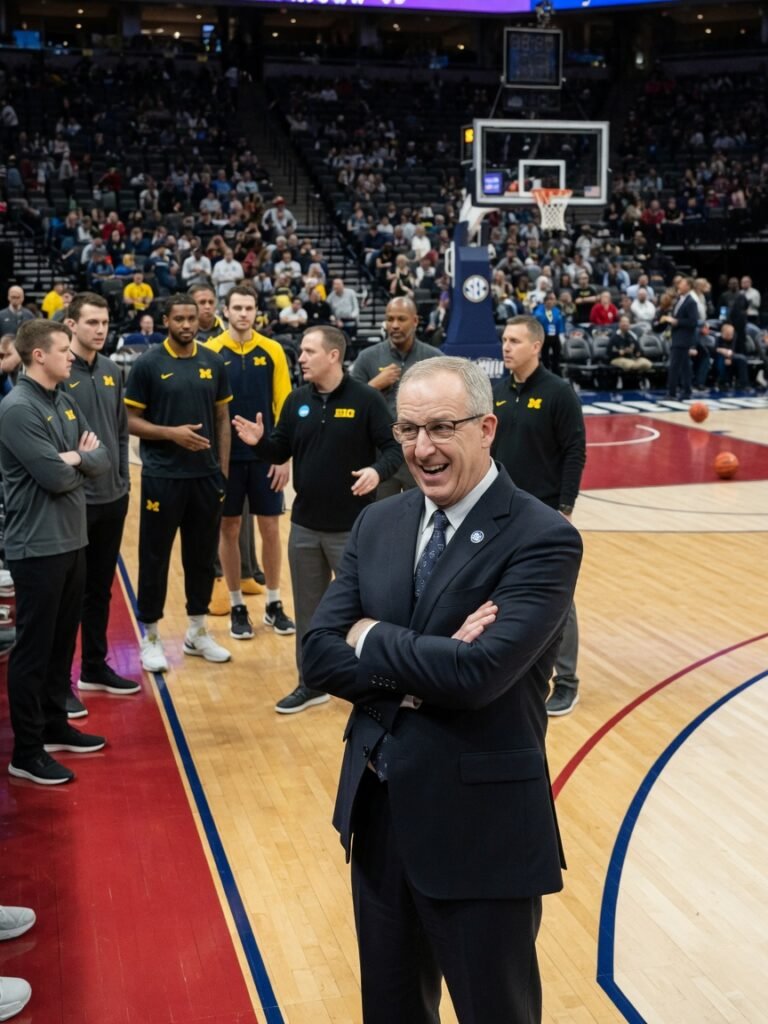
Greg Sankey sat on Paul Finebaum’s show and called the whole super-league specter a fabrication, and I felt my blood pressure spike the second the clip hit my feed. The man laughed about merging with the Big Ten like it was some inside joke between two commissioners who can’t even agree on playoff expansion. I don’t buy a word of it. This isn’t about protecting college sports. This is about two conferences already printing money trying to keep the printing press locked in their basement while everyone else fights over scraps.
The bill from Ted Cruz and Maria Cantwell landed last week with that voluntary media-rights pooling language buried later in the text, and Sankey immediately zeroed in on the dozen buckets of issues in the first section. He needs time to study it. He wants it truly voluntary. Fine. But the second anyone floats the idea that the SEC and Big Ten might just consolidate power into a thirty-team cartel, he and Tony Petitti both label it fiction. Pete Bevacqua from Notre Dame testified that such a league could happen if the rich keep getting richer, then added the line that actually matters: it would turn college football into a mini-NFL, and that isn’t good. Sankey heard that and chuckled. I didn’t.
College basketball sits right in the blast radius even if the headlines stay football-only. The NCAA Tournament revenue split, the conference realignment math that decides who hosts regionals, the NIL collectives that already favor Power programs with football money — all of it gets warped when two leagues decide the rest of the sport is minor-league. I said last week when I was breaking down those Super Regional staff picks that safe corporate logic was going to cost people real money. Same disease here. Sankey and Petitti keep acting like they’re separate kingdoms that just happen to agree on everything that protects their revenue. The laugh they shared on that call tells you everything.
The ACC and Big 12 came out in favor of the bill. Cody Campbell at Texas Tech called it healthy to have outside perspectives involved because the people who created the mess can’t be trusted to fix it. He’s right, and that should terrify the blue-bloods. If pooling media rights actually passes and spreads real money around, the arms race slows. Sankey knows that. That’s why the voluntary qualifier suddenly became the most important word in the entire 111-page document. He wants the option to say no when it stops benefiting his members.
I keep coming back to Bevacqua’s warning because it lands harder in basketball than people admit. A closed super league doesn’t need to invite every mid-major that can win a conference tournament. It doesn’t need Dayton or Saint Mary’s or even some of the current Power programs that don’t bring football revenue. The selection committee already tilts toward name brands. Imagine that same committee run by a cartel that only answers to its own television partners. March Madness becomes a gated community. The underdog stories that sell the event dry up. Sankey can scoff at the merger talk all he wants, but the incentives are already pointing exactly there.
The irony he mentioned — that the two leagues can’t agree on playoff size yet somehow get painted as ready to merge — is the weakest deflection I’ve heard in months. They don’t need full merger to act like one. They already coordinate on scheduling, on officiating standards, on how they treat transfer-portal rules. The next step is just formalizing the revenue split so the rest of the country can’t touch it. Petitti called the super-league notion a fabrication. Sankey echoed it. Both of them are betting that lawmakers will blink first.
I’m not in the mood to play along with the usual media script that treats these commissioners like reasonable stewards. Skip Bayless energy would have us debating whether the bill is too intrusive. The real question is why the same two leagues that spent the last five years raiding every conference in sight suddenly want Congress to slow everything down. They already have the money. They want the rules written so nobody else can catch up.
The dad in me watches this and sees the same pattern that wrecked minor-league baseball. Concentrate power, starve the bottom, then act surprised when the product suffers. College basketball still has the one-night miracle built into its DNA. That miracle only survives if the bracket stays somewhat random and the money doesn’t all flow to the same thirty schools. Sankey can keep laughing with Finebaum. The rest of us are watching the door close in real time.
The bill’s media-pooling section is the one that actually threatens their model. If it stays voluntary and the big two opt out, we’re right back where we started — two leagues negotiating separate deals while everyone else splits the leftovers. Campbell said the people who created the mess can’t fix it. He’s describing Sankey and Petitti exactly. The scoffing on the radio is just theater until the next expansion cycle or the next NIL ruling forces their hand.
I watched the same pattern in the NBA’s Aspiration investigation. Everyone claims the process is working until the interviews actually happen and the money moves. Here the interviews are Senate hearings and the money is already moving. Sankey needs more time to study the buckets. Translation: he needs time to lobby the parts that hurt him into oblivion. The super-league threat isn’t a fabrication. It’s the logical endpoint of the last decade of conference behavior. Pretending otherwise is how you end up with a thirty-team closed shop that treats basketball as an afterthought.
The fight over this bill is going to decide whether college hoops stays a national event or becomes regional content for two networks. Sankey can keep saying the notion isn’t consistent with the truth. The rest of us are reading the incentives and seeing exactly where this ends.