Alicia Vikander’s Tomb Raider is back on the domestic HBO Max charts this week, outpacing Beetlejuice Beetlejuice, Despicable Me, Crazy Rich Asians, and even the highest-grossing A24 title in recent memory. That is not supposed to happen. The 2018 film cost roughly $90 million before marketing and finished just under $275 million worldwide, a respectable but hardly legendary haul that left Warner Bros. with no appetite for a sequel. Yet here it sits, a lean survival thriller still finding fresh eyeballs while flashier properties fade.
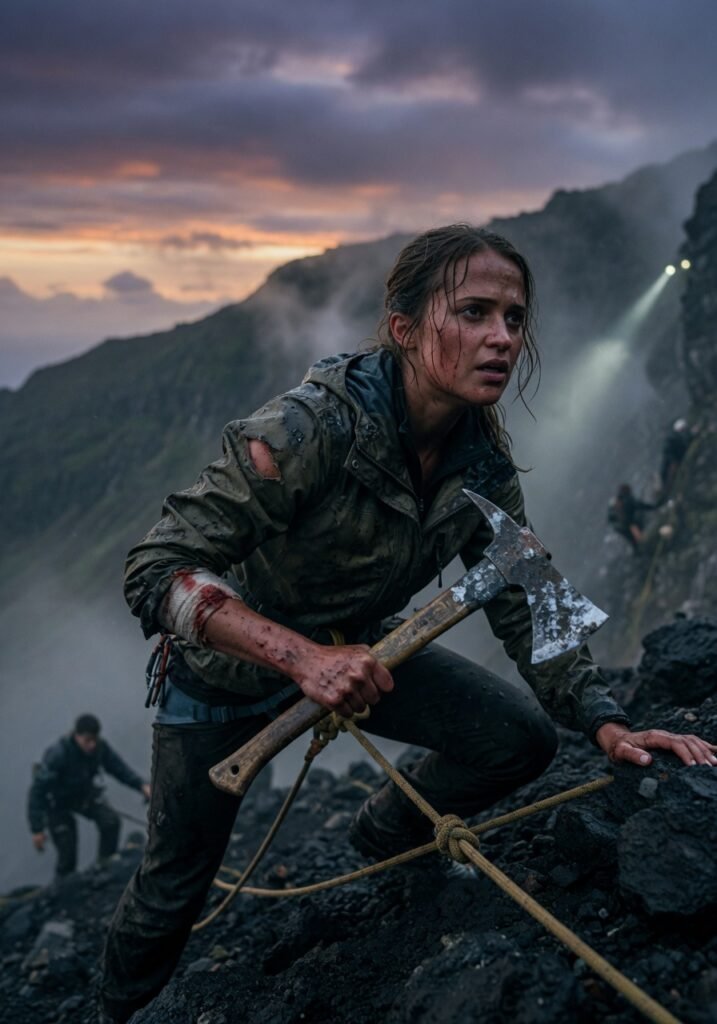
The reason is not nostalgia or algorithm magic. Roar Uthaug’s direction treats the material like a job that needs finishing rather than a franchise launchpad. Lara Croft begins the film broke, stubborn, and unwilling to claim her father’s legacy. The script drops her on an island where every solution demands physical cost and quick thinking. There are no chosen-one speeches, no last-minute exposition dumps explaining ancient mechanisms, and no love interest whose only function is to ask the heroine what she is feeling. The second act moves because the environment itself becomes the antagonist, forcing Lara to improvise with limited tools. That structure still works on streaming because audiences recognize competence when they see it.
Compare that to Michael Fassbender’s Assassin’s Creed from two years earlier. That picture carried a larger budget, a more recognizable brand on paper, and the same married-couple curiosity factor. It collapsed under the weight of its own mythology, stuffing centuries of Templar history into a single narrative while the modern-day framing device never earned its screen time. Vikander’s film avoided the same trap by keeping the stakes personal and the geography immediate. One picture trusts the audience to follow a woman climbing a tower with a rope and a knife. The other assumes viewers need holographic history lessons every fifteen minutes.
Uthaug’s post-Hollywood career makes the contrast sharper. After Tomb Raider he returned to Norway and delivered Troll, the most successful non-English-language title Netflix has ever released in the United States. The through-line is obvious: he understands scale without surrendering clarity. Whether the threat is a mythical creature or a father-daughter mystery on a forgotten island, the camera stays with the people solving the immediate problem. Hollywood rarely rewards that instinct once a director clears the $200 million mark. Uthaug simply went home and kept working.
You might be thinking a video-game adaptation this old should feel dated by now. The 2018 Lara is already more grounded than the 2001 Angelina Jolie version, which leaned harder on the iconography than the interior life. Vikander’s take strips away the unnecessary glamour. Training montages show bruises and failed attempts. The island sequences emphasize endurance over acrobatics. That restraint reads as deliberate rather than cheap, especially when current big-budget action often substitutes slow-motion drone shots for actual spatial geography. The film never pretends every set piece must top the last one. It just keeps Lara moving until the final confrontation feels earned.
The same economy shows up in how the supporting cast functions. Dominic West’s Lord Richard Croft exists mostly as motivation and warning, not as a scene-stealing subplot. Walton Goggins plays the corporate villain with the minimum number of monologues required to establish stakes. No one is asked to deliver dialogue that sounds like it was focus-grouped into inoffensiveness. When the movie does pause, the silence serves the tension instead of filling runtime with quips. That approach is rarer than it should be, which is why the picture still registers as functional years later.
Streaming numbers like these expose the gap between what studios claim audiences want and what they actually watch when given the choice. Tomb Raider is not “stunning and brave” for casting a woman who can do pull-ups. It is merely competent at the basics of the survival genre: clear objectives, visible geography, and a lead whose skills improve through repetition rather than sudden epiphany. Grimdark fantasy and neo-westerns succeed for similar reasons. They refuse to hand the protagonist an easy out. The land, or the island, or the oil field exacts a price. Viewers keep returning because the cost feels real on screen.
Vikander and Fassbender remain the only married couple to headline separate video-game films in the same decade that both underperformed relative to expectations. Neither picture killed the broader category. Both simply proved that name recognition alone cannot rescue a script that mistakes lore for character. The difference is that one of them still circulates because its director understood the assignment and left the rest on the cutting-room floor.
The lesson is not that every adaptation needs a European director who will immediately decamp after one studio gig. It is that efficiency travels. When the camera stays locked on a single person solving physical problems with limited resources, the audience does not need constant reminders of why they should care. They already see the cost. That remains the hardest trick in the genre, and Tomb Raider keeps pulling it off on streaming long after the theatrical run ended.