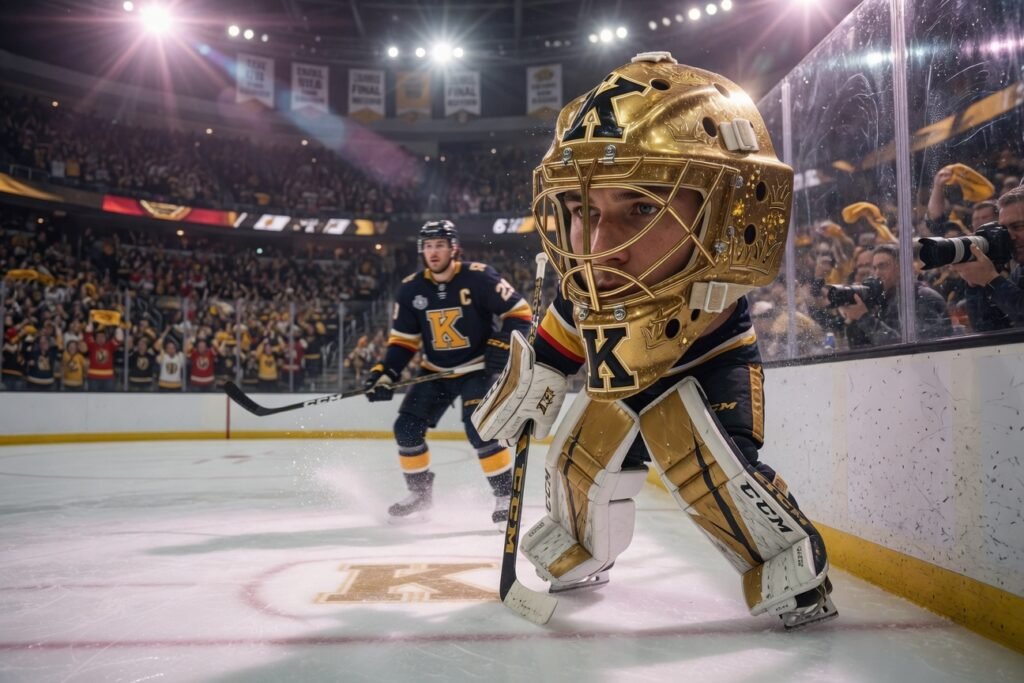
The 2026 Stanley Cup Final lands at the perfect time for me to unload some frustration. Carolina and Vegas both punched their tickets with the kind of runs that expose how little the regular season actually matters once the bracket opens up. I watched the conference finals play out and came away convinced this series will be decided by who handles the middle of the ice better when the checking tightens and the schedule compresses. Carolina’s path was shorter and cleaner on paper, but Vegas has the experience of multiple deep runs in a franchise that barely existed a decade ago.
Vegas reached this spot by outlasting the Avalanche in four after grinding through the Mammoth and Ducks in six games each. That Western Conference grind shows in their playoff numbers. Mitch Marner sits at seven goals and fourteen assists through sixteen games. He is the engine that turns second chances into sustained pressure. Carter Hart posted a .944 save percentage in the conference final alone. Those numbers do not scream dominance, but they scream reliability when the shots come in waves.
I am not convinced Hart’s regular-season history against Carolina tells us anything useful. He went 4-6-1 with a 2.93 goals-against average in eleven prior meetings, all with Philadelphia. Those were different teams and different versions of himself. The Hart who arrived in Vegas midseason has looked sharper, especially when the defense in front of him limits high-danger chances. Still, the knock on him has always been consistency under the brightest lights, and Carolina will test that immediately.
Carolina’s story carries its own weight. This is their first Final since 2006, when Rod Brind’Amour captained the only championship in franchise history. He has now been part of ninety-eight of the team’s one hundred playoff wins since the Hartford move. That continuity matters. The Jackson Blake–Taylor Hall–Logan Stankoven line has accounted for thirty-five percent of Carolina’s postseason points. Hall’s five goals and eleven assists in thirteen games make him the clear offensive heartbeat. Stankoven’s nine goals tie him for third in franchise single-postseason history behind only Brind’Amour and Eric Staal. Those are not empty stats; they reflect a line that is creating at even strength and on the power play while the rest of the roster stays disciplined.
Frederik Andersen’s turnaround is the quiet story that could decide the series. He finished the regular season with a 3.05 goals-against average and .874 save percentage. In the playoffs he is at 1.44 and .928 through thirteen games. That kind of reversal does not happen by accident. Carolina’s structure in front of him allows him to see pucks cleanly, and he has rewarded them with twelve wins. Vegas will need to find ways to screen him and create second-chance chaos, something their top-six has shown it can do when Marner and Jack Eichel are both rolling.
Eichel and Noah Hanifin carry an extra layer this year. Both won Olympic gold with the United States in 2026. Only Ken Morrow has previously paired that achievement with a Stanley Cup in the same calendar year. The motivation is obvious, yet it also adds external noise. I keep wondering whether that storyline distracts from the actual task of beating a Carolina team that has lost just once in its playoff run. The Hurricanes are the first club since the 1983 Oilers to reach the Final with one or zero losses. That kind of efficiency usually translates when the games matter most.
John Tortorella’s presence on the Vegas bench adds another variable. He took over late and still guided the team here. History shows coaches in that spot rarely get the credit they deserve if the roster was already talented, but the adjustment period is real. Carolina’s system under Brind’Amour has had all season to gel. Vegas is still installing pieces around Hart and integrating new habits. That gap in cohesion could show up in Games 3 and 4 when the series shifts to Las Vegas and the building gets loud.
The schedule itself favors the team that manages rest better. Games 1 and 2 at Carolina, then a quick shift west for Games 3 and 4. If the series goes long, the travel could bite the older legs on both rosters. Hall is thirty-four. Andersen is thirty-six. Vegas counters with Eichel and Marner in their primes. The physical toll will accumulate fast once checking pairs start hunting the Blake line.
I keep coming back to special teams as the separator. Carolina’s power play has clicked behind Hall and Stankoven. Vegas has leaned on Marner’s playmaking to generate looks at five-on-four. Neither team has shown a glaring weakness on the penalty kill yet, but one breakdown in the Final tends to decide a game. The team that forces the other into the box more often will control the tempo.
My prediction is not a sweep. Carolina’s goaltending and structure give them the slight edge at home to start, but Vegas has too much offensive talent and too many Final appearances to roll over. I expect a six-game series that goes back to Raleigh with everything on the line. Andersen will need to stay elite, and Hart will have to prove the regular-season sample against Carolina was irrelevant. The line play in the middle of the ice will decide who lifts the Cup.
That sets up the obvious question: which team’s identity survives the first two games in Carolina?