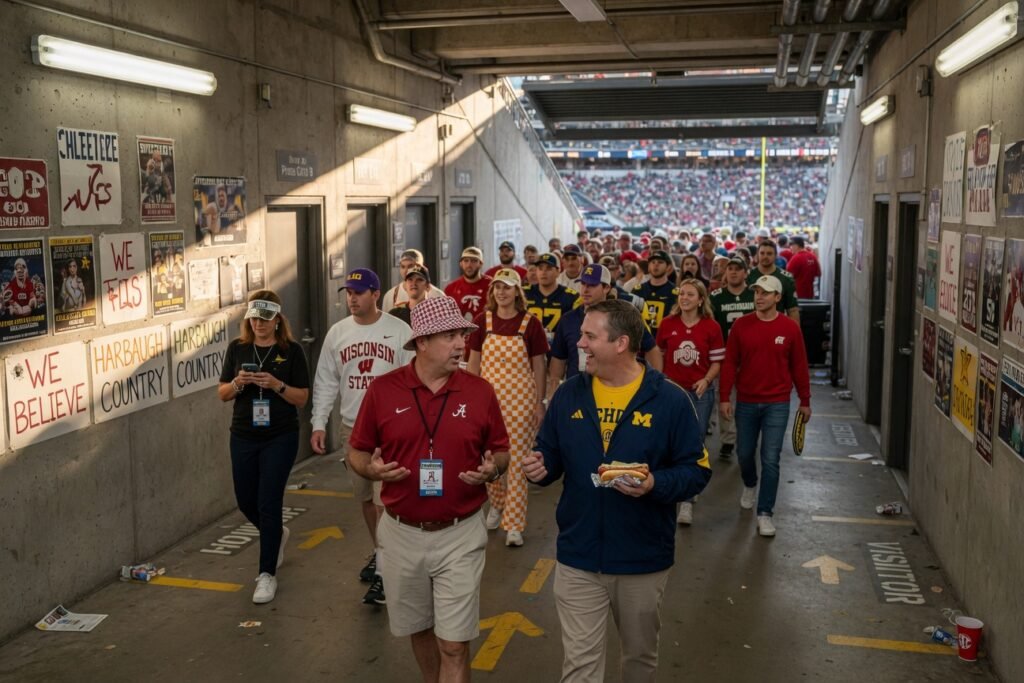
I walked into this spring meeting cycle expecting the usual posturing, the familiar dance between power brokers who know the cameras are watching. Instead I found something sharper. Jedd Fisch laid out a plan that cuts through the noise, and it forced me to reconsider how the entire playoff conversation has been framed since the expansion talks began. Fisch wants the Big Ten to lock in nine conference games, then slot one nonconference matchup each against the SEC, ACC, and Big 12. The idea is simple on its face: play the schedule, get seeded, and let the results quiet the conference-strength arguments once and for all.
He told ESPN the exact words that stuck with me. “You take your 12 games, see how you’ve done, you get seeded in the playoff, and then nobody can make these ridiculous arguments about how you do in specific conferences when clearly the conferences are different.” That line landed because it named the problem without apology. The rest of the Power 2 has spent weeks circling the same issue without saying it plainly. Fisch did. He has watched enough seasons to know that subjective strength-of-schedule debates have already warped selection committee conversations, and he is tired of watching good teams get punished for geography rather than performance.
I have covered this sport long enough to remember when a single loss could end a season before November even arrived. That memory makes Fisch’s nine-game proposal feel less like tinkering and more like a necessary correction. The Big Ten has already signaled it is moving toward that structure, and the math is straightforward. Fewer league games inside the conference means room for protected cross-conference dates that actually mean something. Those games would carry real weight in the seeding process instead of serving as afterthoughts on the schedule.
The contrast with the SEC’s position could not be clearer. While the Big Ten left California united behind a 24-team playoff, the SEC came out of Destin still split. Some athletic directors see the value in expanding the field; others worry about the financial model and the logistics of squeezing eight first-round games into an already crowded calendar. Chris Del Conte summed up the hesitation when he said the league needs time to evaluate because “it’s not just, ‘Hey, let’s jump to this.'” That caution is understandable on paper, but it ignores the calendar that actually matters. Tony Petitti and Greg Sankey must reach agreement by December 1 if any change is going to take effect for 2027. Waiting for perfect data is a luxury the sport no longer has.
I watched the 12-team format play out last December and saw the same complaints surface that have existed for a decade. One-loss teams from power conferences received the benefit of the doubt while undefeated or lightly tested groups from elsewhere fought for scraps. A 24-team field would not erase every grievance, but it would lengthen the runway exactly the way Warde Manuel described. He said it gives programs the freedom to schedule tougher nonconference opponents without the fear that one bad result ends the season. That is not abstract theory. It is the difference between Michigan playing Oklahoma and Michigan playing a directional school that guarantees a win. The current structure punishes ambition. The 24-team model rewards it.
The financial questions remain real, of course. Nobody in either room has seen hard numbers on what eight additional first-round games would generate in media rights. The Army-Navy complication adds another layer that no one has fully solved. Yet the absence of perfect data cannot become an excuse for paralysis. Petitti has been clear that the Big Ten is not entertaining a 16-team model. The SEC still leans that way officially but has left the door open. The gap between those positions is not philosophical; it is practical. One league wants more teams and more games. The other is protecting the revenue model it already controls. Both sides know that any deal will require compromise on scheduling, seeding, and how the selection committee weighs conference performance.
What struck me most while reading the reporting out of both meetings was how little anyone wanted to discuss the regular season itself. Fisch’s proposal forces that conversation into the open. Nine conference games plus three protected cross-conference dates would create a schedule that actually tests every participant against a broader sample. The results would feed directly into seeding rather than feeding endless debates about whether the Big Ten or SEC is better in a given year. That clarity would serve the playoff, the television partners, and the fans who have grown weary of the same arguments recycled every December.
I keep returning to the December 1 deadline because it concentrates the mind. If Petitti and Sankey cannot close the gap, the 12-team format locks in for at least another cycle. That outcome would not collapse the sport, but it would entrench the same structural complaints that Fisch is trying to eliminate. The Big Ten has already done the internal work to present a united front. The SEC remains divided between presidents who want 16 and coaches who see the upside of 24. Those divisions matter because they slow the decision-making process at the exact moment the sport needs momentum.
The legacy question sits underneath every line of this debate. College football has always measured itself by rings and by the quality of the opponents those rings were earned against. A 24-team playoff would not hand anyone a ring, but it would give more programs a legitimate path to compete for one. It would also protect the value of the regular season by making every game carry weight in a longer playoff chase. That is the trade-off the commissioners are weighing, and the clock is already running.
The conversations in Palos Verdes and Destin revealed more than policy preferences. They revealed two leagues that still view the playoff through different lenses of self-interest. Fisch’s scheduling idea bridges some of that distance by demanding results on the field rather than arguments in boardrooms. If the Big Ten adopts the nine-game model and the SEC eventually follows, the cross-conference dates would become the proving ground the sport has needed for years. The alternative is another round of the same subjective debates that have already worn thin.
I have watched this league long enough to know that momentum matters more than perfect consensus. The Big Ten has it. The SEC is still searching for it. December 1 will tell us which side prevailed.