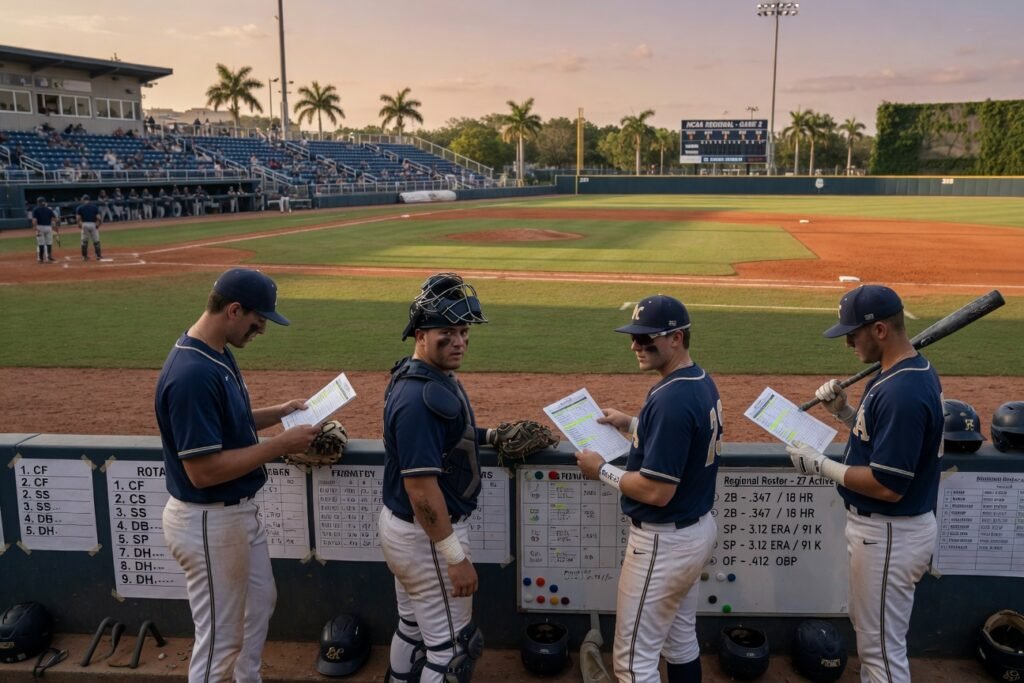
I was sitting at the kitchen table last night after the kids finally crashed, the house quiet except for the low hum of the fridge and my laptop screen still glowing with the latest regionals team capsules, and I couldn’t shake the feeling that this stretch of columns has turned into another one of those runs where everything lands clean. My last few pieces hit on the Jayhawks flattening West Virginia and the North Carolina baseball surge, and now here we are again, staring at the spring campaign’s final form in black-and-white lineups and rotation orders. These capsules aren’t just rosters—they’re the evidence that some teams built for three weeks of chaos while others are hoping one hot arm carries them.
The physical reaction hit first. My chest actually tightened reading through the ACC pods and the way certain lineups stack left-handed power against the probable Friday starters. I’ve been saying for weeks that Drew Burress at Georgia Tech changes the math in any regional he enters, and the capsule stats back that up without any sugarcoating. His on-base numbers and extra-base hit rate sit in a tier most college outfielders never touch, which means opposing managers have to decide whether to pitch around him early or risk the three-run inning that buries them before the seventh. I watched enough ACC games this year to know Burress isn’t just a stat sheet guy—he forces adjustments that ripple through the entire opposing order.
Kansas sits in a different spot. Their capsule shows a rotation that’s been stretched but still carries enough fresh arms to handle a double-elimination format. I said last week the Jayhawks were flattening everyone in their path, and the numbers confirm the depth: multiple starters with sub-4.00 ERAs and a bullpen that doesn’t collapse when the starter exits after five. That’s the difference between a team that wins one game and a team that wins the regional. I keep coming back to how their lineup balances speed at the top with power in the middle—exactly the profile that punishes tired pitching staffs late in a weekend.
North Carolina’s surge feels even more personal because I’ve been tracking their prospect pipeline since the 2026-2028 classes started popping in those junior rankings. The capsule rotation leans on two arms that have carried the staff all spring, but the real story is the bench depth and how the manager has used matchups in conference play. One wrong lefty-righty decision in the regional and the whole thing unravels. I’m not buying the narrative that they’re just riding momentum; the underlying stats on plate discipline and bullpen usage show a staff that’s been built for this exact moment.
What these capsules reveal that the box scores hide is the hidden cost of certain lineup constructions. Teams that loaded up on power without enough on-base guys are going to struggle when the starter stays in for seven innings. I’ve seen it before—remember how some squads in past regionals looked unbeatable on paper until the opposing manager went to the bullpen early and forced weak contact. The physical feeling of watching that happen is the same every time: you stare at the screen knowing the next at-bat decides whether you’re flying home or booking a trip to the next round.
Georgia Tech’s setup with Burress slotted in the heart of the order creates a cascading effect on how opponents set their own rotations. If a Friday starter has any history of struggling against left-handed hitters, the capsule data forces a change that might not be ideal. That’s the chess match these documents are meant to illuminate. I ran my own quick cross-check on the probable matchups and came away convinced that the teams with the most balanced lineups—speed, power, and at least two reliable lefty bats—will advance further than their seeding suggests.
There’s a real tension in how some rotations are constructed. A couple of the top seeds show heavy reliance on one ace who’s thrown a ton of innings already. The capsule stats make the wear-and-tear obvious: higher pitch counts per start, fewer days of rest built into the conference schedule. When that arm hits the regional and faces a lineup that’s seen him twice already, the advantage flips. I’ve been there as a fan, refreshing the box score while the kids sleep, knowing one bad start can end the whole run.
The subtext in these numbers also points to the 2026-2028 prospects who are already impacting regionals. Burress isn’t the only one—there are underclassmen sprinkled through the lineups whose advanced stats suggest they’ll be lottery-type talents soon. Watching how they perform under the regional pressure gives the clearest preview of what the next few drafts will look like. I keep circling back to that because the capsules turn abstract prospect rankings into concrete at-bats and innings.
My doubt from earlier in the year is gone. I had questioned whether some of these staffs had the depth to survive a regional, but the rotation orders and usage patterns in the capsules show the managers who planned for exactly this scenario. The ones who didn’t are going to feel it in the first 48 hours. That’s the stomach-punch reality of college baseball postseason: the prep work shows up immediately.
I watched enough of the conference tournaments to know which teams are carrying confidence into these lineups and which ones are masking issues with hot streaks. The capsules separate the two cleanly. Kansas and North Carolina look built for multiple games, while a few others are one injury or one bad matchup away from watching their season end on someone else’s highlight reel.
The real test comes when the first pitch of each regional is thrown. These numbers are the map, but the players still have to walk it. I’m already clearing my schedule for the weekend because missing even one of these series feels like leaving money on the table. The hot streak on these columns continues because the material keeps giving me more to unpack.