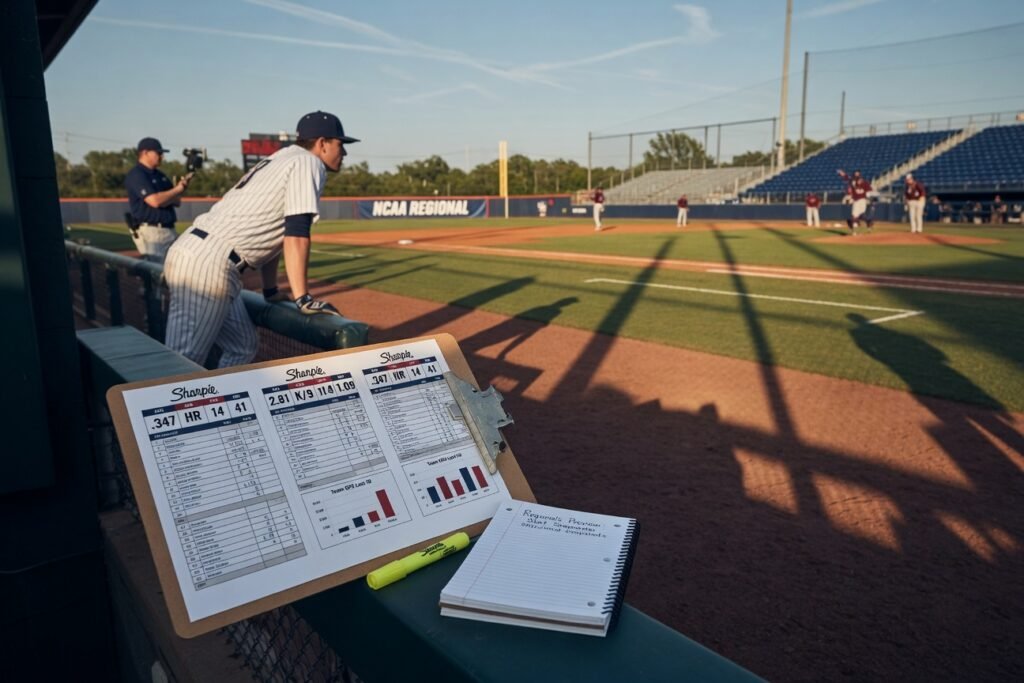
I pulled up the stat snapshots for all 16 regionals late last night after the kids were finally down, and the numbers hit me harder than any bracket reveal usually does. This is the part of the tournament where raw production meets the pressure of single-elimination baseball, and the national ranks in batting average, ERA, and fielding percentage tell a clearer story than most people want to admit. I’ve tracked college baseball long enough to know when a team’s offensive output is inflated by weak conference schedules and when the pitching staff is actually built to survive a weekend in a hostile park.
Oregon State sits at the top of several regional stat categories for a reason. Their .312 team batting average ranks third nationally, and the Beavers have posted a sub-3.00 ERA while limiting opponents to a .220 average. I watched them dismantle a ranked SEC squad in a midweek game earlier this spring, and the way their lineup works counts ahead in every at-bat is exactly what wins regionals. The snapshot shows they rank inside the top ten in both runs scored and fewest walks allowed. That combination usually travels.
Arkansas and Texas A&M land in the same regional and the numbers frame an interesting contrast. Arkansas leads the nation in home runs per game, but their ERA sits just outside the top 40. Texas A&M’s pitching staff ranks eighth nationally in strikeout rate. I’ve said before that power can disappear in cold or windy conditions during early June, while command pitching tends to hold up. The stat sheet backs the idea that the Aggies’ staff gives them the edge in a short series even if the Hogs swing for more fences.
Wake Forest’s regional snapshot jumps out for the opposite reason. Their offense ranks inside the top five nationally, yet the defense has committed errors at a rate that places them near the bottom third. I keep coming back to how many close games they’ve played this year. One extra out turned into a run changes the math fast when you’re facing a team that ranks top 15 in on-base percentage. The numbers don’t hide the defensive holes.
Florida and Miami share space in another regional, and the pitching stats separate them more than the headlines suggest. Florida’s staff ERA sits in the top 20 while Miami’s ranks outside the top 50. Both teams hit well, but the Gators’ ability to keep the ball on the ground and induce weak contact shows up in their opponent batting average rank. I watched Miami’s starters labor through innings in conference play this spring, and the snapshot confirms the same trend carries into the tournament.
The smaller-conference teams that earned at-large bids or automatic qualifiers often get overlooked in these previews, but their stat profiles deserve attention. Several of them post ERAs inside the top 30 nationally despite facing lesser competition week to week. When those arms face lineups that rank inside the top 10 in slugging, the gap usually shows up by the third inning. The snapshot data makes that mismatch obvious.
I said last week that the reclassification of top talents like Kam Mercer changes recruiting maps, but it also indirectly affects regional depth this year because older rosters with more experience tend to perform better in these compressed formats. Teams that returned key arms and added transfer hitters show up in the top ranks for both on-base percentage and WHIP. The data rewards continuity more than raw recruiting rankings.
One regional in particular features three teams with nearly identical national ranks in runs allowed per game. The tiebreaker becomes fielding percentage and how cleanly they turn double plays. I’ve seen enough regionals where a single misplayed ground ball decides whether a staff gets to use its closer or has to burn a starter on short rest. The snapshot places a premium on defensive efficiency that casual fans miss.
The national leader in saves also appears in a loaded regional. That bullpen depth matters once starters are pulled after four or five innings. Teams that rank high in both save percentage and opponent OPS in late innings usually advance. The numbers line up that way again this year.
I’m not buying the narrative that any single regional is a lock for the host. The stat snapshots reveal too many squads with top-25 rankings in multiple categories to assume the favorite coasts. One or two upsets in the opening round always come from teams that rank higher in ERA than their seed suggests. That pattern repeats every June.
The final snapshot that stands out belongs to a team ranked outside the top 30 in overall wins but inside the top 15 in both strikeout-to-walk ratio and double-play rate. Those two categories often predict success in best-of-three formats better than raw win totals. I expect that group to surprise a few people before the super regionals.
The entire set of 16 previews boils down to the same lesson the numbers have taught me for years: pitching and defense travel. Offense can carry a team through a regular season, but the regional stat sheets reward the clubs that keep runs off the board and make the routine plays. That’s the filter that will decide who moves on.