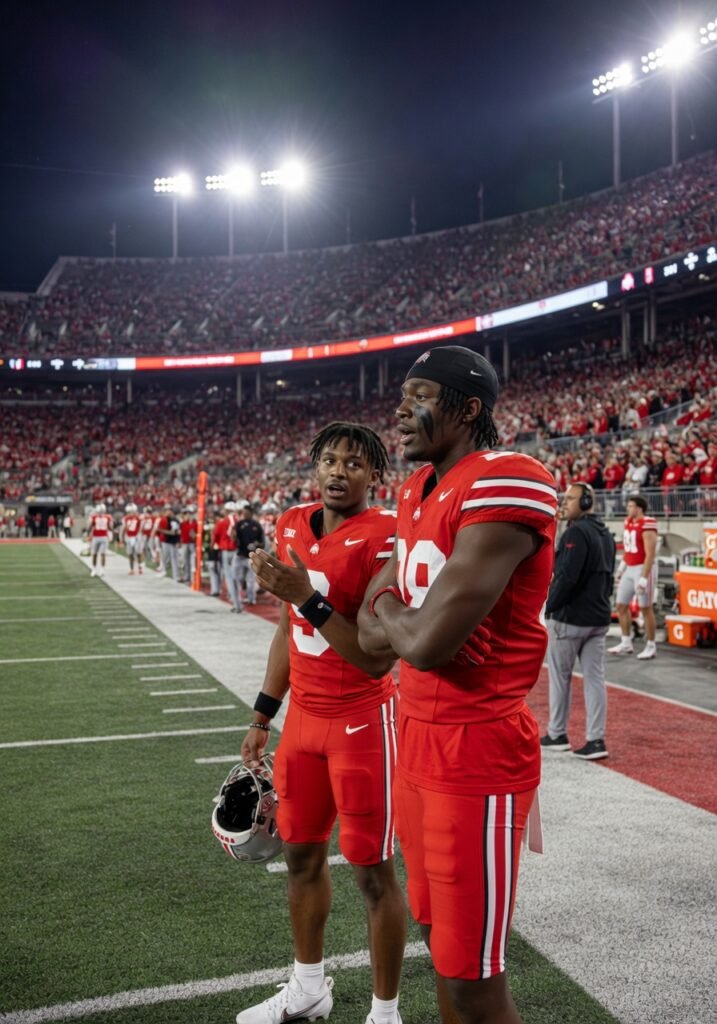
I saw the Titans grab Carnell Tate at No. 4 and felt that familiar jolt I got after calling the Knights’ third-period dagger last week. This wasn’t some safe, consensus pick the talking heads could pat themselves on the back for. It was Nashville declaring they were done watching Cam Ward sling it into traffic with a receiving corps that couldn’t beat press coverage to save its life.
Last season Tennessee managed three passes of 40-plus yards. Three. Ward’s accuracy and arm talent got buried under that reality, and the front office knew it. Drafting the 6-foot-3 Ohio State All-American who posted five 40-yard touchdowns tells me they finally stopped pretending the problem was scheme or coaching alone. They went out and bought the exact tool Ward needs: a guy who wins vertically and doesn’t flinch when a corner jams him at the line.
I ran the numbers on Ward’s rookie tape the moment the pick came in, same way I did on those NBA trade proposals that dropped last week. Ward completed just 17 percent of his attempts when receivers faced press. That’s not a skill issue on his end. That’s a personnel failure. Tate’s burst off the line and ability to contort for contested catches in traffic changes the math. Brian Daboll already hinted at bunch formations and motion to help the rookie get free, but the real advantage is simpler. Tate can just win one-on-ones the way Hartline coached him to at Ohio State. Daboll coached Hartline once upon a time, so the connection isn’t accidental.
The rest of the league is still pretending this was a reach because defensive names like Arvell Reese and Sonny Styles were sitting there. Saleh made it clear the quarterback comes first. I respect that clarity. Too many coaches hide behind “culture” and “identity” while their franchise signal-caller eats dirt. Saleh and Borgonzi decided the identity starts with giving Ward a legitimate X receiver who stretches the field and forces safeties to respect the deep third. That opens everything else.
Tate’s first OTA session already showed the fit. Ward kept finding him across the formation, including a 50-yard bomb after a coverage bust. That wasn’t luck. Tate’s catch radius and body control let him turn broken plays into explosives the way last year’s group never could. The Titans needed someone who treats press coverage like a personal insult, and Tate said exactly that to reporters. “You have to take that very personal.” I like hearing that from a 22-year-old who just got drafted in the top five. It tells me he understands the assignment isn’t route-running drills. It’s beating the best corner on the other side every Sunday.
Critics will say the Titans ignored the defensive line or linebacker room. Go ahead and @ me about it. Those same voices spent all offseason glazing Saleh’s background without acknowledging that a quarterback without weapons makes any defense irrelevant by the fourth quarter. Ward’s mobility buys some time, but the arm talent shines when there’s a vertical threat demanding attention. Tate gives them that. The deep game wasn’t just bad last year; it was nonexistent. Five of Tate’s nine college touchdowns traveled 40-plus yards. That profile doesn’t grow on trees.
Daboll’s offense will lean on slants and quick game early while Tate learns NFL press techniques, but the long-term vision is obvious. Pair the athletic quarterback with the big-bodied boundary guy who can win 50-50 balls down the sideline. That’s how you turn a young passer from promising into a problem. I’ve watched enough tape to know Ward already throws with anticipation. Now he has a target who can track it and finish.
The subtext nobody wants to say out loud is that this pick resets expectations for Year 2. Last year’s receiving group looked cooked against physical corners. Tate walks in with the size, the production, and the coaching pedigree to flip that narrative fast. If he handles the jump from college press to NFL press the way the Titans believe he will, the entire passing game gets re-rated. Defenses that used to crowd the box or sit on intermediate routes suddenly have to respect the seams and the sidelines again.
I’m not buying the “reach” narrative for a second. The board was open after Arizona took Love, and Tennessee had a clear vision. Borgonzi called it a consensus decision. That language usually means everyone in the room saw the same thing: a quarterback who needs one alpha to unlock the rest of the room. Tate isn’t just a receiver. He’s the guy who forces coordinators to game-plan differently.
Prediction time. By midseason Tate leads the team in targets on third downs and 20-plus air yards. Ward’s deep completion percentage jumps from the basement to league average. The Titans offense stops looking like a project and starts looking like a threat in a wide-open AFC South. That doesn’t mean they win the division tomorrow, but it means the foundation is no longer a question mark.
I keep coming back to the same point I made after the MacKinnon injury column. When a franchise finally stops protecting its young star with excuses and starts protecting him with weapons, everything changes. Tate is that weapon. The rest of the league can debate the defensive names they would have taken. Nashville decided the quarterback runway matters more, and I can’t argue with the logic.
Will Tate’s rookie year live up to the No. 4 price tag, or will the press-coverage adjustment slow him down the way it has so many Ohio State receivers before him?