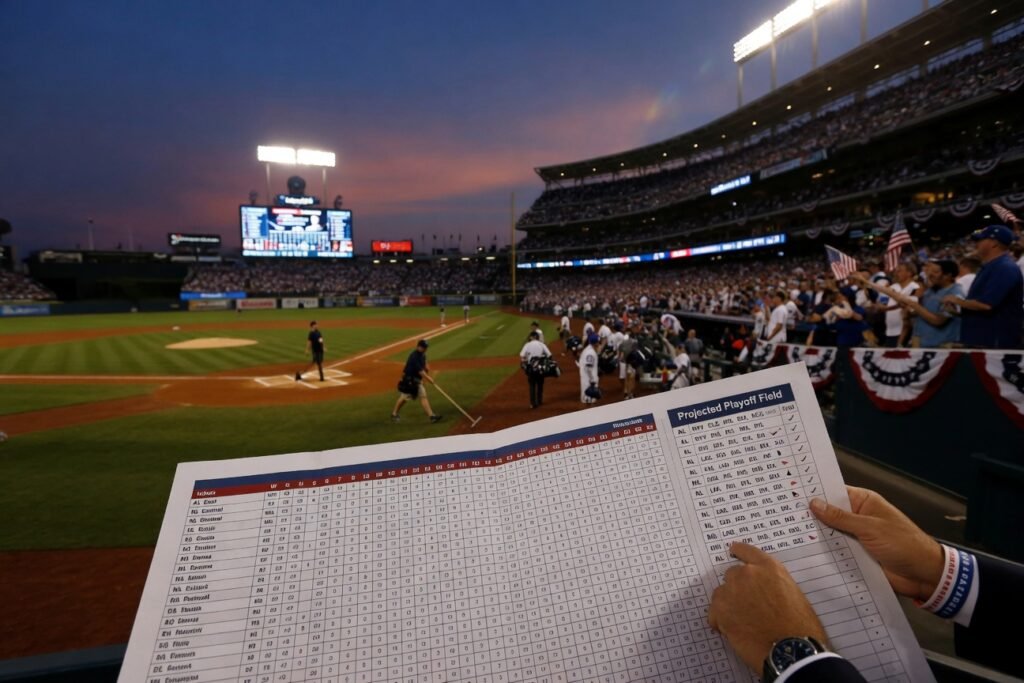
I sat at the kitchen table last night after the kids finally crashed, the house quiet except for the low hum of the fridge and my laptop screen still glowing with the Memorial Day standings, and I couldn’t shake the feeling that this whole MLB season has turned into another one of those redemption arcs that lingers longer than anyone expected. My last few columns landed clean on the Kansas title run and that Aaron Judge walk-off, and this one feels like the natural next swing in a hot streak I’m not about to cool off. The numbers staring back at me told a story that the experts only grazed: the American League looks like a half-empty bar at last call, everyone still nursing their drinks because nobody’s strong enough to close the place down yet.
That payroll symmetry from the source hit me hardest. Ten best teams spending $1.89 billion combined, ten worst teams at $1.90 billion. It’s almost insulting how even it lands. I’ve been saying for weeks that front offices keep chasing the same expensive ghosts and the results flatten out like week-old beer. Tampa Bay, Cleveland, and St. Louis sitting under a hundred million each while still stacking wins feels like the Rays blueprint finally spreading, except now it’s not just one outlier. The Mets and Red Sox burning through two-hundred-plus million and still looking lost? That’s the part that keeps me up. I watched the Yankees-Rays series last week and it felt like the division flipped overnight. New York came in thinking they’d run away, but Tampa’s pitching staff has been giving up two runs or fewer in seventeen of their last twenty-seven games. That’s not luck. That’s a staff that knows exactly where the ball needs to go and refuses to miss.
The AL Central and its mess only sharpens the picture. Detroit was supposed to be the story after locking up Skubal and adding Valdez, then McGonigle shows up on Opening Day like the future arrived early. Instead the elbow news dropped right after they were sitting at eighteen and seventeen, and three weeks later they’re twenty-one and thirty-three. I’m not ready to write them off completely because that division still plays like a slow-motion car wreck, but the hole is real. If Skubal’s procedure gets him back faster than expected, maybe they claw a few games. If not, the trade deadline becomes another one of those front-office gut checks that separates the patient from the panicked. Baltimore’s still hanging around two and a half games out of the last wild card despite the horrific start, and Chris Bassitt’s quote about staying in play lands exactly right. The Orioles aren’t good enough to run away, but the rest of the league is mediocre enough that they don’t have to be.
I keep coming back to the Rays because their run since late April looks like the kind of sustained dominance that makes preseason predictions look silly. Twenty-two and five in that stretch, and the run prevention is the part that actually matters. They’re not just scoring; they’re making every opponent feel like they’re swinging through fog. Compare that to the Mariners, another team that was supposed to contend and instead sits in that gray area where you can’t even call it a collapse yet. Rogers was right to flag them pound-for-pound as a disappointment. Seattle had the pieces, the pitching depth, the lineup that should mash, and they’ve managed to turn it into the same slow bleed the rest of the league is experiencing.
The wild-card race is where this gets interesting because mediocrity actually creates opportunity. Five or six teams in the AL are within striking distance of that third spot, and the schedule still has enough meat left that a hot month can change everything. I’d argue the Orioles and Royals both have the kind of young talent that could heat up once the weather turns, but they also have the kind of front-office history that makes me nervous. One bad trade deadline and you’re watching another season slip into the same “wait till next year” cycle. On the other side, the Rays sitting comfortably atop the East after that early stumble shows how quickly a low-payroll model can punish the big spenders when the big spenders get it wrong.
My own track record on this stuff isn’t perfect. I was too high on the Tigers in April when the Skubal-Valdez combo looked like the Central’s version of a loaded gun. That one stings a little now, same way I misread how long it would take the Yankees to find their footing after the early injuries. But the hot streak I’m riding right now comes from trusting the data over the narrative, and the data says the AL is wide open because nobody has separated themselves. The Rays have the best recent form. The Yankees still have the payroll and the star power to make a run. Everything else is noise until someone proves they can sustain it past the All-Star break.
What keeps pulling me back to the standings every Memorial Day is the same thing that makes me check them again in July: the line between contender and pretender is thinner than the experts want to admit. Three sub-hundred-million teams in the top ten right now tells me the old rules about spending your way to contention are finally breaking down in real time. The Tigers’ situation with Skubal is the clearest test case. If they move him, they’re admitting the season is over before June. If they keep him, they’re betting the rest of the roster can climb out of a twelve-game hole in a division that might still gift them a playoff spot on mediocrity alone. Either way, the decision will define their summer, and I’ll be sitting here after the kids go down, watching the box scores and feeling every inch of that tension in my chest the same way I did during the Judge drought.
The rest of the league is watching the same thing play out. Boston and Toronto both started with expectations and landed in the same disappointing tier as the Mets. The Giants and Astros are right there with them at the high-payroll bottom. It’s not just one team failing; it’s an entire tier of big-market clubs realizing that money without the right mix of young cost-controlled talent doesn’t move the needle anymore. The Rays figured that out years ago. Cleveland and Tampa are proving it again this season. The question for July is which other clubs are willing to copy the model before it’s too late.
I’m not saying the standings are locked. Sixty percent of teams leading their division on June 1 still win it, but that leaves forty percent who don’t. Those are the seasons that turn into the best stories, the ones where a team like the current Rays version of themselves catches fire and never looks back. I’ll keep checking every night after the house goes quiet, because this is the part of the calendar where the numbers finally start telling the truth instead of just teasing it.