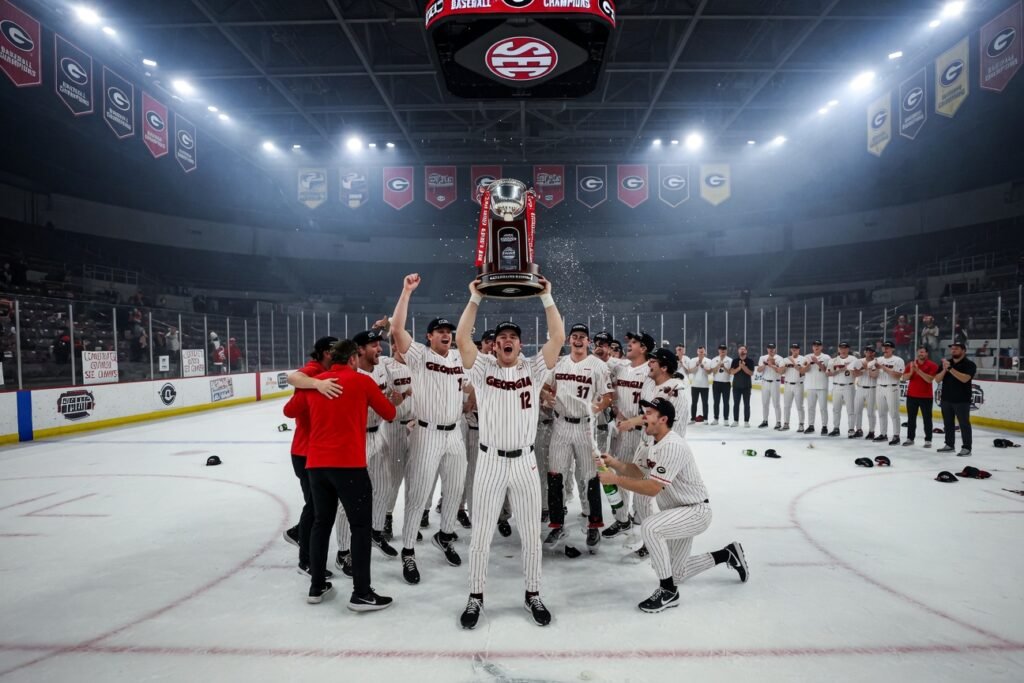
Georgia clinched its first SEC baseball title with that 11-1 run-rule win over Arkansas, and the numbers that stand out most are the five first-inning runs and Paul Farley’s four scoreless frames. The rain delay ate up nearly three hours, yet the Bulldogs still posted an 8-0 lead through five and never let Arkansas string together anything meaningful after Maika Niu’s solo shot. I watched the box score roll in and immediately started mapping what this does for Georgia’s NCAA seeding and how it echoes the way conference tournament wins shift projections in other spring sports.
The first-inning outburst came from consecutive doubles by Rylan Lujo and Brennan Hudson, then Jack Arcamone’s two-run homer. Arcamone finished with four RBI on the day. Those early runs forced Arkansas starter Tate McGuire into a quick hook after one inning and five runs. Georgia’s approach looked like classic power accumulation against a bullpen that had already been taxed by Saturday’s semifinal delays. Farley limited hard contact and kept the game in control through four, giving the staff the length it needed before the three-run sixth sealed the outcome.
This result lands differently because Georgia entered the tournament as the top seed but carried only 15 prior NCAA appearances into the week. Arkansas, by contrast, has 36. The gap in historical depth makes the Bulldogs’ title run a clear program inflection point rather than another notch for an established power. Ten SEC teams sat ranked in the final major polls before the tournament, so the automatic bid and the accompanying resume boost matter for bracket placement when the field drops Monday.
I keep circling back to the pitching staff construction. Farley’s line (four innings, six hits, zero runs) mirrors the kind of mid-week starter who can eat innings in a compressed schedule, the same role you see college hockey programs lean on during conference tournament weekends when goalie rotations get stretched. Georgia’s ability to absorb the weather delay and still execute early offense suggests deeper lineup balance than the raw win total shows.
Compare the path to what happened in last year’s SEC tournament. The 2023 champion relied on late-inning relief dominance and posted a team ERA under 3.00 across five games. Georgia’s 2024 version instead leaned on first-inning separation and a starter who kept the game under control before the bullpen even warmed. That shift changes how opposing coaches will game-plan the Bulldogs in regionals. Expect more defensive shifts against Arcamone and Hudson once the bracket is set.
The NCAA selection implications sit right at the surface. Georgia’s résumé now includes a conference title and a dominant semifinal win, both after weather disruptions. That combination typically moves a team from a 2-seed to a 1-seed discussion in most regionals. Arkansas, despite the loss, still carries the deeper historical NCAA footprint and will likely land as a strong 2 or 3 depending on how the committee weighs the 36 prior appearances against this weekend’s results.
I said last week when discussing Malachi Moreno’s return to Kentucky that one calculated decision can reset an entire frontcourt projection. The same logic applies here to Georgia’s pitching staff. One dominant outing from Farley plus the offensive output from Arcamone resets expectations for how the Bulldogs will be scouted in the first weekend of regionals. The data point that matters most is the 8-0 lead through five innings; that margin forces opponents into aggressive at-bats earlier than they prefer.
The rain delay itself created a secondary variable. Both teams played semifinals on Saturday under similar delays, so fatigue models favored the team with clearer offensive separation. Georgia’s five-run first inning essentially ended the game before the sixth-inning Arkansas homer could create any momentum. In hockey terms, this mirrors the way a quick first-period goal in a conference semifinal can flatten the opponent’s structure once special-teams units start getting overworked.
Looking ahead, the Monday selection show will reveal how much the committee values the SEC title versus raw RPI. Georgia’s 15 prior appearances mean this is new ground for the program. The staff will now prepare for a regional that likely includes at least one other ranked SEC opponent given the ten teams that entered the week in the polls. That clustering changes travel and rest dynamics in a way that pure baseball analytics sometimes underweights.
Arcamone’s four-RBI game sits as the clearest individual marker. A home run plus a two-run single in the sixth gave the Bulldogs the cushion they needed after Arkansas finally scored. Those extra-base contributions in the middle of the order are the exact profile that travels well into June. I expect the scouting reports to adjust by the time regionals begin, with more emphasis on keeping the ball out of the pull-side gaps where Lujo and Hudson already showed they can do damage.
The broader SEC picture remains crowded. Ten ranked teams mean multiple programs will view this weekend as validation or disappointment depending on bracket placement. Georgia’s win gives the conference an extra automatic qualifier with momentum, while Arkansas must lean on its deeper NCAA history to rebound quickly. The numbers from Sunday—11 runs, seven innings, one Arkansas hit after the sixth—tell the story cleanly enough that the selection committee will have little trouble slotting the Bulldogs into a favorable regional.