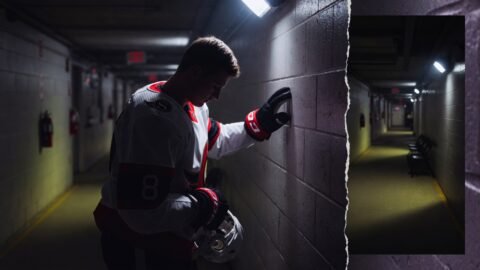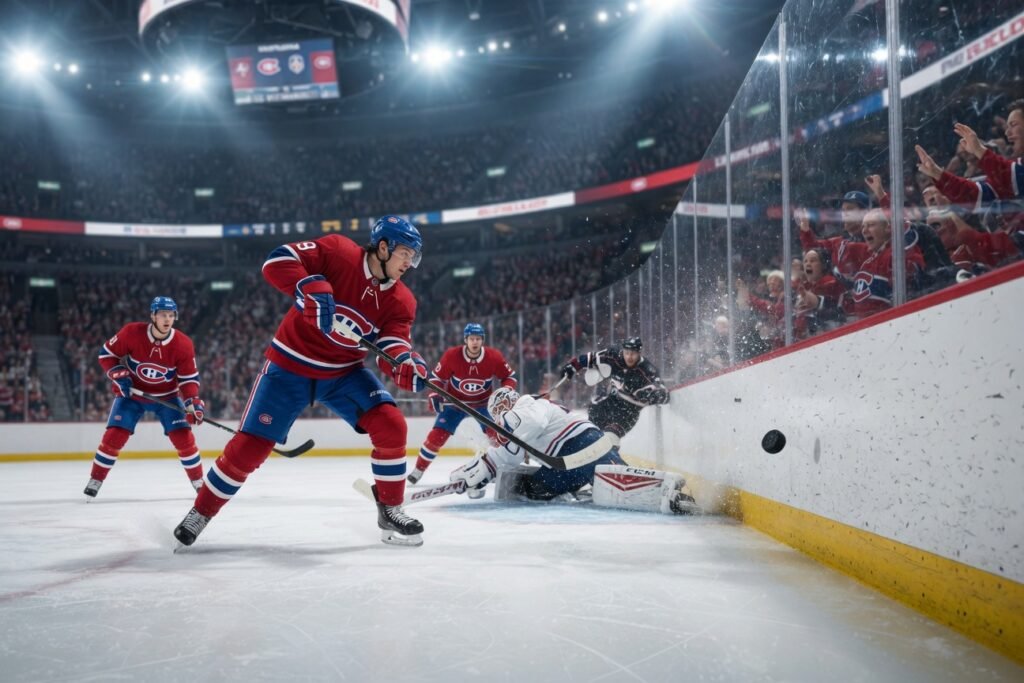
I was sitting at the kitchen table last night after the kids finally crashed, the house quiet except for the low hum of the fridge and my laptop screen still glowing with the box score from Montreal’s 6-2 dismantling of the Hurricanes, and I couldn’t shake the feeling that the Canadiens have turned playoff survival into something closer to forward momentum than simple recovery. That phrase “bouncing forward” keeps rattling around in my head because it fits what I watched in Game 1 better than any standard “bounce back” story. Juraj Slafkovsky dropped two goals and added an assist in that one, and the whole roster looked like they were already living three shifts ahead of the mistakes that should have buried them earlier in the run.
I said last week when I broke down the SEC baseball updates that Georgia’s Diamond Dogs weren’t just leading the home-run race, they were turning every swing into a statement of intent rather than a reaction to the last at-bat. The Habs are doing the same thing on ice. After dropping an 8-3 stinker in Game 6 against Buffalo, they didn’t lick wounds or dwell on the blown chance to close it out at home. They came out in Game 7 and won in overtime on the road. Same pattern against Tampa in round one. Seven games, no consecutive losses, and now they sit in the Eastern Conference finals with the kind of quiet swagger that only comes when every player accepts the role Martin St. Louis has carved out.
St. Louis has framed it as physics, and I buy that. Bouncing forward means the puck moves to a new space instead of trying to reset to the old one. Slafkovsky first said it three years ago after finally scoring his first goal of the season in a loss to St. Louis. The coach kept him on the top line with Suzuki and Caufield anyway, and the kid responded by treating the goal as proof of concept rather than a lucky reset. Now he’s the 22-year-old who just posted 30 goals and 73 points in the regular season, then added Olympic production for Slovakia before stepping into these playoffs like the room was always his. That arc feels earned because the organization refused to treat early struggles as permanent.
Kaiden Guhle is the quieter version of the same story. Seven points in fifteen playoff games after managing just eleven in thirty-nine regular-season outings tells you the minutes are translating into impact, not just survival. Guhle’s not chasing the defensive pairings that worked in October; he’s reading the current rush and jumping into the next layer of play. The rest of the roster is following. Bottom-six penalty killers are creating chances that used to belong only to the power-play unit. Top-six scorers are blocking shots without looking like they’re auditioning for a different job. Everyone knows the assignment, and that acceptance is what turns a plucky underdog run into something that feels inevitable.
I keep coming back to the physical cost of this style. Watching Game 1, my chest actually tightened when Carolina pressed in the second period and Montreal gave up odd-man rushes that looked like they could flip the script. Then Slafkovsky buried his second goal and the entire bench exhaled like they had already processed the mistake two shifts earlier. That’s the difference between bouncing back and bouncing forward. One team is still explaining the last goal; the other is already setting the next forecheck.
The series against Carolina is going to test whether this mindset travels. The Hurricanes play a structured, heavy game that punishes teams still thinking about the previous period. Montreal’s answer so far has been to treat every shift as its own small season. Suzuki eclipsing a hundred points for the first time in forty years for a Habs player gives the room a steady north star, but it’s the supporting turns that make the difference. Caufield hitting fifty-plus goals for the first time in thirty-six years is nice, yet the real story is how those big numbers are feeding the depth chart instead of isolating the stars.
I’m not ready to call this a Stanley Cup run yet, but the pattern is clear. Two seven-game series without consecutive losses is not luck. It’s a refusal to let one bad result define the next preparation. Slafkovsky’s line is producing at a rate that forces Carolina’s top pair into uncomfortable matchups, and the secondary scoring is arriving in bunches rather than droughts. If the Hurricanes try to grind this into a war of attrition, Montreal’s forward momentum gives them the edge in extended play.
What stands out most is how little the team is leaning on individual heroics. Every player who steps up is doing so inside the system St. Louis built, not outside it. That’s why the mantra has legs. It started as a 19-year-old’s way of handling a slow start and became the operating principle for a roster that refuses to measure itself against the last game. I’ve watched enough playoff teams collapse after one ugly loss to know the difference when a group actually moves on without looking back.
The physical feeling after that 6-2 win was different from the usual playoff relief. It wasn’t the exhausted exhale of a team that survived another scare. It was the quiet certainty that the next adjustment was already in motion. Carolina is going to push back in Game 2, and the test will be whether Montreal treats any pushback as fresh information instead of unfinished business. If they do, the conference finals could stretch the way the first two rounds did, but with the same result pattern. Bouncing forward isn’t flashy, but it’s the only way a team built like this keeps advancing when the margins get thinner.
I’ve been on a stretch with these columns where the reads keep landing, and this one feels like another layer of the same idea. Resilience in sports usually gets sold as emotional toughness, but the Canadiens are showing it as simple directional physics. Every mistake gets reviewed, then left behind. Every goal becomes fuel for the next layer instead of a highlight to replay. That’s how you turn two seven-game wars into a conference finals appearance without the emotional hangover that usually follows. The kids are still asleep as I type this, and the screen is still open on Slafkovsky’s three-point night. I keep replaying the second goal and wondering how many more times this group will treat the last play as already settled business.