I’ve spent the last two decades waking up before dawn to catch minor-league box scores and drive hours just to sit behind home plate at Double-A parks, and I am telling you right now that the new top prospect in the game is not some safe collegiate pick or a polished college arm. It is a 19-year-old shortstop named Jesús Made who just turned that age earlier this month and is already holding his own in Double-A for the Milwaukee Brewers.
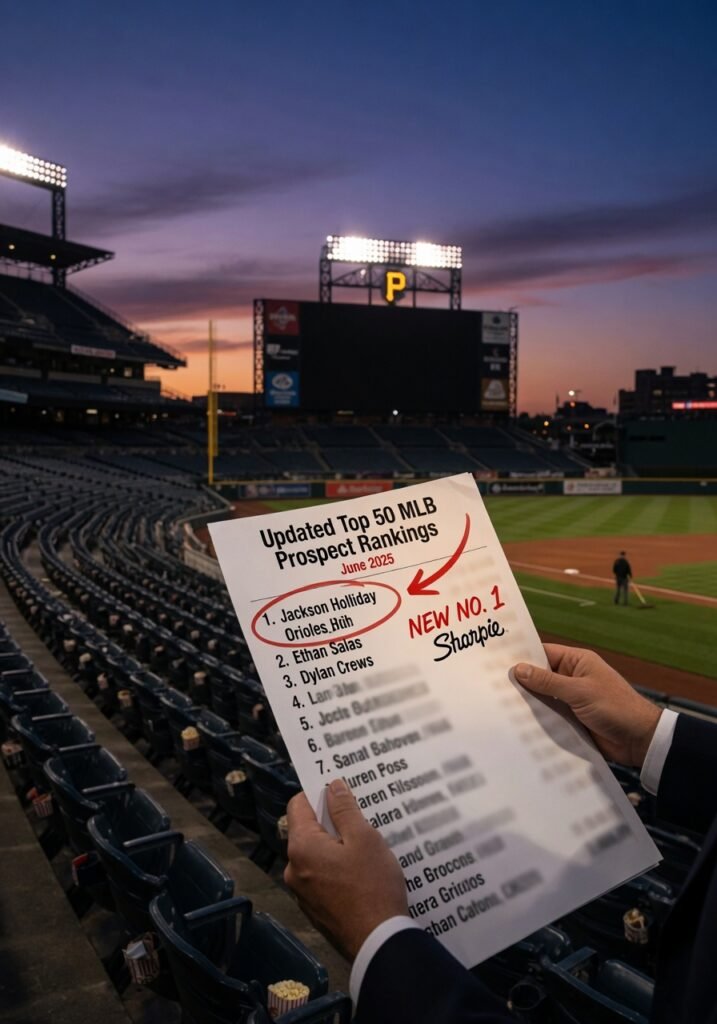
I watched the preseason list roll out and I nodded along when Konnor Griffin sat at number one. The kid had that explosive profile everyone loves. But two months into 2026, the landscape has shifted hard. Griffin, McGonigle, Basallo, Wetherholt—they are all in the big leagues now, and the gap they left has been filled by a different kind of talent. Made is not just the best prospect left. He is the one player whose ceiling still feels like it can stretch into MVP territory if the lift in his swing shows up this summer.
Let me tell you something about Jesús Made. His 90th-percentile exit velocities are already sitting in the same neighborhood as established big leaguers. That is not projection; that is what the data says about a teenager who is still learning to pull the ball in the air. Eleven homers across 153 games the last two seasons tells you the current reality, but it does not tell you the future when that same kid adds twenty-five pounds of muscle and starts driving the ball to the gaps with authority. I have seen this movie before with young shortstops who arrive with plus bat speed and elite feel for the strike zone. The ones who figure out the launch angle become franchise cornerstones. Made has the tools to be that guy.
The Brewers have been patient with him, and that patience is about to pay off in a big way. He is already showing the defensive polish at short that lets you dream of Gold Glove seasons, and his base-running instincts are advanced beyond his years. If Milwaukee is smart, they keep him in the fold and let him write the next chapter of their infield. I have watched too many teams ship out their best young talent for rental pieces that flame out in October. This is the moment where the Brewers can choose a different path.
Right behind Made sits Leo De Vries, the switch-hitting shortstop the Athletics acquired when they dealt Mason Miller to San Diego. De Vries already knows how to pull and lift the ball as a teenager in Double-A, and that combination of feel and switch-hitting ability is rare. The Athletics did not move their closer for a lottery ticket. They moved him for a player they believe can anchor their lineup for the next decade. I respect the aggression, but I am also watching to see whether Oakland’s front office can actually surround him with enough talent before he reaches free agency.
Colt Emerson is another name that keeps climbing. The Mariners called him up and he homered in his second big-league game. That is not luck. That is a 20-year-old who profiles as an above-average contributor in every phase of the game and is still younger than most of the top college prospects in this year’s draft. Seattle’s window is opening fast with J.P. Crawford heading toward free agency. If Emerson seizes the everyday shortstop job, the Mariners suddenly have a cost-controlled answer at a premium position for years. I said months ago that their system was deeper than people realized. This is the evidence.
Max Clark in Detroit continues to flash five-tool ability even when the power numbers are slow to arrive. His swing plane is flat right now, and that is why the home-run totals have not exploded. But the rest of the package—center-field defense, arm strength, plate discipline—is already plus. Clark can be an All-Star even if he never hits thirty homers in a season. The Tigers have needed a player like this for a long time, and I am not convinced they fully appreciate how valuable a true center fielder with speed and instincts can be over a long career.
Sebastian Walcott remains in the top five despite the elbow surgery that will cost him most or all of 2026. The Rangers are betting on the talent they saw before the injury, and I do not blame them. When healthy, Walcott has the kind of raw power that can change games in October. The question is whether Texas can keep him healthy long enough for that power to matter in a pennant race. I have seen too many high-upside arms and bats get derailed by one bad medical report. Walcott’s return will be one of the most important storylines of the second half.
The rest of the new top 50 is filled with names that could move quickly once the trade deadline arrives. Teams are already making calls. I expect at least three or four of these players to change organizations before August, and the ones who land in winning environments will accelerate their development. The ones who stay on rebuilding clubs risk stalling out. That is the reality of prospect evaluation in today’s game.
I keep coming back to the fact that Made is only nineteen. The physical projection still has room to run, and the mental makeup looks advanced enough to handle the inevitable ups and downs of a first full big-league season. If he adds even a modest amount of loft to his swing in the next few months, the conversation shifts from “very good regular” to “potential superstar.” That is the difference between a solid top-ten prospect and the clear number one.
I have been doing this long enough to know when a ranking update is just noise and when it actually reflects a changing of the guard. This one feels like the latter. Made has passed the players ahead of him on the preseason list because he is still eligible and still producing at an elite level against older competition. The others have graduated to the majors, and that is a good thing for baseball. But it leaves Made standing alone at the top of my board.
The Brewers now hold a genuine franchise piece. How they handle him between now and the trade deadline will tell us whether they are serious about contending in the near term or content to keep selling at the deadline. I am watching closely. If they move Made for a package that does not include multiple high-upside arms or bats, I will be the first to say it was a mistake that sets the organization back years. This is not a time for half-measures.
The rest of the list offers plenty of intrigue. De Vries, Emerson, Clark, and Walcott each carry different flavors of upside, and any one of them could surge into the top spot by the end of the season if Made hits a wall or suffers an injury. That is the beauty and the cruelty of prospect rankings. They are snapshots, not final judgments. But right now, the snapshot is clear.
I have said it before and I will say it again: the teams that develop their young talent instead of trading it away are the ones that build sustained success. Milwaukee has that chance with Made. The question is whether they will take it or blink when the first big offer lands in their inbox. I know what I would do if I were running the club. I would keep the kid, extend him early, and let him grow into the face of the franchise. Anything less feels like an unforced error that future front offices will look back on with regret.
The 2026 season is still young, but the prospect landscape has already been redrawn. Jesús Made is the new standard-bearer. The rest of the game is chasing.