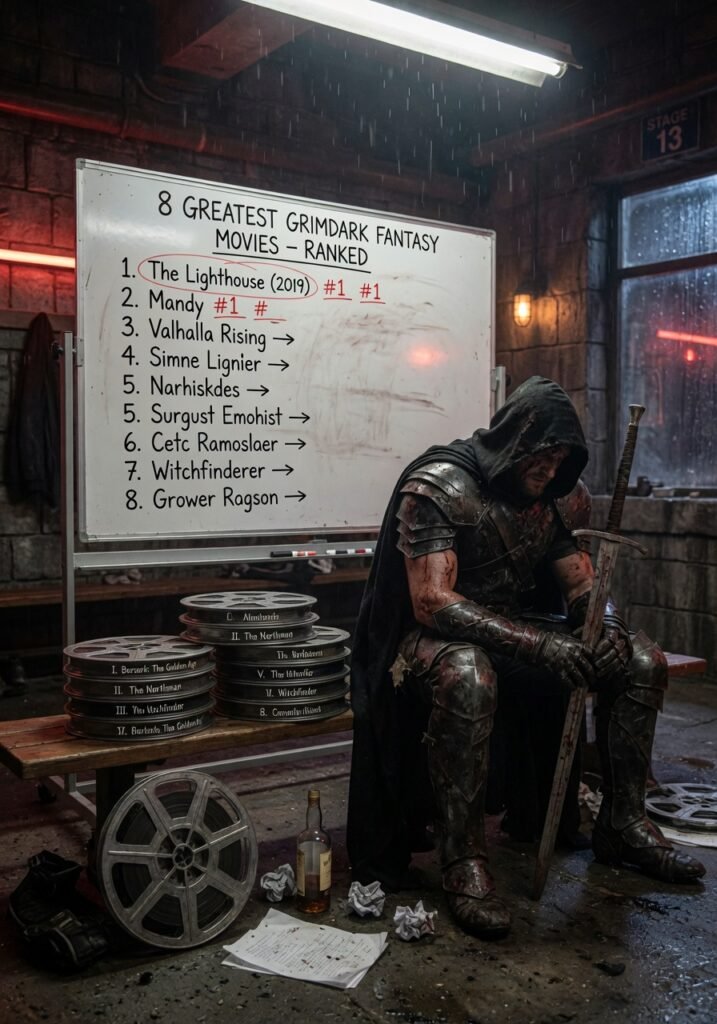
Grimdark fantasy movies refuse to offer you a chosen one who saves the day with a rousing speech and a last-minute deus ex machina. They drop you into mud, blood, and moral rot where survival demands compromise and the gods stay silent. That approach still feels rare on screen even though the subgenre has been simmering since Warhammer 40,000 stamped its tagline on miniature boxes decades ago. Most fantasy films still default to clear battle lines and uplifting payoffs, which is why the few that lean into cynicism and brutality stand out like open wounds.
The recent Collider ranking started in the right place by spotlighting low-budget standouts that actually commit to the bleakness. Their number eight pick, The Head Hunter, nails the antihero template without any studio gloss. Christopher Rygh’s Father hunts monsters in a grimy Dark Ages nowhere, driven by nothing nobler than personal vengeance. The film’s tiny budget forces every kill to feel costly and every victory to taste like ash. That final gut-punch lands because the screenplay never pretends revenge restores anything. It simply ends the man who started it.
Conan the Barbarian sits at seven for good reason. John Milius and Oliver Stone built a world where strength is currency and cults exploit the desperate. Arnold Schwarzenegger’s Conan doesn’t quest for justice so much as payback and power. The film’s set pieces still hold up because they serve character instead of spectacle; every swing of the sword advances the barbarian’s hardening worldview. Later sword-and-sorcery knockoffs copied the look but forgot the moral vacancy that makes the original sting.
My list diverges from there because too many so-called dark fantasies still hedge with likable rogues or redemptive arcs. Real grimdark withholds those comforts. Number six goes to Valhalla Rising. Nicolas Winding Refn’s mute Viking warrior drifts through misty, violent episodes that strip away glory until only brutality remains. There are no rousing battles, only men hacking at each other while the landscape swallows any notion of purpose. The film’s near-wordless structure forces viewers to confront violence without narrative anesthesia, something most modern fantasy still refuses to risk.
Number five is Solomon Kane. The 2009 adaptation of Robert E. Howard’s Puritan mercenary gives us a man who literally sold his soul and now fights to claw it back. James Purefoy plays the role with zero charm, just grim efficiency and self-loathing. The script keeps politics and warfare grounded in personal damnation rather than world-saving stakes. It understands that grimdark protagonists rarely evolve into better people; they just become more effective at the same ugly work.
The Northman lands at four because it translates the same logic to Viking legend without softening the fatalism. Robert Eggers and Alexander Skarsgård deliver a revenge tale where every choice tightens the noose of prophecy. Amleth’s quest looks heroic until the film reveals how little agency any participant actually holds. The practical effects and brutal combat choreography make the moral grayness physical instead of thematic window dressing. Compare that to most prestige fantasy that stages huge battles yet still hands the audience a clear moral winner.
Excalibur takes third. John Boorman’s 1981 Arthurian epic treats the Round Table as a doomed political experiment where loyalty, lust, and magic all corrode one another. No character escapes corruption, not even the king. The film’s operatic tone and lingering sense of inevitable collapse prefigured later grimdark approaches by decades. Its influence shows up in everything from Game of Thrones’ court intrigue to The Northman’s mythic fatalism, yet few imitators match its willingness to let legend curdle on screen.
Second place belongs to The Witch. Eggers again, this time with Puritan settlers whose faith and fear collapse into something far older and hungrier. The script never grants the audience a single uncomplicated protagonist. Every family member carries secrets and failings that the wilderness exploits. The final act’s descent into witchcraft feels earned because the preceding acts spent their time documenting how isolation and dogma already warped these people. It is the rare horror-tinged fantasy that earns its grimdark label through character rather than set dressing.
The top spot goes to Pan’s Labyrinth. Guillermo del Toro’s 2006 masterpiece weaves Franco-era fascism with dark fairy-tale logic and refuses to let either side offer comfort. Ofelia’s choices carry real cost because the adult world’s cruelty mirrors the fantasy realm’s indifference to innocence. The film’s politics never flatten into simple resistance porn; they expose how power devours everyone caught between its gears. That layered bleakness still outpaces most entries that arrived afterward.
These eight succeed where bigger productions fail because they prioritize consequence over comfort. Screenplays that treat moral ambiguity as window dressing collapse the moment a hero needs to make an ugly call. The ones on this list embed that ugliness into structure, pacing, and ending. They understand grimdark is not just dirt and swearing; it is the absence of narrative mercy. Studios keep chasing the next safe epic because ambiguity scares test audiences and complicates sequels. The result is a landscape where true grimdark entries remain outliers rather than the norm.
My recent columns on prestige horror and limited-series storytelling have hammered the same point: when writers withhold easy catharsis, the work lingers. These movies prove the same rule applies to fantasy. They do not ask you to root for anyone. They simply show you what survival looks like when every path leads through someone else’s corpse.