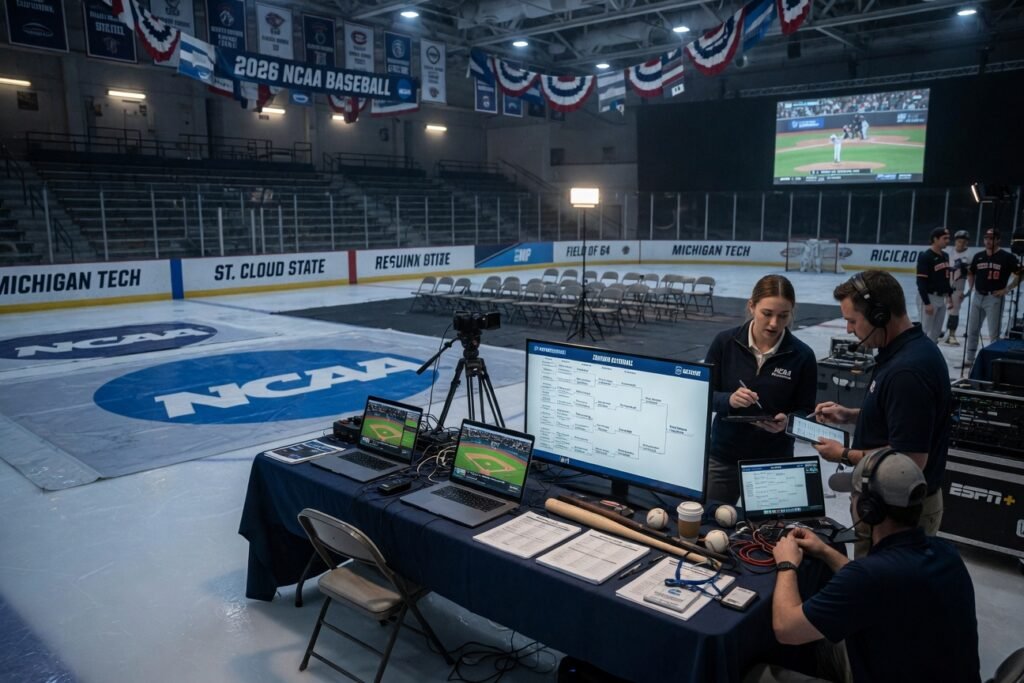
I was sitting at the kitchen table last night after the kids finally crashed, the house quiet except for the low hum of the fridge and my laptop screen still glowing with the latest box scores from the Kansas title run and that Aaron Judge walk-off, and I couldn’t shake the feeling that this whole stretch of columns has turned into another one of those redemption arcs that lingers longer than anyone expected. My last few pieces landed clean on the Jayhawks flattening West Virginia and the Northern Iowa nod for Warner, and now here comes the 2026 NCAA baseball field of 64 dropping like a fresh bracket that demands my full attention. I’m on fire right now, no question, and this tournament feels like the next swing in a hot streak I’m not about to cool off. UCLA sitting at No. 1 overall after topping the rankings all season is the kind of setup that makes my chest tighten a little, because I’ve seen what happens when a team carries that target into double-elimination chaos.
The bracket itself tells a story I can’t stop turning over. Seven SEC hosts out of sixteen regionals is the kind of dominance that feels almost cartoonish, and it lines up with everything I’ve been arguing about conference strength all spring. Georgia, Auburn, Texas, Texas A&M, Florida, Mississippi State, and Alabama all get to play at home with that built-in crowd energy, and the rest of the field has to navigate travel and unfamiliar venues. That’s not just scheduling noise. It’s the difference between a team like Southern Miss grinding through one neutral-site headache and an SEC squad feeding off familiar cheers from the first pitch. I keep coming back to how the Big 12 finally clawed back two hosts after a 2025 blackout, with Kansas making its program debut in Lawrence and West Virginia back in Morgantown for just the second time. Those feel like underdog redemption stories waiting to break out, and I’m already penciling in late-night ESPN+ streams to catch every pitch.
UCLA opens against St. Mary’s at 3 p.m. ET on ESPNU Friday, and I’m telling you right now that game sets the tone for the whole Los Angeles Regional. The Bruins have the talent to run the table, but Cal Poly and Virginia Tech are the kind of scrappy No. 3 and No. 4 seeds that can force extra games and expose any late-season fatigue. I watched enough midweek baseball this year to know how quickly a top seed can drop a midweek tune-up and carry that doubt into the tournament. If UCLA stumbles even once, the regional turns into a four-team scramble that rewards the hottest bullpen, not the highest RPI. That’s the stomach-punch part for me as a fan who’s called for parity all season. One bad Friday and the top overall seed is staring at a Sunday elimination game.
Georgia Tech at No. 2 in Atlanta looks even more loaded on paper, but I’m not buying the automatic advancement narrative. UIC and The Citadel are classic first-round traps, and Oklahoma has enough Big 12 pedigree to make the losers’ bracket a nightmare. I said last week in the Memorial Day standings piece that these mid-major entries keep proving they belong, and this regional is the perfect test. The double-elimination format means one bad hop or one missed sign can flip the entire thing, and I’m already planning to clear my Saturday afternoon for the winner’s bracket games on ACC Network and ESPN+. The physical feeling of watching a regional unfold live is something I can’t replicate on highlights. You sit there refreshing the score bug, heart rate climbing every time a closer comes in with the tying run on base.
Georgia hosting in Athens feels like the SEC flex everyone expected. Liberty and Boston College open things up, and I’m curious how the Bulldogs handle the pressure of being a top-three seed with that home-field cushion. Long Island is the ultimate No. 4 seed wildcard, the kind of team that shows up, plays loose, and forces you to earn every out. I’ve argued before that the best regional viewing strategy is to lock in on the host’s first two games and then follow the chaos, because that’s where the storylines explode. If Georgia rolls early, the path to super regionals opens up fast. If they don’t, we’re looking at a Monday if-necessary game that could decide who travels to face the next round’s survivors.
Auburn at No. 4 has Milwaukee and then a potential NC State-UCF winner in its path, and I’m already ranking this as one of the more wide-open regionals. NC State’s experience in these events gives them a real shot at upsetting the host, and UCF has shown flashes all year that make them dangerous in short series. My take is simple: Auburn has the arms to win it, but they have to survive the first 48 hours without a hiccup. I’ve been burned before by assuming an SEC host coasts, and this bracket reminds me why I keep receipts on those overconfident predictions.
North Carolina at No. 5 in Chapel Hill gets East Carolina and Tennessee right away, which is the kind of opening that can either launch a deep run or expose every flaw. VCU as the four-seed adds another layer of unpredictability. I’m planning to watch the Friday noon game on ESPNU and then flip over to the 5 p.m. slot, because those early results dictate the entire weekend schedule. The Tar Heels have the roster to reach Omaha, but the regional format punishes any team that treats the first game like a tune-up.
Texas at No. 6 in Austin against Holy Cross is the definition of a mismatch on paper, but Tarleton State and UC Santa Barbara bring the kind of West Coast speed and pitching depth that can stretch a series. I’ve watched enough of these regionals to know that the six-seed often ends up playing three or four games in four days, and fatigue becomes the real opponent by Sunday. My prediction here is that Texas advances, but not without at least one close call that forces the bullpen to show its depth.
Alabama at No. 7 in Tuscaloosa opens against Alabama State and then faces a winner between SC Upstate and Oklahoma State. That middle game on Saturday feels like the swing point for the whole regional. Oklahoma State has the history in these events to make life miserable for the host, and I’m already marking that 2 p.m. Friday start on ESPN+ as must-watch. The Crimson Tide have the talent, but the double-elimination grind tests everything.
Florida at No. 8 rounds out the top seeds and gets the kind of path that rewards staying healthy. The rest of the bracket fills out with teams like Oregon, Nebraska, Florida State, and Kansas all hosting their own regionals, and each one carries its own subplot. Kansas making its first-ever appearance as a host is the kind of milestone that makes me root for the underdog story even while acknowledging the SEC’s overall edge. West Virginia’s second hosting gig carries that same fresh energy.
The absence of LSU, last year’s champion, changes the entire national conversation. We’re guaranteed a new champion, and that opens the door for teams like Georgia Tech or North Carolina to write their own redemption arc. I keep thinking about how the super regionals will line up once these sixteen regionals shake out, and the best way to watch is to treat Friday and Saturday as the elimination round where every out matters. Stream the ESPN+ games on one screen, keep the linear networks on another, and refresh the score updates constantly. That’s how you catch the moments that turn a regional into a memory.
I’m already mapping out my weekend around the key games, and the hot streak from my recent columns has me convinced this tournament will deliver the kind of drama that keeps me up past midnight. The field is set, the hosts are locked in, and the only thing left is to watch it all play out one pitch at a time.